Table of Contents
Introduction

Stainless pipe fittings are critical components in any piping system, especially in industries that demand durability, resistance to corrosion, and long-term performance. Whether it is a hydraulic system, water supply network, or industrial chemical line, the reliability of the connections defines the efficiency and safety of the entire infrastructure. Poor-quality stainless pipe fittings can result in leaks, pressure losses, system failures, or even hazardous incidents.
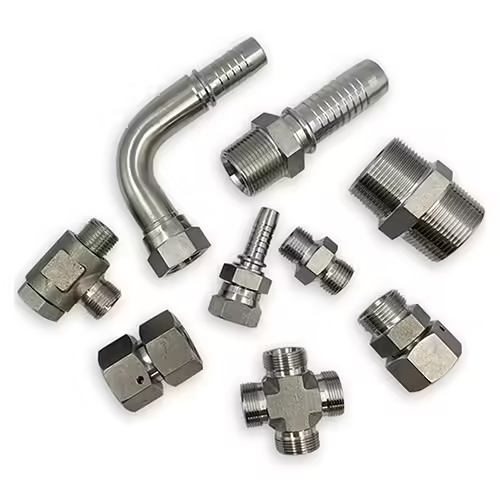
At Hebei Minglai Pipe Fitting Co., Ltd., we specialize in manufacturing hydraulic fittings including flared pipe joints, welded joints, card sleeve joints, crimp joints, removable joints, and quick-change joints. Our experience has taught us that knowing how to identify faulty fittings can save costs, time, and risks. This article explores six warning signs that indicate poor stainless pipe fittings and offers practical advice on evaluation and prevention.
Sign 1: Visible Surface Defects on Stainless Pipe Fittings
A stainless pipe fittings supplier’s responsibility doesn’t end once the product is delivered—it continues through comprehensive after-sales support that ensures system performance, safety, and longevity. Unfortunately, a common warning sign of an unreliable supplier is the lack of proper customer service or post-purchase engagement.
When you encounter installation problems, leaks, or need technical clarification, the ability to reach your supplier quickly can mean the difference between a minor inconvenience and a major operational delay. Some manufacturers may fail to provide installation instructions, ignore maintenance queries, or even reject replacement requests when defects occur. This leaves customers without recourse and may result in unplanned downtime or additional costs.
By contrast, a trusted stainless pipe fittings supplier like Hebei Minglai Pipe Fitting Co., Ltd. offers robust after-sales support tailored to each client’s project and industry. We assist customers with everything from pressure rating clarification to product compatibility guidance. We also provide technical documentation, digital manuals, and engineering consultations when needed.
What to Look For:
- Uniform and polished surface appearance
- No visible pits, scratches, or machining marks
- Smooth sealing surfaces without sharp edges
- Absence of discoloration, weld undercut, or porosity
When selecting a stainless pipe fittings manufacturer, it’s essential to consider the full service package—not just the product price. A supplier who provides lasting technical and logistical support builds confidence, reduces operational risk, and fosters long-term partnership.
Sign 2: Inconsistent Wall Thickness or Dimensions
Dimensional accuracy is a non-negotiable factor when it comes to stainless pipe fittings. Inconsistent wall thickness, uneven bore diameters, or improper threading can cause misalignment during installation, leading to compromised sealing and mechanical instability.
Stainless pipe fittings—especially those used in high-pressure or precision systems—must adhere to global standards like ISO, SAE, or DIN. Deviations in dimensions can cause stress concentration, pressure drops, or even complete system failure. This is particularly important for crimp-type and quick-change fittings, where proper compression and sealing depend on tight tolerance control.
Measurement Considerations:
- Use precision calipers or micrometers to verify OD/ID
- Compare with technical datasheets and international standards
- Inspect thread pitch and profile for inconsistencies
Engineers and installers should be wary of fittings that “almost fit”—these often signal low manufacturing precision and poor quality assurance.
Sign 3: Substandard Material Composition
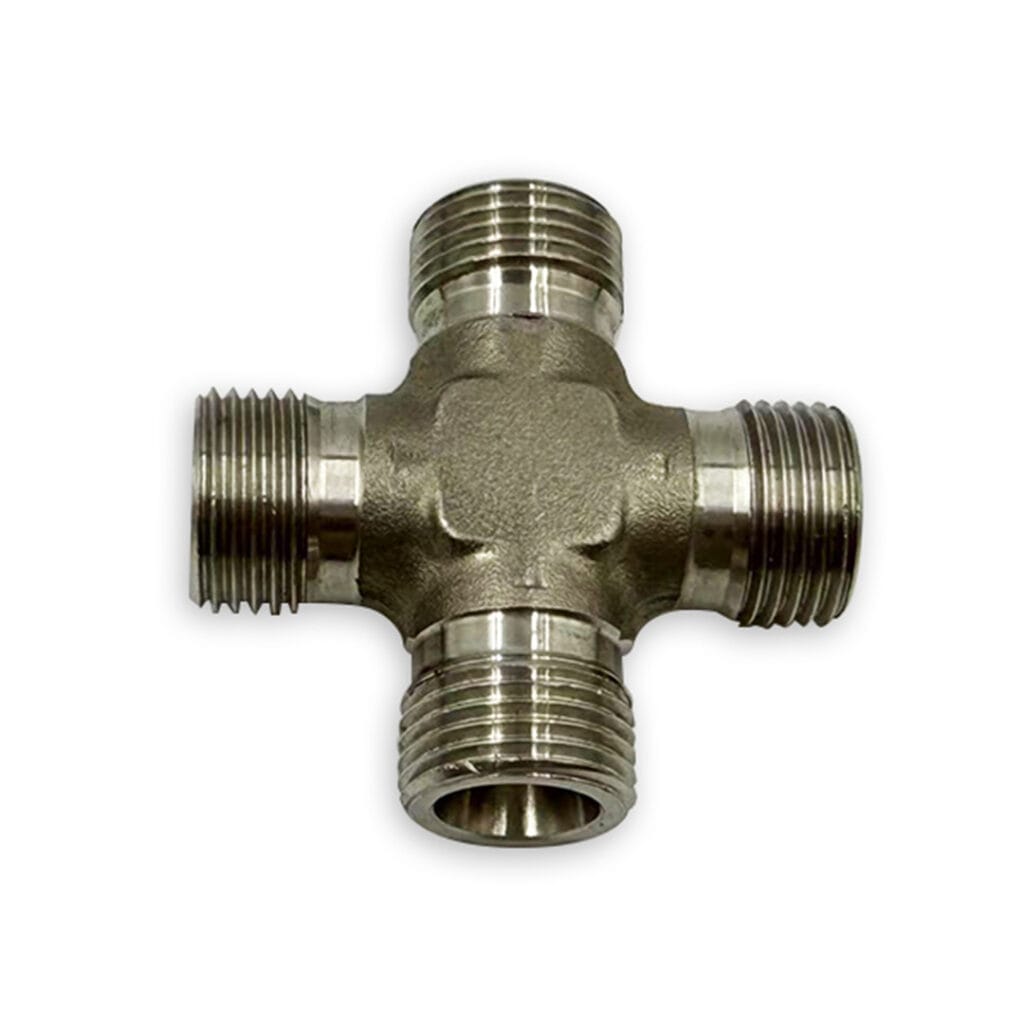
Material quality is the backbone of any high-performance stainless pipe fittings system. Using inferior or uncertified alloys may drastically affect corrosion resistance, strength, and fatigue life. While some fittings are labeled as “stainless,” without proper certification or traceability, they may contain lower chromium or nickel content than required, making them prone to rust or cracking under stress.
At Hebei Minglai Pipe Fitting Co., Ltd., we strictly verify raw materials before production. We use standard stainless steel grades such as 304, 316, or 321, each selected based on your application needs—whether for chemical resistance, high-temperature operation, or sanitary conditions.
Common Signs of Material Issues:
- Early signs of rust, even in mild conditions
- Unusual density (too light or heavy)
- No mill certificate or material trace report available
- Brittle texture or discoloration after minimal usage
Only a certified stainless pipe fittings manufacturer can ensure that the alloy mix meets technical specifications suitable for your project requirements.
Sign 4: Poor Sealing Performance and Leakage
The primary role of stainless pipe fittings is to ensure a tight and secure connection between pipeline components. When sealing performance is compromised, it results in leaks that could lead to serious operational or environmental hazards. In industrial and hydraulic systems, even small leaks can degrade system efficiency, cause contamination, or lead to pressure loss.
Leaks may arise from uneven sealing surfaces, incorrect dimensions, improper thread finishing, or weak structural integrity of the fitting body. Removable and quick-change fittings are especially vulnerable if tolerances are not tightly controlled.
Indicators of Sealing Issues:
- Wet or oily surfaces around the fitting
- Pressure drops in system diagnostics
- Visible seal damage or deformation
Sign 5: Lack of Product Certification and Testing
Any trustworthy stainless pipe fittings supplier must provide documented proof of compliance with industry regulations and standards. Absence of ISO 9001:2015, CE, or SGS certificates may signal a lack of proper quality management systems.
Testing is not optional. Critical fittings must be tested for tensile strength, corrosion resistance, pressure endurance, and temperature performance. Hebei Minglai Pipe Fitting Co., Ltd. follows a full traceability process, including destructive and non-destructive tests. Every fitting is quality-checked and certified before packaging.
Certifications to Request:
- ISO 9001:2015 Quality Management
- CE Conformity (if applicable in your region)
- SGS or Third-Party Testing Reports
- Material Test Certificates (MTCs)
Documentation helps assure long-term reliability and accountability from your stainless pipe fittings supplier.
Sign 6: Inadequate After-Sales Support
Customer service often reflects a supplier’s long-term commitment to quality. A stainless pipe fittings manufacturer who disappears after the sale, fails to provide documentation, or ignores product queries is not a reliable partner.
At Hebei Minglai Pipe Fitting Co., Ltd., we offer full after-sales support, including documentation, installation guidance, engineering advice, and return policies. We also help customers troubleshoot operational issues and provide replacements where necessary.
Strong after-sales support includes:
- Fast response to technical inquiries
- Installation and maintenance manuals
- Clear return and warranty policies
- Support team with engineering expertise
Reliable after-sales service not only resolves immediate issues but also fosters trust and long-term cooperation.
Table: Quick Reference Checklist for Evaluating Stainless Pipe Fittings
| Evaluation Criteria | What to Check | Red Flags |
|---|---|---|
| Surface Finish | Cracks, pitting, roughness | Uneven texture, rust spots |
| Dimensional Accuracy | Use precision tools to measure thickness and diameter | Loose fit or misalignment |
| Material Quality | Certifications and material composition reports | No documentation, fast corrosion |
| Sealing Performance | Pressure and leak tests | Drips, stains, or pressure drops |
| Certification and Testing | ISO, CE, SGS compliance | Lack of test records |
| After-Sales Support | Availability of manuals and technical assistance | No contact or follow-up |
Conclusion
Understanding the critical signs of poor stainless pipe fittings can help you avoid costly replacements, system failures, or safety risks. Whether it’s surface defects, incorrect sizing, or lack of certifications, each warning sign should prompt careful review.
Working with an experienced and trustworthy manufacturer like Hebei Minglai Pipe Fitting Co., Ltd. ensures that you receive reliable, well-tested, and high-performing hydraulic fittings for various industrial applications. Our expertise in flared, welded, crimp, and quick-change pipe joints guarantees a solution for every need.
FAQ
What materials are commonly used in stainless pipe fittings?
The most commonly used materials in stainless pipe fittings are 304 and 316 stainless steel. 304 offers good corrosion resistance for general use, while 316 provides better chemical resistance, especially in harsh or marine environments.
How do I test a stainless pipe fitting for leakage?
Leak testing can be done using hydrostatic or pneumatic methods. Hydrostatic tests involve pressurizing the fitting with water, while pneumatic tests use air or inert gas. Both methods help detect leaks before system operation.
Are certifications important when choosing a pipe fitting supplier?
Yes, certifications like ISO 9001 or CE confirm that a stainless pipe fittings supplier meets international quality standards. They ensure product reliability, traceability, and adherence to strict production protocols.
How can I ensure correct installation of stainless pipe fittings?
To ensure proper installation, always follow the supplier’s technical guidelines, use appropriate tools, and clean the mating surfaces thoroughly before assembly. This helps achieve secure seals and long-term performance.
What if I receive a faulty stainless pipe fitting?
If you receive a defective fitting, a reputable supplier like Hebei Minglai will offer replacements or support. Simply report the issue with photos or test data, and their after-sales team will provide a quick resolution.