Polytetrafluoroethylene (PTFE) tube is a high-performance element widely used in modern industries. Known for its excellent chemical, thermal, and mechanical properties, PTFE tubes are indispensable in applications ranging from aerospace to food processing. This article dives into the key elements, types, applications, and user-friendly guidance on selecting the right PTFE tube.
Table of Contents
Understanding Polytetrafluoroethylene Tube
What Is a PTFE Tube?
A Polytetrafluoroethylene tube is a high-quality conduit designed to transport liquids or gases safely under harsh conditions. Its core elements include:
- Chemical stability: Resistant to nearly all acids, bases, and solvents
- Thermal resistance: Operates between -60°C and 250°C (-100°F to 500°F)
- Mechanical strength: Can withstand high pressure and tensile forces
- Low friction and non-stick surface: Enables smooth flow of fluids
- Electrical insulation: Suitable for sensitive electronics
- Durability: Resistant to aging, wear, and external damage
These elements collectively make PTFE tubes a reliable choice in demanding environments.
Key Types of PTFE Tubes
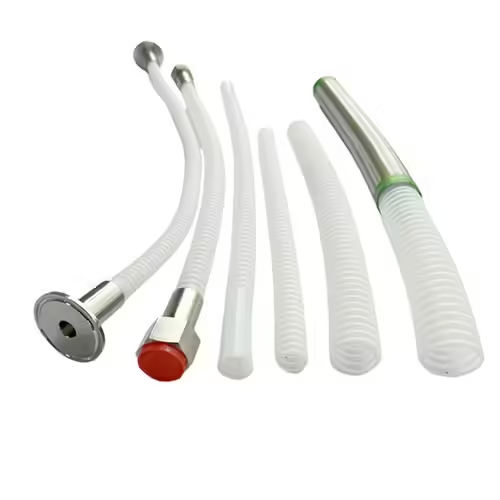
Flat PTFE Tube
- Smooth-wall design
- Easy installation and lower cost
- Ideal for low-pressure, laboratory, or general applications
Corrugated PTFE Tube
- Flexible wave-like structure
- High mechanical strength, especially when reinforced
- Suitable for high-flexibility pipelines, vibration-prone or compact installations
PTFE-Lined Metal and Rubber Assemblies
- Combines PTFE inner tube with metal hoses, rubber connectors, or bellows compensators
- Core elements: inner layer resists corrosion, outer layer enhances tensile and compressive strength
- Applications: industrial pipelines requiring both flexibility and chemical resistance
Essential Performance Elements of PTFE Tube
The exceptional performance of PTFE tubes comes from a combination of several key elements:
- High-Temperature and High-Pressure Resistance
- Can handle pressures up to 3000 psi and steam temperatures up to 250°C while keeping the surface safe below 60°C
- Corrosion Resistance
- Suitable for highly corrosive media and chemical transport
- Lightweight and Flexible
- Example: a 2-meter hose with connectors weighs only 500g, reducing operator workload
- Durability
- Resistant to mechanical damage, capable of withstanding 180kg of tensile force
- Low Friction and Non-Stick Properties
- Ensures smooth flow and prevents blockage in pipelines
- Electrical Insulation and Chemical Stability
- Perfect for electronics and high-precision instrumentation
- Longevity
- Extended service life reduces replacement frequency, lowering operating costs
Structure and Raw Material Elements
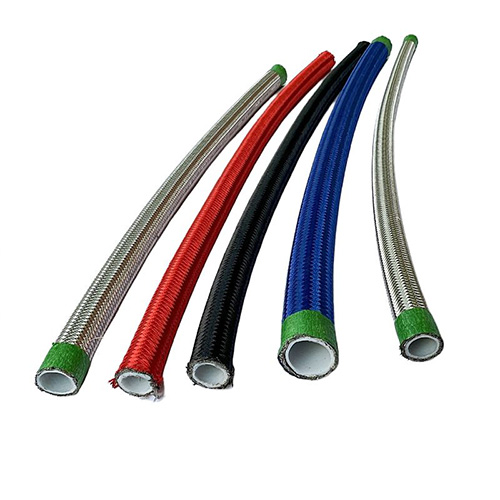
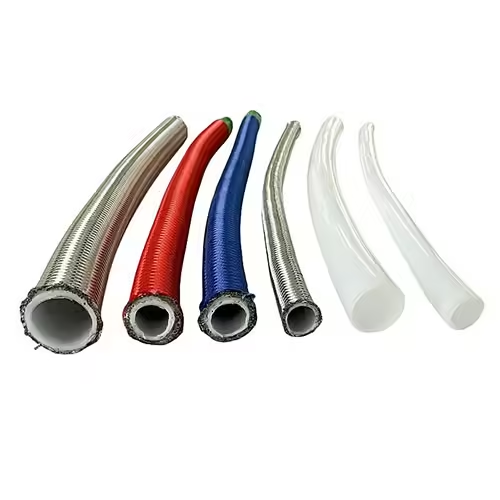
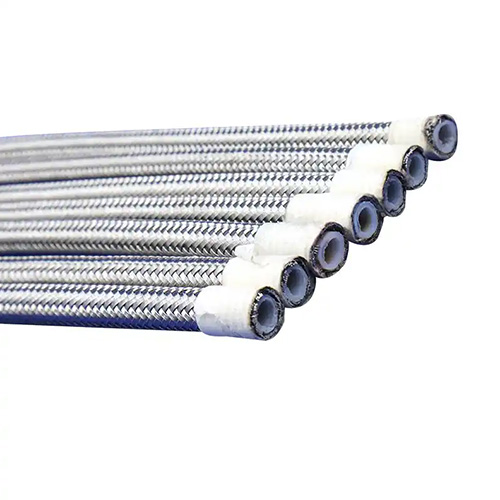
PTFE Braided Hose Structure
- Inner tube: made of PTFE for corrosion resistance
- Braided layers: stainless steel wire, aramid fiber, and other materials
- Outer layer: protects against tensile and compressive forces, mechanical damage
Polytetrafluoroethylene Raw Materials
- Powdered resin: high crystallinity and molecular weight; primary material for sheets, tubes, and other components
- Concentrated dispersions: used for producing molded shapes like pipes, valves, and custom fittings
Applications of PTFE Tube Across Industries
PTFE tubes are used in a wide range of industries due to their reliability, safety, and unique elements:
Aerospace and Defense
- Common names: Aerospace-grade PTFE tube, hydraulic conduit, fuel line
- Key elements: lightweight, flexible, heat and chemical resistance
- Applications: fuel systems, hydraulic circuits, vibration-prone systems
Chemical Industry
- Common names: Chemical-resistant PTFE hose, lined tubing
- Key elements: high corrosion resistance, thermal stability
- Applications: transporting acids, bases, solvents, and reactive gases
Medical and Pharmaceutical
- Common names: Medical PTFE tubing, process tubes
- Key elements: hygienic, non-toxic, sterilizable
- Applications: drug production, fermentation lines, liquid and gas transfer
Food and Beverage
- Common names: Food-grade PTFE tube, beverage conduit
- Key elements: non-stick, temperature resistant, safe for consumption
- Applications: milk, juice, beer, edible oil, and processing equipment pipelines
Electronics and Electrical Engineering
- Common names: Insulated PTFE tube, electronic conduit
- Key elements: electrical insulation, chemical resistance
- Applications: cable protection, semiconductor manufacturing, high-frequency wiring
Mechanical, Instrumentation, and Textiles
- Common names: Hydraulic tubing, instrumentation lines, fiber transport tubes
- Key elements: flexibility, wear resistance, vibration tolerance
- Applications: cooling, lubrication, chemical transfer
Comparative Guide: Choosing the Right PTFE Tube
Flat vs Corrugated PTFE Tube
| Feature | Flat PTFE Tube | Corrugated PTFE Tube |
|---|---|---|
| Flexibility | Low | High |
| Pressure Resistance | Moderate | High |
| Installation | Simple | More complex |
| Typical Use | Labs, low-pressure transfer | Industrial pipelines, vibration-prone areas |
PTFE Tube vs Other Fluoropolymers (FEP, PFA)
| Element | PTFE | FEP | PFA |
|---|---|---|---|
| Temperature Resistance | -60°C ~ 250°C | -50°C ~ 200°C | -60°C ~ 205°C |
| Chemical Resistance | Excellent | Very good | Excellent |
| Mechanical Strength | Moderate | Lower | High |
| Flexibility | Moderate | High | Moderate |
Conclusion
Polytetrafluoroethylene tubes are high-performance elements critical to industrial, medical, and food applications. Their combination of chemical stability, thermal resistance, mechanical strength, and flexibility makes them ideal for complex systems across multiple industries. By understanding types, key elements, and comparative features, professionals can select the right PTFE tube for safe, efficient, and long-lasting operation.long-lasting tubing solutions.
FAQ
What is the difference between PTFE and metal hoses?
PTFE hoses combine chemical resistance, thermal stability, and flexibility, while metal hoses offer strength but may corrode under certain chemicals.
Can PTFE tubing be used for food and pharmaceutical applications?
Yes, food-grade and medical-grade PTFE tubing is FDA compliant, non-toxic, and easy to sterilize.
How flexible is a corrugated PTFE hose?
Corrugated PTFE hoses are highly flexible and can withstand tight bends without kinking, especially when reinforced with metal or aramid fiber braiding.
How do I know when to replace a PTFE tube?
Replace when you notice cracks, discoloration, reduced flexibility, leaks, or surface damage.
Can PTFE hoses handle high-pressure steam?
Yes, reinforced PTFE hoses can handle pressures up to 3000 psi and temperatures up to 250°C safely.