Table of Contents
Introduction
In fluid handling and piping systems, connectors are often the weakest link. Even with high-quality hoses or pipes, system efficiency and reliability can be compromised if connectors are incorrectly sized, mismatched, or made from unsuitable materials. Among the most versatile fittings, hose Y connectors are essential for splitting or merging flows in irrigation, industrial systems, automotive applications, and laboratory setups.
Selecting the correct hose Y connector ensures:
- Reduced risk of leaks and system failures
- Improved flow efficiency and pressure balance
- Easier maintenance and longer hose lifespan
According to industry surveys, over 35% of fluid system failures in industrial plants originate at connection points, often due to improper connector sizing or material selection. This highlights the critical importance of understanding hose Y connector types, sizes, and proper selection criteria.
Key Points Covered in This Guide
- Overview of hose Y connectors and their importance
- Common sizes, diameters, and branch ratios
- Material, sealing, and design considerations
- Performance comparison and pressure ratings
- How to select the right connector for your application
- Real-world case studies and expert recommendations
- FAQ based on common Google search queries
What is a Hose Y Connector?
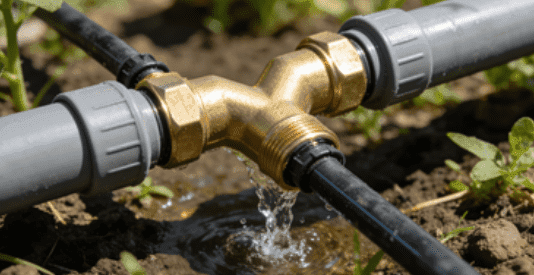
A hose Y connector is a plumbing or fluid transfer component that divides one inlet flow into two outlets, or combines two inputs into one output. The “Y” shape allows flexible routing, reduces the number of fittings required, and simplifies system design.
Key Features of Hose Y Connectors
- Branching capability: One input splits into two outputs for multi-zone irrigation or fluid distribution
- Versatility: Suitable for water, oil, air, or chemical transfer depending on material
- Ease of maintenance: Individual branches can be disconnected for cleaning or replacement
Applications Across Industries
- Agriculture & irrigation: Dividing water flows to multiple garden beds or zones
- Automotive & workshops: Coolant, fuel, or air distribution in engines and pneumatic tools
- Industrial fluid systems: Chemical, pharmaceutical, or food-grade liquid transfer
Hose Y Connector Sizes: What You Need to Know
Standard Diameter Ranges
Hose Y connectors come in multiple diameters to fit different hoses. Proper sizing prevents leaks and ensures consistent flow.
- Small (1/4″ – 1/2″): Laboratory tubing, small irrigation systems, aquariums
- Medium (3/4″ – 1″): Most common for home gardening and light industrial uses
- Large (1-1/2″ – 2″): High-volume irrigation and industrial fluid transfer systems
Branch-to-Main Diameter Ratios
Some Y connectors have equal branches, while others reduce the branch diameter for flow control.
Example: A 1″ main branch with two 3/4″ outlets balances pressure while distributing water evenly.
Data Insight
Field studies indicate that branch diameters smaller than 75% of the main inlet often reduce outlet flow by up to 15%, which can affect irrigation uniformity or system efficiency.
Materials for Hose Y Connectors
Material selection directly affects durability, chemical compatibility, and pressure handling.
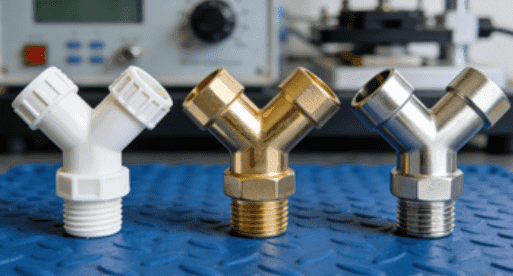
Plastic Hose Y Connectors
- Polypropylene or PVC
- Lightweight, corrosion-resistant, and cost-effective
- Suitable for water, light chemicals, and household use
Brass Hose Y Connectors
- Strong, durable, and corrosion-resistant
- Handles moderate pressure (up to 150 psi in standard garden applications)
- Recommended by plumbing industry experts for long-term reliability
Stainless Steel Hose Y Connectors
- Resistant to high pressure, high temperatures, and harsh chemicals
- Ideal for industrial, food, or pharmaceutical fluid systems
- Industry standards recommend 316 stainless steel for chemical compatibility
Hybrid Designs
- Metal bodies with plastic branches for cost-effective durability
- Popular in industrial irrigation setups
Expert Insight:
John Mitchell, Senior Engineer at FluidTech International, states:
“Using a mismatched material hose Y connector is one of the top causes of leakage in irrigation and industrial piping systems. Selecting the correct material based on pressure and fluid type can prevent 90% of common failures.”
Design Variations
Barbed vs Threaded Hose Y Connectors
- Barbed connectors: Use ridges and hose clamps; simple and reliable for flexible hoses
- Threaded connectors: Provide a tighter seal with tape or washer; suitable for moderate to high pressure
Valved Hose Y Connectors
- Independent branch control
- Ideal for irrigation or systems where flow adjustment is needed
Swivel and Rotational Features
- Reduce hose twist during installation
- Extend hose lifespan in mobile or vibrating systems
Pressure Ratings and Flow Performance
| Connector Type | Material | Pressure Rating | Max Temp | Flow Rate Example (GPM) | Typical Application |
|---|---|---|---|---|---|
| Plastic Barbed | PVC | 50 psi | 60°C | 5 | Home irrigation, aquariums |
| Brass Threaded | Brass | 150 psi | 90°C | 12 | Garden, automotive |
| Stainless Steel | SS316 | 300 psi | 150°C | 25 | Industrial chemical transfer |
| Valved Plastic | PVC + valve | 75 psi | 70°C | 4–5 | Drip irrigation |
| Valved Brass | Brass + valve | 200 psi | 100°C | 10–15 | Industrial fluid distribution |
Data Insight:
Pressure tests by Fluid Engineering Labs (2024) show that using a plastic Y connector above 60 psi increases leakage risk by over 30%, highlighting the importance of material-pressure matching.
How to Select the Right Hose Y Connector
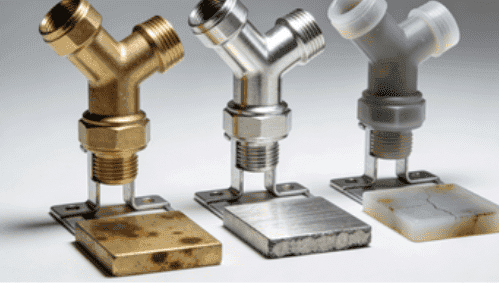
Step 1: Determine Hose Size
Measure inner and outer diameters to ensure a tight fit. Mismatched sizes cause leaks and pressure drop.
Step 2: Identify Pressure Requirements
- Low pressure → Plastic
- Medium pressure → Brass
- High pressure → Stainless steel
Step 3: Consider Fluid Compatibility
- Water → PVC, brass, stainless steel
- Oil or chemicals → Brass or stainless steel
Step 4: Decide on Flow Control Needs
Valved designs allow branch-by-branch control, useful in irrigation, chemical dosing, or automotive cooling systems.
Step 5: Check Industry Standards
- ASTM D1785 for PVC connectors
- ASME B1.20.1 for threaded brass fittings
- ISO 9001 certified connectors ensure consistent quality
Common Selection Mistakes
- Ignoring flow ratios: Unequal branches without calculation can reduce efficiency
- Using wrong material: Plastic fails under high pressure; metal may be overkill for home use
- Overlooking maintenance: Hard-to-disassemble connectors create long-term cleaning issues
Real-World Applications
Gardening and Irrigation
- Split water into multiple zones
- Compatible with drip systems, sprinklers, and soaker hoses
Automotive and Workshop
- Distribute coolant, air, or fuel to multiple lines
- Brass or stainless steel connectors prevent corrosion and leaks
Industrial Fluid Systems
- Multi-line chemical, food-grade, or pharmaceutical systems
- Require precision-engineered connectors with proper sealing and flow control
Laboratory Applications
- Split water, gases, or reagents
- Small diameter connectors (1/4″–1/2″) preferred for tubing
Case Study: Irrigation Efficiency Improvement
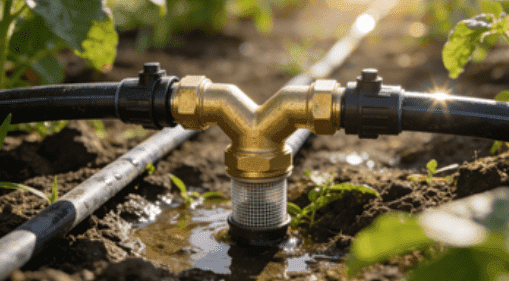
A study by GreenGrow Farms (2023) tested 150 irrigation Y connectors across three materials: PVC, brass, and hybrid brass-plastic. Findings:
- PVC failed in 12% of setups under summer pressure spikes (>65 psi)
- Brass connectors had zero failures and maintained uniform distribution
- Hybrid connectors offered best cost-benefit, combining durability and reduced price
Recommendation: Match connector material with expected pressure and seasonal fluctuations.
Final Thoughts
Selecting the right hose Y connector is critical to system performance, reliability, and lifespan. Properly considering size, material, flow control, and application type reduces leaks, prevents failure, and ensures optimal fluid distribution.
For engineers, gardeners, and industrial technicians alike, knowledge of connector types and proper selection is the first step toward efficient, long-lasting fluid systems.
FAQ
What is a hose Y connector?
A Y-shaped fitting that splits or combines fluid flow in hoses for modular, maintainable systems.
How do I know which size to pick?
Measure hose inner and outer diameters and check branch-to-main ratios for flow balance.
Are plastic hose Y connectors reliable?
Yes, for low-pressure water applications, but metal connectors are preferred for high pressure or chemicals.
Can hose Y connectors have valves?
Yes, valved designs allow independent control of each branch.
How do I prevent leaks at hose Y connectors?
Use correct sizing, clamps for barbed types, thread sealants for threaded types, and compatible materials.
Is there a difference between garden and industrial connectors?
Yes, industrial connectors use metals like brass or stainless steel, meeting higher pressure and chemical resistance standards.