In today’s competitive manufacturing landscape, supply chain efficiency determines not only profitability but also long-term stability. Partnering with an integrated hydraulic fittings supplier—one capable of producing fittings, rubber components, and hose assemblies under one roof—can drastically reduce procurement complexity, minimize inventory risks, and improve operational reliability.
This article explores how integrated production models redefine efficiency in the hydraulic industry, combining quality, flexibility, and cost-effectiveness.
Table of Contents
Understanding the Role of a Hydraulic Fittings Supplier in Modern Industry

A hydraulic fittings supplier provides essential components that enable leak-free, pressure-resistant, and reliable hydraulic connections. These fittings form the backbone of power transmission systems in industries such as construction, mining, agriculture, logistics, and heavy equipment manufacturing, where precision, strength, and durability directly impact operational uptime.
Core Function of Hydraulic Fittings
Hydraulic fittings serve as the connecting link between hoses, pipes, and hydraulic components. Their function is not just mechanical—it’s systemic.
By enabling controlled fluid transfer under high pressure, they:
- Maintain pressure stability and energy efficiency.
- Prevent system leakage and contamination.
- Enhance the overall service life of hydraulic assemblies.
Even a minor design flaw in a fitting can lead to pressure loss up to 8–10%, directly impacting machine performance and fuel efficiency.
Integrated vs. Traditional Suppliers
Traditional Supply Model
In a traditional model, companies source hydraulic fittings, rubber seals, and hoses from multiple vendors. Each supplier focuses on its specific product, leading to fragmented compatibility and higher administrative workload.
Drawback: Quality control becomes challenging, and mismatched tolerances often result in leakage or assembly failure.
Integrated Hydraulic Fittings Supplier
An integrated supplier combines R&D, machining, rubber molding, and hose assembly under one production system.
This ensures unified standards, simplified logistics, and synchronized delivery schedules—reducing total supply chain friction.
Result: Average production lead time drops from 60 days to 30 days, and overall defect rates fall by more than 70%.
How Integrated Manufacturing Enhances Supply Chain Efficiency

Integrated manufacturing fundamentally transforms the hydraulic sourcing process, merging multiple production and logistics touchpoints into a single, streamlined workflow.
Instead of managing separate vendors for fittings, rubber seals, and hoses, businesses gain a unified supply chain that enhances visibility, accelerates response time, and ensures consistent quality across all stages of procurement and production.
Reduced Procurement Complexity
Working with an integrated hydraulic fittings supplier means consolidating all hydraulic components under one management system.
This single-source approach eliminates the need for buyers to issue multiple purchase orders, coordinate across suppliers, or validate cross-compatibility among components.
Procurement teams typically spend up to 30–40% of their time managing vendor communications and documentation. By partnering with an integrated supplier, that time can be cut in half—directly reducing labor costs and administrative overhead.
Example — Logistics Equipment OEM
A logistics equipment manufacturer in Germany once worked with four different suppliers for fittings, hoses, and rubber parts.
After switching to an integrated partner, the company achieved:
- 45% reduction in documentation workload
- 35% shorter order confirmation time
- Elimination of 70% of cross-vendor communication delays
The procurement team reported smoother coordination and fewer post-delivery disputes, allowing faster rollout of production batches.
Improved Quality Consistency
Integrated manufacturing ensures every fitting, seal, and hose originates from the same controlled process flow — using unified material sourcing, dimensional tolerances, and testing protocols.
This alignment minimizes variation and mismatch issues that commonly occur in multi-supplier systems, where even a 0.1 mm tolerance difference can lead to leakage or assembly misfit.
In benchmarking studies across hydraulic OEMs:
- Integrated suppliers maintain a dimensional consistency rate above 95%.
- Multi-supplier systems average between 82–85%, with higher rework rates due to part incompatibility.
- Average return/rejection rate drops from 3.2% to 0.5% after integration.
Case Insight — Agricultural Machinery Manufacturer
An agricultural OEM experienced repeated hydraulic leakage in their harvesters. Root cause analysis revealed minor thread misalignment between third-party fittings and imported hoses.
After shifting to an integrated hydraulic fittings supplier, the company standardized all connection interfaces and material grades, achieving zero leakage incidents over a 12-month test period and extending maintenance intervals by 20%.
Shorter Lead Time and Predictable Delivery
Lead time directly determines an OEM’s ability to meet market demand and production targets.
By synchronizing machining, surface treatment, rubber molding, and assembly within one integrated facility, suppliers can optimize workflow scheduling and eliminate inter-factory logistics delays.
In practical terms:
- Average lead time drops from 45–60 days (multi-supplier) to 25–30 days (integrated).
- Delivery variance — the gap between expected and actual delivery — reduces by up to 50%, enhancing predictability.
- Inventory turnover improves by 1.4x, enabling just-in-time (JIT) replenishment.
Example — Construction Equipment OEM in Southeast Asia
Before integration, the company’s hydraulic assembly schedule was repeatedly delayed by inconsistent hose and fitting deliveries.
After consolidating production with an integrated manufacturer, they reported:
- 40% shorter total project cycle
- 25% reduction in safety stock inventory
- Zero missed shipping deadlines in two consecutive quarters
This case demonstrates how synchronizing production processes not only accelerates delivery but also stabilizes the entire supply chain ecosystem — from supplier to assembly line.
Comparative Analysis: Multi-Supplier vs. Integrated Hydraulic Fittings Supplier
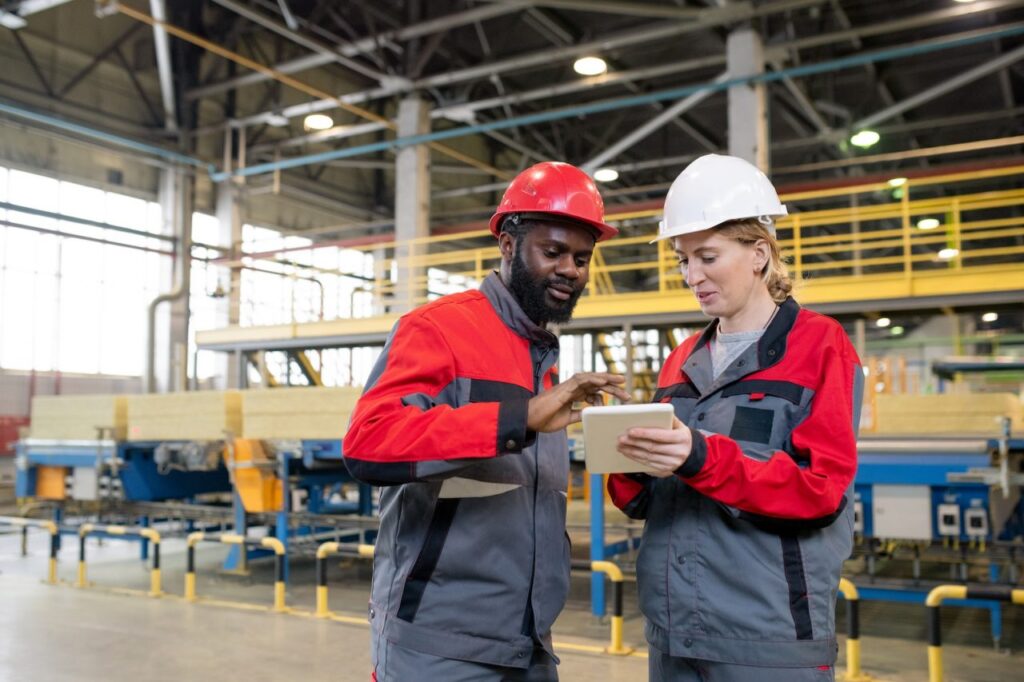
The difference between using multiple vendors and an integrated manufacturer goes beyond price—it impacts efficiency, reliability, and quality assurance.
| Parameter | Multi-Supplier Model | Integrated Supplier Model |
|---|---|---|
| Communication | Multiple vendor contacts | Single technical partner |
| Product Compatibility | Varies by manufacturer | Fully standardized |
| Lead Time | 45–60 days typical | 20–30 days typical |
| Quality Control | Separate inspection processes | Unified testing and QA |
| Inventory Risk | High – varied component lifecycles | Low – coordinated replenishment |
| After-Sales Service | Shared responsibilities | Centralized support |
This table highlights why integration is increasingly preferred among OEM manufacturers and industrial buyers.
Technical Advantages of an Integrated Hydraulic Components Manufacturer
An integrated supplier is not just a product vendor—it is a solution partner that blends design, manufacturing, and validation into one value chain.
Design and Engineering Collaboration
By co-developing fittings, hoses, and sealing parts, engineers ensure dimensional alignment and pressure compatibility early in the design stage.
This eliminates downstream assembly issues and extends service life by 20–25% on average.
Material and Process Optimization
Using precise material selection—carbon steel for strength, stainless steel for corrosion resistance, or brass for low-pressure systems—allows customization for different industrial needs.
Heat treatment and CNC finishing processes ensure consistent tensile strength and durability.
Typical Mechanical Parameters:
- Tensile Strength: 700–900 MPa
- Hardness after Heat Treatment: 35–45 HRC
- Surface Roughness: ≤ Ra 0.8 µm
System-Level Testing
Instead of testing individual components separately, integrated suppliers conduct system-level pressure and leakage testing under real operating conditions.
Each assembly undergoes:
- Burst pressure test (up to 4x working pressure)
- Thermal cycling test (-40°C to 120°C)
- Salt spray corrosion resistance (≥ 72 hours)
This ensures the system performs reliably under real-world stress and vibration.
Case Study: Improving Efficiency for an Agricultural Machinery OEM
An agricultural machinery manufacturer in Europe previously sourced hydraulic fittings, seals, and hoses from three separate vendors. Lead time averaged 60 days, and assembly issues caused 2% leakage failures.
After switching to an integrated hydraulic fittings supplier, the company experienced:
- Lead time reduction to 28 days
- Inventory cost savings of 30%
- Zero leakage failures after 6 months of operation
This case demonstrates how integration directly translates into operational savings and performance stability.
Economic Impact: Quantifying the Benefits
| Performance Metric | Before Integration | After Integration | Improvement |
|---|---|---|---|
| Lead Time | 60 days | 28 days | ↓53% |
| Procurement Cost | 100% baseline | 85% | ↓15% |
| Failure/Return Rate | 2.0% | 0.3% | ↓85% |
| Supplier Count | 3 vendors | 1 vendor | Simplified |
| Inventory Turnover | 3.5 times/year | 5.2 times/year | ↑48% |
These results underline the measurable impact of choosing an integrated supplier—transforming procurement strategy into a competitive advantage.
Sustainability and Green Supply Chain Practices
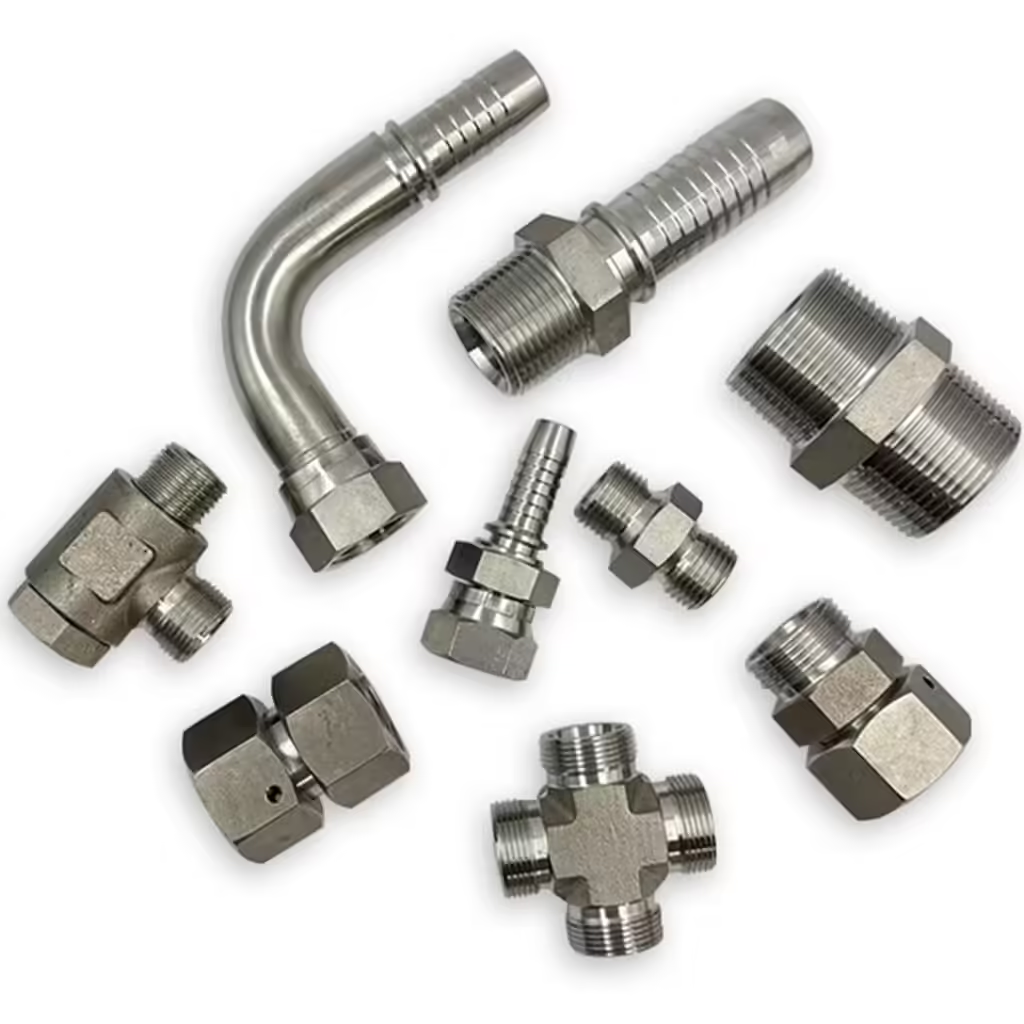
By centralizing production, integrated suppliers reduce transportation steps, packaging waste, and cross-factory logistics.
Many have adopted energy-efficient CNC lines, recyclable rubber compounds, and lead-free materials, cutting carbon emissions by up to 25% per order batch.
This aligns with global ESG and carbon-neutral manufacturing trends, helping OEMs meet sustainability goals.
Conclusion
Supply chain efficiency is no longer a matter of cutting costs—it’s about building partnerships that deliver reliability and value. Choosing an integrated hydraulic fittings supplier helps manufacturers simplify procurement, improve quality consistency, and achieve operational agility.
If you’re seeking a trusted partner for high-performance fittings, rubber components, and hose assemblies, contact our engineering team today for a customized solution designed around your efficiency goals.
FAQ
Why is choosing an integrated hydraulic fittings supplier better than using multiple vendors?
Because it consolidates design, production, and logistics, reducing delays, costs, and compatibility issues—key for long-term supply chain efficiency.
Can integrated suppliers handle custom fittings and small-batch orders?
Yes. Integrated manufacturers can quickly adapt production lines for OEM customization, enabling faster prototyping and specialized configurations.
How does integration reduce lead time in hydraulic component sourcing?
In-house machining, testing, and assembly mean components don’t travel between multiple factories, cutting waiting times and transportation delays.
Are integrated suppliers more expensive initially?
The unit price may be slightly higher, but total cost of ownership decreases due to reduced logistics, fewer rejects, and lower inventory requirements.
Do integrated hydraulic fittings suppliers provide system-level testing?
Yes, top manufacturers perform system testing under simulated pressure and temperature conditions to ensure component compatibility and leak-free performance.
How does integration improve sustainability?
By streamlining production and logistics, integrated suppliers reduce energy use, packaging waste, and transportation emissions.