Table of Contents
Introduction to T-Connectors
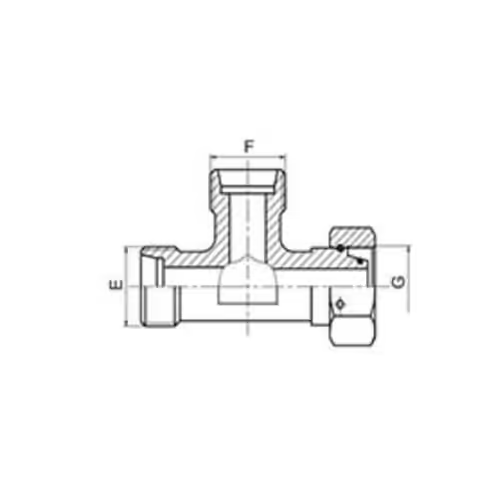
T-connectors are crucial components in fluid systems, electrical networks, and structural assemblies. They allow branching, splitting, or joining of pipelines, cables, or modular frameworks. For B2B operators, understanding T-connector types, materials, and applications is essential to optimize efficiency and reliability.
What is a T-Connector?
Definition and Concept
A T-connector is a three-way connection component shaped like the letter “T”, specifically designed to join three separate lines, pipes, cables, or structural members. Its versatile design allows a single input to branch into two outputs or merge two inputs into one output, maintaining system continuity, operational efficiency, and safety.
Beyond simple connection, T-connectors serve as crucial points in systems, helping to streamline layouts, reduce the number of additional fittings, and simplify maintenance. For industrial applications, even minor misalignment or improper connector selection can lead to leakage, structural instability, or electrical faults, highlighting the importance of understanding T-connector functionality.
Types of T-Connectors

Pipe T-Connectors
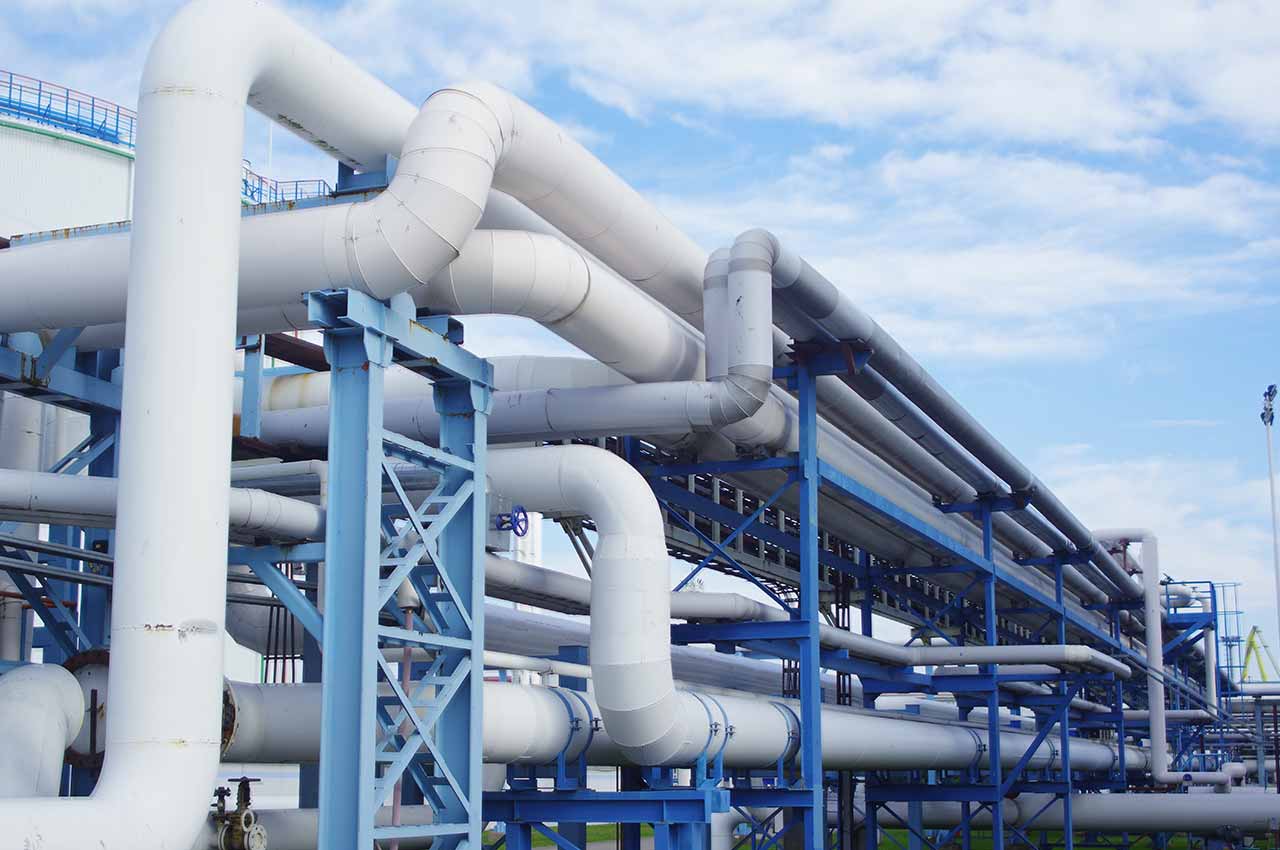
Pipe T-connectors are widely used in water distribution, HVAC systems, and industrial fluid networks. They allow fluid or gas to split or combine efficiently while maintaining pressure stability and leak-proof performance. Depending on the application, these connectors can be constructed from PVC, PPR, brass, or stainless steel, each offering varying levels of corrosion resistance, temperature tolerance, and mechanical strength.
Modern pipe T-connectors often incorporate threaded, welded, or compression-style connections, ensuring compatibility with standard piping systems and reducing installation time. These connectors are particularly valuable in large-scale industrial plants or commercial buildings where multiple branches must be fed from a single source.
Electrical T-Connectors
Electrical T-connectors are used to branch electrical circuits or signal pathways in low-voltage and high-voltage systems. They are essential for industrial automation, control panels, and large-scale electrical distribution networks, ensuring safe and consistent current flow.
Materials for electrical T-connectors typically include copper, brass, or conductive alloys. Insulating coatings or housings provide protection against accidental contact, corrosion, and heat, making them suitable for demanding industrial environments. These connectors also help reduce wiring complexity, which simplifies maintenance and troubleshooting.
Structural T-Connectors
Structural T-connectors are commonly employed in aluminum or steel modular frames, prefabricated buildings, or heavy-duty construction assemblies. They join wall panels, beams, or supports while providing mechanical strength, precise alignment, and load-bearing capacity.
By distributing structural loads efficiently, these connectors prevent deformation and ensure stability for walls, roofs, and modular frameworks. Depending on the project requirements, structural T-connectors may be welded, bolted, or clamped, offering flexibility in installation and future modifications. They are particularly useful in B2B prefabrication projects where speed, precision, and repeatability are crucial.
Core Functions of a T-Connector
Branching and Distribution
T-connectors are essential for efficiently splitting fluid, gas, or electrical paths in a network. Instead of requiring multiple junctions or additional fittings, a single T-connector provides a compact, reliable branching point, simplifying system layout and reducing installation costs.
In industrial applications, properly rated T-connectors can handle high pressures, large currents, or heavy structural loads, ensuring that the system operates safely under demanding conditions.
Structural Support
In modular construction and industrial assembly, T-connectors provide critical load-bearing support. By holding panels, beams, and other components in precise alignment, they maintain the structural integrity of walls, roofs, and frameworks.
For prefabricated buildings or steel framing, structural T-connectors enable fast on-site assembly, reducing labor costs while maintaining quality. Their mechanical design distributes loads evenly, which prevents warping or misalignment over time.
Electrical or Signal Distribution
T-connectors also play a pivotal role in electrical or signal distribution networks. They allow safe branching of current or signals from a single main line to multiple secondary lines without compromising conductivity or creating hotspots.
Industrial automation, server rooms, and commercial electrical systems rely heavily on these connectors to ensure reliable and efficient distribution. Properly selected connectors reduce system downtime and improve maintenance efficiency, especially in high-density installations.
Materials and Manufacturing
Common Materials
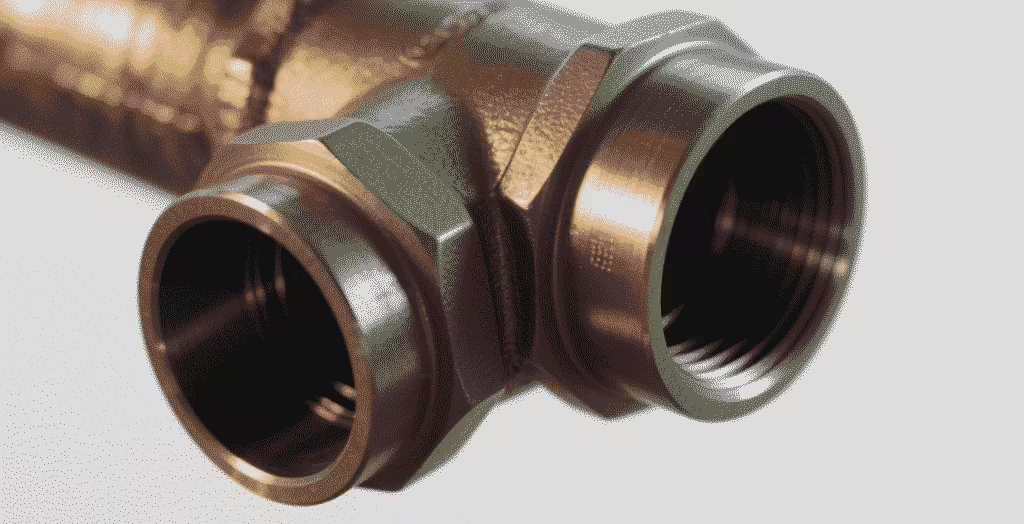
T-connectors are made from different materials based on application requirements:
- Metals: Stainless steel, brass, or aluminum for high strength and durability.
- Plastics: PVC, PPR, or engineering polymers for lightweight, corrosion-resistant applications.
Manufacturing Methods
- Injection Molding for plastic connectors ensures precise shapes and smooth surfaces.
- Casting or Machining for metal connectors provides higher pressure tolerance and structural load capacity.
Parameter Comparison Table
| Type | Material | Max Pressure | Temperature Range | Typical Use |
|---|---|---|---|---|
| Pipe T-Connector | PVC | 10 bar | -10°C to 60°C | Water supply, low-pressure fluid |
| Pipe T-Connector | Stainless Steel | 25 bar | -40°C to 150°C | Industrial fluids, high-pressure |
| Electrical T-Connector | Copper/Brass | N/A | -20°C to 120°C | Electrical branching, panels |
| Structural T-Connector | Aluminum/Steel | 5 ton load | -20°C to 80°C | Modular walls, roofs, frames |
This table helps B2B purchasers compare strength, durability, and application suitability quickly, supporting informed decisions.
Design Considerations for T-Connectors
Size and Compatibility
Selecting the correct T-connector begins with precise measurement and compatibility assessment. For pipe systems, this includes inner and outer diameters, wall thickness, and threading type. In electrical applications, it involves cable gauge, insulation type, and current capacity. For structural assemblies, panel width, beam thickness, and load alignment must be evaluated.
Ensuring a seamless fit is crucial for avoiding leaks, electrical faults, or structural misalignment. Even small mismatches can lead to decreased efficiency, higher maintenance costs, and potential system failure. Modern B2B manufacturing and installation often rely on standardized T-connector dimensions to simplify design and reduce custom fabrication requirements.
Pressure and Load Ratings
T-connectors must be rated appropriately for the pressure or load they will encounter. Pipe connectors in industrial fluid systems may face pressures ranging from a few bars to over 25 bars, while structural connectors must withstand mechanical loads in tons. Electrical T-connectors must handle maximum current without overheating or losing conductivity.
Incorrectly rated connectors can compromise system safety and performance. Selecting the proper rating not only ensures reliability and longevity but also reduces downtime caused by component failure. For high-volume B2B operations, understanding these ratings is critical to optimizing ROI and avoiding costly replacements.
Environmental Adaptability
Environmental factors heavily influence material and design choices. Metal T-connectors, such as stainless steel or brass, perform well in high-pressure, high-temperature, or corrosive environments. They are also suitable for outdoor applications where UV exposure or weathering could degrade plastics.
Plastic or polymer connectors offer lightweight, corrosion-resistant alternatives for chemical, residential, or low-pressure applications. Modern polymers can also withstand moderate UV exposure, but extreme temperatures or harsh chemicals may still limit their use. Evaluating the operating environment, chemical exposure, and temperature range ensures that the chosen T-connector maintains performance and longevity.
Installation and Maintenance
Installation Practices
Proper installation is critical for the safety and efficiency of T-connector systems. Key factors include:
- Alignment: Ensures that pipes, cables, or structural elements meet the connector at the correct angle. Misalignment can lead to leaks, electrical faults, or uneven load distribution.
- Torque and Fastening: Over-tightening or under-tightening can compromise connector integrity. Using torque specifications recommended by the manufacturer helps maintain system reliability and safety.
- System Compatibility: Ensuring that the connector material, size, and rating match the system reduces the likelihood of early wear, corrosion, or mechanical failure.
For industrial B2B setups, modular and pre-assembled T-connectors help speed up installation, reduce errors, and allow easier future maintenance or expansion.
Maintenance and Longevity
Routine maintenance enhances both safety and operational lifespan. Key practices include:
- Visual Inspections: Check for cracks, corrosion, leaks, or loose fasteners in metal connectors; inspect for deformation or brittleness in plastic connectors.
- Cleaning and Lubrication: For metal connectors in fluid or structural systems, periodic cleaning and appropriate lubrication prevent corrosion and reduce friction.
- Replacement Schedules: High-stress environments may require more frequent replacement of T-connectors to prevent failures before they impact operations.
Advanced B2B operations often integrate predictive maintenance systems, using sensors or monitoring software to track pressure, load, or electrical continuity. This allows maintenance before failures occur, optimizing uptime and protecting investment in large-scale systems.
Applications and Real-World Case Studies
Industrial and Commercial Use
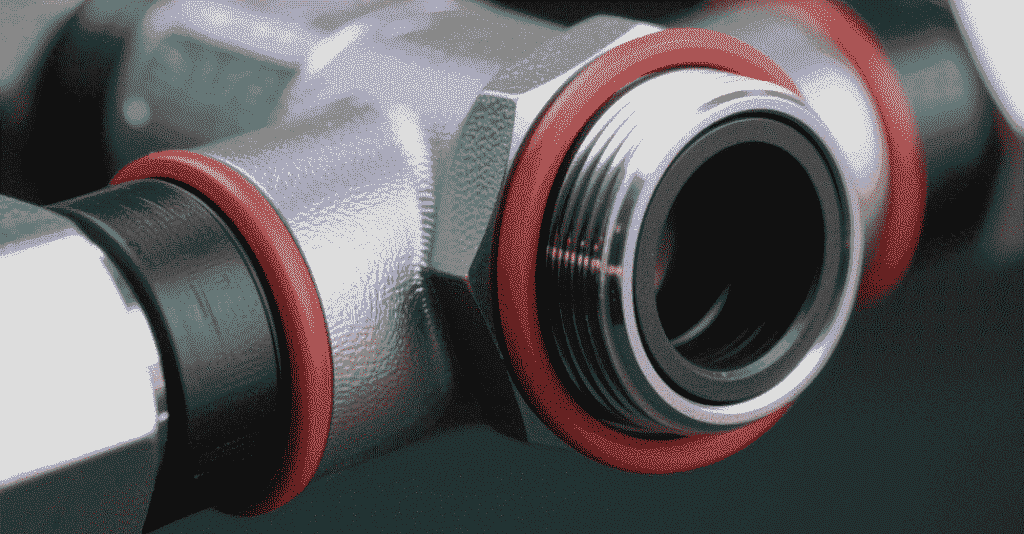
T-connectors are widely used in plumbing, HVAC, electrical systems, and structural modular assemblies. Their ability to simplify layouts reduces installation time and costs.
Case Study 1: European Manufacturing Plant
A manufacturing facility integrated stainless steel T-connectors for fluid lines and copper T-connectors for electrical branching.
Results: 20% faster installation, 15% fewer leaks, and improved safety compliance.
Case Study 2: Prefabricated Housing Project
Structural aluminum T-connectors were used to join wall panels, roof trusses, and modular supports.
Results: 30% faster assembly, 25% labor cost reduction, and highly consistent panel alignment.
FAQ
Q1: What is a T-connector used for?
A1: It is used to branch or join pipelines, electrical circuits, or structural components efficiently.
Q2: Can one connector handle multiple components at the same time?
A2: Yes, a properly rated T-connector can manage two outputs simultaneously for fluids, signals, or structural loads.
Q3: How do I select between metal and plastic T-connectors?
A3: Metal is preferred for high-pressure, high-temperature, or load-bearing scenarios. Plastic is suitable for lightweight, corrosion-resistant, or residential systems.
Q4: How often should T-connectors be inspected?
A4: Weekly visual inspections and periodic functional tests ensure no leaks, wear, or misalignment.
Q5: Are structural T-connectors reusable?
A5: Yes, high-quality metal or aluminum connectors can be reused multiple times in modular frameworks without performance loss.
Q6: Can T-connectors be used outdoors or in harsh environments?
A6: Yes, with proper material selection, such as stainless steel or UV-resistant plastics, T-connectors can withstand weather, chemical exposure, and temperature extremes.
Conclusion
T-connectors are essential for fluid, electrical, and structural systems, enabling efficient branching, load-bearing, and reliable performance. Selecting the right type, material, and installation method ensures long-term efficiency, safety, and cost savings.
Need expert guidance on selecting the right T-connector for your project? Contact our engineers for customized B2B solutions and technical support today.