Table of Contents
Introduction

Rubber barrels play a crucial role in numerous industrial applications, including chemical storage, food processing, pharmaceutical manufacturing, and logistics. Their flexibility, corrosion resistance, and durability make them preferable to traditional metal or plastic containers. However, improper selection, handling, or maintenance can lead to serious operational issues that reduce efficiency, increase costs, and compromise safety.
This article delves into 5 common problems with rubber barrel and provides actionable solutions. We will examine technical aspects, material properties, operational procedures, maintenance best practices, and practical real-world examples. By understanding these challenges, businesses can maximize the lifespan and performance of rubber barrels, while ensuring workplace safety and efficiency.
1. Leakage and Sealing Problems in Rubber Barrel
Leakage is one of the most frequent and critical issues in industrial rubber barrel usage. Leaks can cause material loss, production downtime, environmental hazards, and serious safety risks. Even small leaks can result in chemical spills, contamination, and increased operational costs.
Causes of Leakage
- Poor Sealing or Damaged Gaskets: Repeated use, high pressure, and frequent opening/closing can wear out seals, leading to leaks.
- Manufacturing Defects: Burrs, uneven inner walls, or improperly molded surfaces prevent complete sealing.
- Handling Damage: Dropping, impact during transport, or improper stacking can crack the barrel surface and compromise sealing.
- Temperature Fluctuations: Extreme heat or cold can cause rubber expansion or contraction, weakening seal integrity.
Real-World Case Study
A chemical manufacturing plant in Germany used low-cost rubber barrels to store corrosive liquids. Frequent leakage incidents caused chemical spills, increased cleanup costs, and threatened worker safety. After replacing barrels with precision-turned inner walls and reinforced gaskets, leakage incidents dropped by 90%, production efficiency improved, and worker confidence in handling materials increased.
Solutions and Best Practices
- Use high-quality rubber barrels with smooth, burr-free inner walls to ensure proper sealing.
- Regularly inspect and replace worn gaskets to maintain sealing performance.
- Train staff in proper handling procedures, including safe lifting and avoiding impact during transport.
- Select barrels with strong sealing features for high-pressure or liquid applications.
2. Material Degradation and Aging in Rubber Barrel

Rubber barrels are exposed to harsh working environments, including high temperatures, UV light, chemical exposure, and mechanical stress. Over time, these conditions lead to material degradation, which can compromise durability and performance.
Common Problems
- Hardening or Cracking: Continuous exposure to heat or UV causes rubber to lose flexibility.
- Loss of Elasticity and Tear Resistance: Frequent handling or pressure can accelerate wear.
- Surface Corrosion or Chemical Deterioration: Certain chemicals may react with the rubber if material compatibility is not checked.
Advanced Material Solutions
- Choose aging-resistant and tear-resistant rubber, which maintains elasticity over prolonged periods.
- Apply protective coatings to reduce UV and chemical damage.
- High-temperature resistant rubber ensures performance in heat-intensive applications like industrial mixing or hot liquid storage.
Installation and Storage Recommendations
- Store barrels in shaded or controlled environments to minimize UV exposure and heat stress.
- Avoid stacking barrels beyond recommended limits to prevent deformation and uneven stress distribution.
- Rotate barrels periodically to ensure uniform wear and prevent aging in specific sections.
- Conduct periodic inspections to identify early signs of cracks or hardening.
Case Study
A food processing facility experienced barrel material cracking due to prolonged exposure to high-temperature liquids. By switching to high-quality, aging-resistant rubber barrels and controlling storage temperature, they extended barrel lifespan by 40% and reduced replacement costs significantly.
3. Structural Deformation and Mechanical Damage
Structural deformation can render rubber barrels unusable and compromise safety, especially when used for heavy liquids or chemical storage.
Causes
- Excessive Stacking or Heavy Loads: Overloading barrels can deform walls and compromise seals.
- Dropping During Transportation: Impact can cause cracks or dents.
- Unsupported Custom Shapes: Barrels with special shapes that are not reinforced may warp under stress.
- Repeated Pressure Cycles: High-frequency use in automated systems may cause deformation over time.
Solutions and Best Practices
- Use barrels with reinforced walls and precise turning processes to ensure durability.
- Follow manufacturer-recommended load and stacking guidelines strictly.
- Employ protective handling equipment, such as forklifts with soft grips, pallets, or transport carts.
- Consider flexible customization to create barrels that match your unique operational requirements.
Factory Application Example
A logistics company in Brazil transitioned to reinforced, precision-turned rubber barrels for high-density chemical storage. Structural failures dropped from 12% annually to less than 2%, and damage-related replacement costs decreased significantly. Additionally, operators reported easier handling due to improved barrel design.
Factory Application Example
A logistics company in Brazil switched to reinforced, precision-turned rubber barrels for high-density chemical storage. As a result, structural failures dropped from 12% annually to less than 2%, and damage-related replacement costs decreased significantly.
4. Corrosion and Contamination Risks
Although rubber barrels are corrosion-resistant, improper use or exposure can lead to contamination or internal damage, affecting both product quality and safety.
Causes
- Storage of Incompatible Chemicals: Some solvents or acids can degrade rubber or react with residues.
- Residual Materials Left in Barrels: Failure to clean barrels properly allows chemical buildup, fostering contamination.
- Micro-Cracks or Surface Damage: Even tiny imperfections can allow foreign materials to enter, especially in food or pharmaceutical applications.
- Environmental Factors: Humidity, dust, or prolonged storage in wet conditions can exacerbate contamination risks.
Solutions and Best Practices
- Ensure chemical compatibility before storing any substance in a rubber barrel.
- Perform regular cleaning using appropriate solvents or water-based cleaning systems.
- Inspect barrels frequently for micro-cracks or surface damage.
- Opt for customizable barrels with designs tailored to specific substances, ensuring safe and efficient storage.
Case Study
A food processing plant experienced contamination due to residual oils in improperly cleaned barrels. By adopting customizable, corrosion-resistant rubber barrels with smooth inner walls, contamination risks were eliminated. Production efficiency improved, and compliance with safety standards was enhanced.
Additional Recommendations
- Use color-coded barrels to separate different substances and prevent cross-contamination.
- Implement standard operating procedures (SOPs) for cleaning and handling barrels.
- Train staff to inspect barrels visually and use non-destructive testing methods for early crack detection.
Table: Common Problems and Solutions of Rubber Barrel
| Problem | Cause | Solution | Recommended Material / Feature |
|---|---|---|---|
| Leakage | Poor sealing, damaged gaskets | Replace gaskets, smooth inner walls | High-quality rubber, strong sealing |
| Aging | UV, heat, chemical exposure | Controlled storage, protective coatings | Aging-resistant, tear-resistant rubber |
| Deformation | Overloading, impact, unsupported shapes | Reinforced walls, proper handling | Durable, customizable structure |
| Contamination | Incompatible chemicals, residuals | Regular cleaning, material compatibility check | Special rubber, corrosion-resistant |
| Mechanical Damage | Dropping, improper stacking | Protective equipment, adherence to limits | High-strength rubber, precise turning process |
This table illustrates that selecting the right rubber barrel design, material, and handling procedures significantly reduces operational problems.
5. Customization Challenges in Rubber Barrel
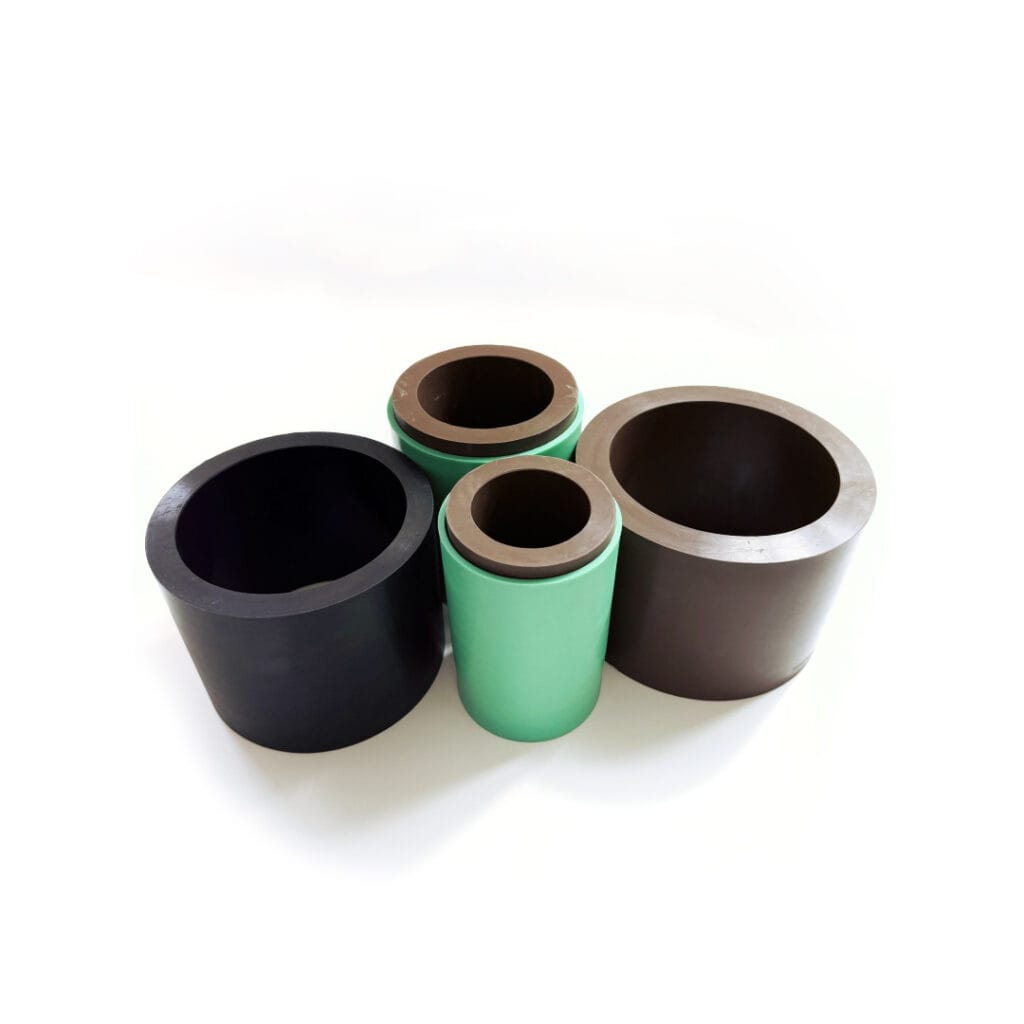
Standard rubber barrels may not meet every industrial requirement, and improper customization can introduce additional problems.
Common Issues
- Incorrect dimensions leading to fitting errors
- Special-shaped barrels failing process requirements
- Inefficient design affecting production workflow
Solutions
- Work with manufacturers offering flexible customization and precise turning.
- Verify dimensions, sealing, and structural integrity before ordering.
- Conduct test runs for complex applications to ensure functionality.
- Integrate advanced design features such as reinforced edges or ergonomic handling structures for efficiency.
Application Example
A pharmaceutical manufacturer required rubber barrels with specific dimensions and reinforced sealing for sterile liquid storage. Customized barrels with precision turning and smooth inner walls eliminated leaks and contamination, improving overall process efficiency by 20%.
Maintenance and Operational Best Practices
Routine Maintenance
- Lubricate moving parts of handling equipment and barrel lids weekly.
- Inspect heating or chemical exposure points monthly for wear or cracks.
- Replace hydraulic seals or gaskets as per manufacturer recommendations.
Operational Tips
- Avoid sudden temperature changes that stress the rubber.
- Follow stacking and load guidelines carefully.
- Train staff on proper handling and cleaning procedures.
Long-Term Benefits
Proper maintenance extends the service life of rubber barrels up to 10–15 years depending on usage conditions, reduces replacement costs, and improves workplace safety.
Conclusion
Rubber barrels are indispensable in many industrial processes, but common problems such as leakage, aging, structural deformation, contamination, and customization issues can hinder their performance. By understanding these 5 common problems with rubber barrel and implementing solutions—including high-quality materials, precise turning processes, reinforced structures, protective handling, and flexible customization—manufacturers can achieve:
- Reliable, leak-free storage
- Prolonged barrel lifespan
- Reduced operational costs
- Improved workplace safety
- Enhanced production efficiency
Investing in well-designed and properly maintained rubber barrels is a strategic decision that delivers long-term benefits across multiple industries.
FAQ
1. How can I prevent leakage in rubber barrels?
Ensure smooth, burr-free inner walls, replace worn gaskets, and handle barrels carefully. Choose strong-sealing models for liquids.
2. What materials help reduce aging in rubber barrels?
Use special rubber that is aging-resistant, tear-resistant, and suitable for high-temperature or chemical environments.
3. Can rubber barrels be customized for special shapes?
Yes, manufacturers provide flexible customization and precision turning to accommodate complex industrial applications.
4. How do I avoid contamination risks?
Ensure chemical compatibility, perform regular cleaning, and inspect barrels for cracks or micro-damage before use.
5. How long does a high-quality rubber barrel last?
With proper use and maintenance, high-quality rubber barrels can last 10–15 years, depending on operating conditions.