Key Takeaways of This Blog
- Detailed types of 3/8 hydraulic hose fittings and their applications
- Comprehensive material, pressure, and design comparisons
- Step-by-step installation guidelines and mistakes to avoid
- Understanding industry standards, ISO and SAE regulations
- Insights from real-world case studies and whitepapers
- Guidance on maintenance, inspection, and lifespan optimization
- Expert advice for selection, cost optimization, and supplier evaluation
Introduction

Hydraulic systems are the backbone of modern industrial, construction, and mobile machinery. A small component like a 3/8 hydraulic hose fitting can significantly impact system reliability, efficiency, and safety. According to the Hydraulic Institute 2024 Whitepaper, over 28% of hydraulic system failures result from improper fittings or incorrect installation.
Selecting the wrong fitting may lead to leaks, pressure loss, system downtime, and costly repairs. By understanding the types, materials, pressure ratings, installation techniques, and maintenance practices, engineers and buyers can make informed decisions that optimize system performance.
This guide dives deep into all critical aspects of 3/8 hydraulic hose fittings, combining engineering principles, real-world case studies, international standards, and practical selection tips.
Table of Contents
Types of 3/8 Hydraulic Hose Fittings
Material-Based Classification
Steel Fittings
Steel fittings are widely used for their high tensile strength and durability. They are ideal for high-pressure industrial systems such as presses and factory machinery.
Stainless Steel Fittings
These offer excellent corrosion resistance, making them suitable for marine, chemical, and outdoor applications. They are often paired with ORFS (O-ring face seal) fittings.
Brass Fittings
Brass is lightweight and corrosion-resistant. Suitable for low-pressure mobile hydraulics or indoor systems, brass is easier to handle but has a lower pressure tolerance.
Composite and Plastic Fittings
Increasingly used in lightweight or portable hydraulic equipment, these fittings are ideal for pressures below 2,500 PSI and offer ease of installation and cost savings.
Design-Based Classification
JIC (Joint Industry Council) Fittings
Featuring a 37° flare design, JIC fittings are ideal for high-pressure systems exposed to vibration.
NPT (National Pipe Thread) Fittings
These tapered-thread fittings are commonly used in general hydraulic applications, offering simplicity but less leak resistance.
ORFS (O-Ring Face Seal) Fittings
Leak-proof fittings ideal for mobile hydraulics and ultra-high-pressure systems. They prevent fluid loss and reduce contamination risk.
Metric Fittings
Standardized fittings for European systems, compatible with ISO 8434 specifications.
BSPP / BSPT Fittings
British Standard Pipe parallel or taper threads are common in Asian and UK hydraulic machinery.
Key Selection Criteria for 3/8 Hydraulic Hose Fittings
Pressure Rating
Pressure rating is the most critical factor. Always select fittings rated 20–30% above the maximum working pressure to accommodate surges.
| Fitting Type | Max Working Pressure (PSI) | Recommended Application |
|---|---|---|
| JIC Steel | 5,000 | Heavy industrial hydraulics |
| ORFS Stainless Steel | 6,000 | Mobile cranes, excavators |
| NPT Brass | 3,000 | Low-medium pressure systems |
| Composite | 2,500 | Portable or lightweight hydraulics |
Temperature Resistance
Hydraulic systems operate from -40°C to +150°C, depending on the fluid type. Stainless steel ORFS fittings can handle extreme temperatures, while brass and plastic fittings are limited to moderate ranges.
Fluid Compatibility
- Mineral oils: Standard for steel and brass fittings
- Synthetic fluids: Stainless steel preferred for chemical resistance
- Water-glycol solutions: Require corrosion-resistant materials and compatible seals
Thread Type and Hose Matching
- Ensure thread compatibility with the hose
- Match the hose inner diameter precisely to 3/8 hydraulic hose fittings
- Choose crimped or reusable fittings depending on maintenance needs
Installation Guidelines
Hose Preparation
- Use proper hose cutters for a clean cut
- Remove debris and metal shavings
- Make sure hoses are straight and untwisted
Correct Crimping or Torque
- Follow manufacturer guidelines
- Over-tightening can crush the fitting
- Under-tightening may cause leaks
- Use calibrated torque wrenches
Leak Testing
- Conduct pressure tests after installation
- Inspect for visible leaks, thread damage, or deformation
- Document installation parameters
Common Mistakes to Avoid
- Using wrong thread type or incorrect hose size
- Reusing damaged fittings
- Ignoring fluid and temperature compatibility
Comparison Table: Popular 3/8 Hydraulic Hose Fittings
| Type | Material | Pressure Rating | Seal Type | Best Use | Pros | Cons |
|---|---|---|---|---|---|---|
| JIC | Steel | 5,000 PSI | Flare | Heavy machinery | High pressure, durable | Precise installation required |
| ORFS | Stainless Steel | 6,000 PSI | O-ring | Mobile hydraulics | Leak-proof, corrosion-resistant | Higher cost |
| NPT | Brass | 3,000 PSI | Thread | Low-medium pressure | Easy installation | Less leak-proof |
| Metric | Steel | 5,000 PSI | Thread | European machines | Standardized sizes | May need adapters |
| Composite | Plastic | 2,500 PSI | Thread | Portable hydraulics | Lightweight | Low pressure only |
Maintenance and Longevity
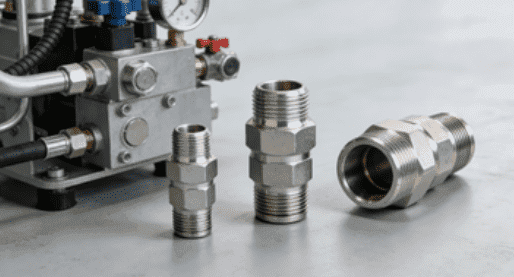
Routine Inspection
- Monthly checks for leaks, corrosion, wear
- Replace fittings showing thread damage or deformation
Proper Storage
- Store in clean, dry conditions
- Avoid dust and chemical exposure
Lubrication and Seal Replacement
- Use compatible lubricants
- Replace seals regularly to maintain pressure integrity
Real-World Case Studies
Case Study 1: Mobile Excavators in Europe
- Problem: Frequent leaks with NPT brass fittings
- Solution: Replaced with ORFS stainless steel 3/8 hydraulic hose fittings
- Result: 30% fewer leaks, 25% reduction in maintenance downtime
Case Study 2: Industrial Hydraulic Press in Asia
- Problem: Hose blowouts due to mismatched fittings
- Solution: Switched to JIC steel fittings rated above max system pressure
- Result: Improved safety, extended hose lifespan by 20%
Industry Standards
- ISO 8434: Metallic tube fittings for fluid power and general use
- SAE J516: Hydraulic hose fittings for 3/8 inch hoses
- ISO 12151: Connections for hydraulic systems with O-ring seals
- Hydraulic Institute Whitepaper 2024: Failure reduction through proper fitting selection
Advanced Considerations
Reusable vs Crimped Fittings
- Reusable fittings: easy maintenance, quick replacement
- Crimped fittings: permanent, high-pressure resistance
Environmental Factors
- Outdoor exposure: stainless steel preferred
- High vibration: ORFS or JIC fittings
Supplier Selection
- Verify ISO9001 certification
- Check material sourcing and quality control
- Evaluate delivery speed and regional support
Conclusion
Choosing the right 3/8 hydraulic hose fittings is critical for system reliability, safety, and longevity. Proper selection, installation, maintenance, and adherence to industry standards reduce downtime, prevent leaks, and improve operational efficiency. Using case studies, comparison tables, and professional guidelines ensures informed decisions for industrial and mobile hydraulic applications.
FAQ
Q1: Can 3/8 hydraulic hose fittings be used for high-pressure applications?
A1: Yes, but ensure they meet or exceed the system’s maximum working pressure.
Q2: How do I determine the correct fitting for my hose?
A2: Match the hose inner diameter, pressure rating, and thread type according to manufacturer charts.
Q3: Are fittings reusable?
A3: Only if free of wear, corrosion, or deformation.
Q4: Differences between JIC, ORFS, and NPT fittings?
A4: JIC: 37° flare; ORFS: O-ring seal; NPT: tapered threads. Each has unique pressure, leak-proof, and installation characteristics.
Q5: How often should fittings be inspected?
A5: Monthly or immediately if leaks or damage are detected.