Key Takeaways
- Main categories of different types of hydraulic fittings used in modern systems
- How thread standards and sealing methods affect performance
- Material-based comparison for industrial selection
- Pressure ratings and application scenarios explained
- Practical selection guide for engineers and buyers
- FAQs based on real user search intent
Introduction

In hydraulic systems, connection integrity determines overall system safety and efficiency. Different types of hydraulic fittings are designed to handle varying pressure levels, sealing requirements, and environmental conditions. Selecting the wrong fitting type can lead to leaks, pressure loss, or even system failure.
From construction machinery to industrial automation, hydraulic fittings play a critical role in ensuring fluid power transmission remains stable and efficient under demanding conditi
Table of Contents
Overview of Different Types of Hydraulic Fittings
Threaded Hydraulic Fittings
Threaded fittings are one of the most widely used different types of hydraulic fittings. They provide strong mechanical engagement and are suitable for high-pressure environments.
Common Thread Standards
- NPT (National Pipe Thread)
- BSP (British Standard Pipe)
- Metric Thread (DIN standard)
These standards are not interchangeable, making compatibility checks essential during system design.
Flared Hydraulic Fittings
Flared fittings use a conical sealing surface to create a tight metal-to-metal connection. They are commonly used in high-pressure hydraulic lines.
Key Concept: Sealing Mechanism
The flare angle (typically 37° or 45°) ensures leak-free performance under vibration and pressure fluctuations.
Compression Hydraulic Fittings
Compression fittings rely on a ferrule that compresses onto the tube to create a seal. They are widely used in medium-pressure hydraulic systems.
Why They Are Popular
They do not require welding or flaring tools, making installation faster and more flexible.
Quick Connect Hydraulic Fittings
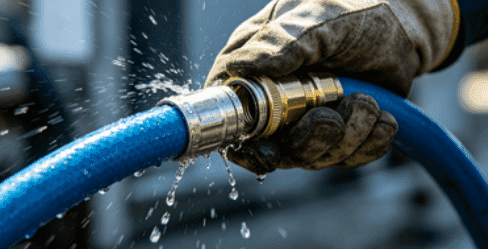
Quick connect systems allow rapid connection and disconnection without tools. They are widely used in maintenance-heavy environments.
Typical Applications
- Agricultural machinery
- Industrial testing systems
- Mobile hydraulic equipment
Comparison Table: Different Types of Hydraulic Fittings
| Type | Pressure Rating | Installation Ease | Reusability | Typical Use Case |
|---|---|---|---|---|
| Threaded | High | Medium | High | Industrial machinery |
| Flared | Very High | Medium | High | High-pressure hydraulics |
| Compression | Medium | Easy | Medium | General hydraulic systems |
| Quick Connect | Medium | Very Easy | High | Maintenance systems |
This comparison helps users quickly evaluate different types of hydraulic fittings based on performance and application needs.
Material-Based Differences in Hydraulic Fittings
Steel Hydraulic Fittings
Steel fittings offer high strength and are commonly used in heavy-duty industrial applications. They are suitable for high-pressure and high-vibration systems.
Stainless Steel Hydraulic Fittings
Stainless steel provides excellent corrosion resistance and is ideal for marine, chemical, and outdoor environments.
Brass Hydraulic Fittings
Brass fittings are used in low to medium-pressure systems where corrosion resistance and cost efficiency are important.
Concept Insight
Material selection directly impacts service life, especially in environments exposed to moisture or chemicals.
Key Selection Factors for Different Types of Hydraulic Fittings
Pressure and Flow Requirements
Each hydraulic system operates under specific pressure conditions. Selecting fittings with insufficient pressure ratings increases failure risk.
Temperature Resistance
Hydraulic systems in industrial environments may experience extreme temperatures. Fittings must maintain sealing performance under thermal expansion and contraction.
Fluid Compatibility
Different hydraulic fluids require different material compatibility to avoid corrosion or degradation.
Concept Comparison: Permanent vs Removable Fittings
Permanent Hydraulic Fittings
Permanent fittings are designed for long-term installations where reliability is more important than flexibility. They offer stronger sealing but are harder to replace.
Removable Hydraulic Fittings
Removable fittings allow easy maintenance and system modification. However, they may require more frequent inspection.
Industrial Application Case Example
In a mining equipment hydraulic system, replacing low-grade fittings with high-pressure flared fittings reduced leakage incidents by over 40%. The improvement was attributed to better sealing geometry and higher pressure tolerance.
This demonstrates how selecting the right different types of hydraulic fittings directly improves system reliability.
Installation Best Practices

Proper Alignment
Misalignment during installation can cause stress concentration and early failure. Always ensure straight engagement before tightening.
Torque Control
Over-tightening may damage threads, while under-tightening may lead to leakage. Manufacturer torque specifications should always be followed.
Seal Material Selection
PTFE tape, O-rings, or metal-to-metal sealing should be chosen based on system pressure and fluid type.
Maintenance Guidelines
Regular Inspection
Inspect fittings for leakage, corrosion, and mechanical wear at scheduled intervals.
Cleaning Procedures
Remove debris and contamination before reassembly to ensure proper sealing.
Replacement Strategy
Replace fittings showing deformation or thread damage immediately to prevent system failure.
Conclusion
Understanding different types of hydraulic fittings is essential for designing safe and efficient hydraulic systems. Each fitting type offers unique advantages depending on pressure, installation method, and application environment.
By selecting the correct fitting type, engineers and buyers can significantly improve system reliability, reduce maintenance costs, and extend equipment lifespan.
FAQ
What are the main different types of hydraulic fittings?
The main types include threaded, flared, compression, and quick connect fittings, each designed for different pressure and application needs.
How do I choose the right hydraulic fitting type?
Consider pressure rating, fluid type, temperature conditions, and installation requirements.
Which hydraulic fitting type is best for high pressure?
Flared and threaded fittings are typically used for high-pressure hydraulic systems.
Are quick connect fittings reliable for industrial use?
Yes, but they are best suited for medium-pressure and maintenance-focused applications.
Can different hydraulic fittings be mixed in one system?
Yes, but compatibility in thread type, pressure rating, and sealing method must be ensured.