Key Takeaways (What You Will Learn in This Guide)
- How hose & fittings systems work in real industrial applications
- International standards used for safety and performance validation
- Material, pressure, temperature, and reinforcement selection logic
- Engineering-based comparison of different hose structures and fittings
- Real-world failure cases and how to avoid them
- Installation, inspection, and maintenance best practices
- A practical selection checklist for engineers and buyers
Introduction

In hydraulic and fluid transfer systems, failures rarely start from major structural defects. More often, they begin with small mismatches—incorrect sizing, overlooked pressure ratings, or incompatible materials. These small errors can escalate into leaks, equipment downtime, or even catastrophic system failure.
Modern industrial systems operate under increasingly demanding conditions: higher pressures, compact installation spaces, and variable temperature environments. In this context, hose & fittings selection becomes a critical engineering decision rather than a simple procurement task.
Across industries such as construction machinery, oil & gas, agriculture, and manufacturing, improper component selection is consistently identified as one of the top three causes of hydraulic system failure in maintenance reports and OEM whitepapers.
Table of Contents
Understanding Hose & Fittings Systems in Engineering Applications
Functional Role in Hydraulic Circuits
Hoses serve as flexible conduits that transport fluid power between components, while fittings ensure secure, leak-free connections. Together, they maintain system integrity under dynamic pressure cycles.
Why Compatibility Is Critical
Even if individual components meet specifications, mismatched interfaces can lead to micro-leakage, pressure loss, or premature wear. Compatibility includes thread type, sealing method, and pressure class alignment.
Common Thread Standards Used Globally
- Metric (DIN standard)
- BSP (British Standard Pipe)
- NPT (National Pipe Thread)
- JIC 37° flare system
Each system is regionally dominant and not universally interchangeable.
Global Standards Governing Hose & Fittings Safety
Industrial hose systems are regulated by multiple international standards to ensure safety and interoperability.
SAE J517 Standard (Hydraulic Hose Performance)
Defines pressure ratings, burst pressure ratios, and temperature tolerance for hydraulic hoses.
A typical safety factor under this standard is 4:1, meaning a hose rated for 3000 PSI must withstand at least 12000 PSI before rupture.
ISO 18752 Standard (Constant Pressure Hose Classification)
Focuses on performance consistency across temperature and pressure variations, widely used in mobile equipment.
EN 853 / EN 856 (European Standards)
- EN 853: Textile-reinforced hoses
- EN 856: Spiral wire reinforced hoses for ultra-high pressure
Why Standards Matter in Real Applications
Compliance ensures predictable performance, interchangeability, and reduced liability risk in industrial operations.
Material Science Behind Hose & Fittings Selection
Steel-Based Fittings
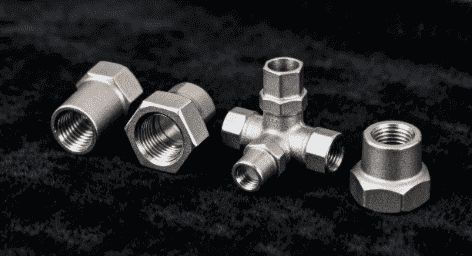
Steel fittings are widely used in high-pressure systems due to superior tensile strength and fatigue resistance.
Stainless Steel (Corrosion-Resistant Applications)
Ideal for offshore, chemical processing, and humid environments where corrosion resistance is critical.
Brass Fittings (Low Pressure Systems)
Used in pneumatic systems and water-based applications where cost efficiency is prioritized over extreme pressure handling.
Elastomer Hose Linings
- NBR (Nitrile Rubber): Oil resistant
- EPDM: Weather and heat resistant
- PTFE: Chemical inertness for aggressive media
Pressure, Temperature, and Dynamic Load Considerations
Operating Pressure vs Burst Pressure
- Operating pressure: normal working condition
- Burst pressure: maximum failure threshold
Industry best practice recommends a minimum 4:1 safety ratio for hydraulic systems.
Temperature Impact on Performance
High temperature reduces elastomer elasticity, while low temperature increases brittleness.
Typical ranges:
- Standard hydraulic hoses: -40°C to +100°C
- High-temp variants: up to +135°C or more
Pulsation and Shock Loads
Construction machinery often experiences pressure spikes exceeding nominal ratings by 20–40%, making reinforcement design essential.
Hose Construction Types and Performance Differences
Wire Braided Hose
Used for medium-pressure applications.
- Compact structure
- Flexible installation
- Moderate pressure resistance
Spiral Wire Hose
Designed for high-pressure systems.
- Multiple reinforcement layers
- High fatigue resistance
- Suitable for excavators and heavy machinery
Thermoplastic Hose
Used in lightweight or mobile systems.
- Lightweight
- Excellent chemical resistance
- Limited high-pressure capability
Expanded Comparison Table: Hose & Fittings Engineering Selection Guide
| Category | Wire Braided | Spiral Reinforced | Thermoplastic | Stainless Steel Fittings | Brass Fittings |
|---|---|---|---|---|---|
| Pressure Range | Medium | Very High | Low–Medium | High | Low–Medium |
| Flexibility | High | Moderate | Very High | Low | Moderate |
| Temperature Resistance | Good | Excellent | Good | Excellent | Moderate |
| Corrosion Resistance | Moderate | Moderate | High | Very High | Moderate |
| Application | Industrial machinery | Excavators, mining | Light systems | Harsh environments | Pneumatics |
| Lifespan | Medium | High | Medium | Very High | Medium |
Real-World Failure Case Study: Hydraulic Excavator Hose Burst
Incident Overview
A construction site in Southeast Asia experienced repeated hydraulic failures in excavator boom systems. Investigation revealed mismatched hose reinforcement type and underestimated pressure spikes.
Root Causes Identified
- Spiral hose replaced with braided hose
- No consideration of pressure surge (up to +35%)
- Improper fitting torque during installation
Outcome
System downtime exceeded 72 hours, with repair costs increasing by 40% due to secondary component damage.
Engineering Lesson
Proper hose & fittings selection must consider dynamic loads, not just static pressure ratings.
Selection Workflow for Industrial Buyers
Step 1: Identify System Parameters
- Maximum operating pressure
- Temperature range
- Fluid type (oil, water, chemical)
Step 2: Determine Hose Construction Type
Choose based on reinforcement and pressure class requirements.
Step 3: Match Fitting Standard
Ensure thread compatibility and sealing method alignment.
Step 4: Validate Safety Factor
Minimum 4:1 burst ratio recommended for hydraulic systems.
Step 5: Confirm Installation Environment
Consider vibration, movement radius, and exposure conditions.
Installation Best Practices for Long-Term Safety
Proper Routing Design
Avoid sharp bends that exceed minimum bend radius specifications. Excessive bending reduces hose life significantly.
Torque Control in Fittings
Over-tightening can deform sealing surfaces, while under-tightening leads to leakage.
Clamping and Support
Hoses must be supported to prevent vibration-induced fatigue failure.
Maintenance and Inspection Strategy
Recommended Inspection Frequency
- Heavy machinery: every 250 operating hours
- Industrial plants: every 3–6 months
- High-pressure systems: monthly visual checks
Key Failure Indicators
- Surface cracks
- Oil seepage near fittings
- Abrasion damage
- Swelling or stiffness changes
Predictive Maintenance Trend
Modern industrial facilities increasingly use sensor-based monitoring to detect pressure anomalies and prevent unexpected downtime.
Industry Trend Insights and Technical Developments

Smart Hydraulic Systems
According to recent industrial automation reports, smart hydraulic systems integrating pressure sensors can reduce failure rates by up to 30%.
Lightweight High-Pressure Materials
New polymer composite reinforcements are being developed to replace traditional steel wire in select applications.
Sustainability Focus
Manufacturers are investing in recyclable elastomer compounds and low-emission production processes to meet environmental compliance standards.
Practical Selection Checklist
Before finalizing any hose & fittings configuration, verify:
- Pressure rating exceeds system maximum by at least 25%
- Temperature range covers operating extremes
- Thread type matches system interface
- Material is compatible with fluid type
- Installation space allows safe bend radius
- Manufacturer certification (SAE / ISO / EN) is available
Conclusion
Selecting hose & fittings is not a routine procurement decision—it is a critical engineering process that directly affects system reliability, operational safety, and lifecycle cost. By understanding standards, materials, pressure behavior, and installation requirements, users can significantly reduce failure risks and improve system efficiency.
A structured selection approach combined with regular inspection ensures long-term stability in even the most demanding industrial environments.
FAQ
What is the most common reason for hose failure in hydraulic systems?
Most failures result from incorrect pressure rating selection or improper installation rather than manufacturing defects.
How do I choose between braided and spiral hoses?
Braided hoses suit medium pressure and flexible routing needs, while spiral hoses are required for high-pressure and heavy-duty applications.
Are all fittings interchangeable across systems?
No, thread standards differ globally. Compatibility must be verified before installation.
What is the standard safety factor for hydraulic hoses?
Most international standards recommend a 4:1 burst pressure safety factor.
How long do hose & fittings typically last?
Service life varies from 1 to 5 years depending on pressure cycles, environment, and maintenance practices.