Table of Contents
Introduction

Hydraulic connector material is a critical factor in hydraulic system performance, safety, and longevity. The right material ensures leak-free operation, durability, and compatibility with the system’s fluid. Choosing the wrong material can result in corrosion, premature failure, or safety hazards.
Key Concept: Material Selection Impact
The choice of connector material affects pressure handling, environmental resistance, installation, and maintenance frequency. Understanding material properties is the first step to designing a reliable hydraulic system.
Types of Hydraulic Connector Material
Carbon Steel Hydraulic Connectors
Carbon steel is strong, cost-effective, and widely used in general industrial systems. It is suitable for medium to high-pressure applications but requires protective coatings to resist corrosion.
Stainless Steel Hydraulic Connectors
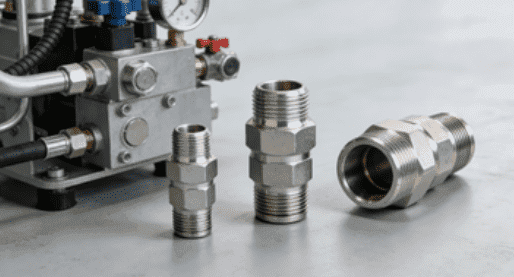
Stainless steel offers excellent corrosion resistance and high-temperature tolerance, making it ideal for chemical, marine, and high-pressure industrial applications. It is durable and requires minimal maintenance.
Copper Hydraulic Connectors
Copper is lightweight and offers good thermal and electrical conductivity. It is ideal for low-pressure systems or portable hydraulic devices but is less suited for high-pressure applications.
Aluminum Hydraulic Connectors
Aluminum connectors are light and easy to handle, reducing installation effort. They are best suited for low to medium-pressure systems but have lower strength compared to steel.
Alloy Steel Hydraulic Connectors
Alloy steel combines high strength and wear resistance, making it ideal for heavy-duty, high-pressure hydraulic systems. Its higher cost and machining requirements are offset by superior durability.
Performance Comparison of Hydraulic Connector Material
Strength Comparison
- Alloy steel and carbon steel provide the highest strength for high-pressure applications.
- Aluminum and copper are suitable for lightweight or portable systems.
Corrosion Resistance
- Stainless steel is best for chemically aggressive or marine environments.
- Carbon steel requires protective coatings, while aluminum and copper offer moderate corrosion resistance.
Weight and Handling
- Lightweight materials like aluminum and copper reduce installation difficulty and system weight.
- Steel-based materials provide superior durability but are heavier.
Conceptual Comparison Table
| Material | Strength | Corrosion Resistance | Best Use Case |
|---|---|---|---|
| Carbon Steel | High | Low | General industrial systems |
| Stainless Steel | High | High | Chemical, marine, high-pressure |
| Copper | Moderate | Moderate | Low-pressure portable systems |
| Aluminum | Moderate | Moderate | Lightweight, mobile applications |
| Alloy Steel | Very High | Moderate | Heavy-duty high-pressure systems |
How to Choose the Right Hydraulic Connector Material
Pressure and Temperature Considerations
Always match the material’s pressure and temperature ratings to the hydraulic system requirements to avoid leaks or failure.
Fluid Compatibility
The material must be chemically compatible with the hydraulic fluid, whether it’s oil, water, or chemical solutions.
Environmental Factors
Consider vibration, external corrosion, and temperature extremes. Stainless steel is preferred in marine or high-humidity environments.
Cost vs Performance
Carbon steel is economical but requires more maintenance. Stainless steel or alloy steel may have higher upfront costs but provide longer lifespan and lower maintenance frequency.
Material Recommendations by Industry and Application
Industrial Machinery
Recommended Materials: Carbon steel or alloy steel
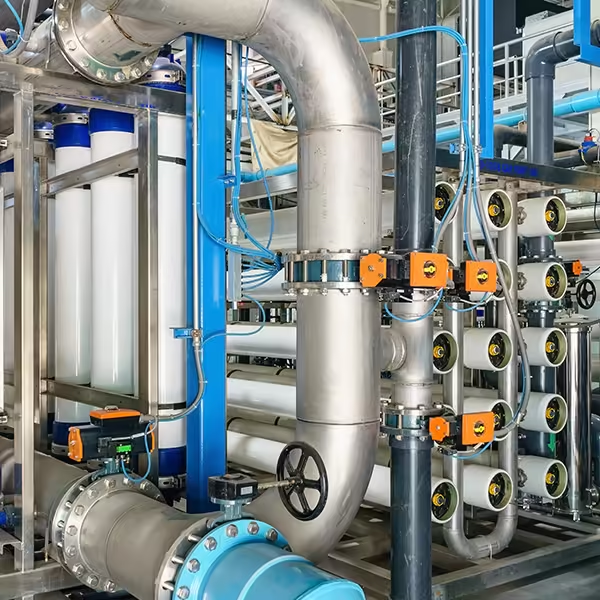
Heavy-duty presses, manufacturing lines, and high-pressure hydraulic equipment require connectors that can withstand continuous stress, high pressure, and wear. Carbon steel is cost-effective for general industrial applications, while alloy steel offers superior strength and wear resistance for extreme conditions. Choosing the right material reduces downtime, minimizes maintenance costs, and ensures system reliability.
Example Applications: Hydraulic presses, injection molding machines, heavy conveyor systems, and stamping machinery.
Automotive Hydraulic Systems
Recommended Materials: Stainless steel or carbon steel
Brake lines, power steering, and fuel injection systems operate under varying pressure and temperature conditions. Stainless steel provides excellent corrosion resistance for long-term durability, particularly in areas exposed to moisture and road salts. Carbon steel can also be used in controlled environments where cost-effectiveness is a priority. High-strength connectors help prevent leaks and ensure vehicle safety.
Example Applications: Automotive brake systems, hydraulic clutches, power steering assemblies, and fuel delivery lines.
Marine and Offshore Applications
Recommended Materials: Stainless steel
Marine environments expose hydraulic connectors to saltwater, high humidity, and fluctuating temperatures. Stainless steel is ideal due to its superior corrosion resistance, ensuring connectors do not weaken or fail over time. For offshore platforms and vessels, choosing the correct grade of stainless steel (e.g., 316) can dramatically extend service life and reduce maintenance frequency.
Example Applications: Ship steering systems, offshore drilling rigs, marine cranes, and ballast control hydraulics.
Chemical Industry
Recommended Materials: Stainless steel or high-grade alloy steel
Hydraulic systems in chemical plants often handle aggressive fluids and operate under elevated temperatures. Stainless steel or specialized alloy steel ensures resistance to chemical corrosion and high-pressure wear. Selecting materials compatible with the specific chemicals used prevents leaks, contamination, and costly downtime.
Example Applications: Chemical pumps, process control hydraulics, high-pressure valves, and fluid transfer systems.
Portable and Lightweight Equipment
Recommended Materials: Aluminum or copper
Low-pressure mobile hydraulic devices benefit from lightweight, easy-to-handle materials that do not compromise system integrity. Aluminum is particularly suitable for field equipment, portable hydraulic jacks, and lightweight agricultural machinery. Copper can be used where moderate strength is acceptable and good thermal conductivity is needed. These materials reduce operator fatigue and improve portability.
Example Applications: Mobile hydraulic jacks, lightweight agricultural sprayers, portable construction equipment, and remote hydraulic actuators.
Installation and Maintenance Considerations

Installation Tips
Material hardness affects torque requirements. Softer metals like aluminum need careful handling to avoid deformation during installation.
Regular Inspection
Check connectors for corrosion, cracks, or wear. Materials like stainless steel require less frequent inspections, while carbon steel may need protective coatings and more frequent maintenance.
Material-Specific Maintenance
- Stainless steel: minimal maintenance, high durability
- Carbon steel: requires coatings and periodic checks
- Aluminum/Copper: watch for wear and deformation in high-stress applications
Conclusion
Choosing the right hydraulic connector material is crucial for ensuring hydraulic system safety, reliability, and performance. By understanding material properties, environmental factors, and application needs, engineers can make informed decisions. Proper material selection, installation, and maintenance reduce the risk of leaks, corrosion, and premature failure, ensuring long-term system efficiency.
FAQ
What material is best for high-pressure hydraulic systems?
Alloy steel or stainless steel is generally recommended due to high strength and resistance to stress and wear.
Can different hydraulic connector materials be mixed in a system?
Yes, but you must ensure chemical compatibility and avoid galvanic corrosion. Proper design prevents leaks and premature wear.
How do I select a material for my operating environment?
Consider pressure, temperature, hydraulic fluid, and environmental exposure. Stainless steel is optimal for harsh, corrosive conditions.
Are lightweight materials like aluminum safe for hydraulic systems?
Yes, for low to medium pressure systems. For high-pressure applications, steel or alloy steel is preferred.
How does material choice affect maintenance frequency?
Materials with higher corrosion resistance, like stainless steel, need fewer inspections. Carbon steel and aluminum may require more frequent checks and protective treatments.