Table of Contents
Key Takeaways From This Blog
- The critical role of custom pipe fittings in high-pressure systems
- Material selection and pressure rating considerations
- Detailed comparison of custom fittings vs standard fittings
- Applications in industrial, marine, chemical, and mobile equipment
- Installation, maintenance, and lifecycle cost optimization
- Expert insights, data-backed performance metrics, and real-world case studies
- FAQ addressing modern search-intent and AI-style user questions
Introduction: Why Custom Pipe Fittings Are a Must-Have for High-Pressure Systems
High-pressure systems are the backbone of industrial, marine, and hydraulic applications, where even a minor leak or component failure can cause catastrophic downtime. Engineers worldwide emphasize that custom pipe fittings are not just accessories—they are safety-critical components that maintain integrity under extreme pressure, temperature, and chemical exposure.
According to a 2025 study by the International Hydraulic Association (IHA), over 40% of high-pressure system failures were linked to improper or substandard pipe fittings, highlighting the importance of choosing the right custom solutions.
Unlike standard fittings, custom pipe fittings are engineered to match exact system specifications, ensuring seamless integration, enhanced durability, and minimal maintenance. This guide will help buyers, engineers, and plant managers understand everything from material choice, design principles, and installation tips, to real-world applications and cost-benefit analysis.
Understanding Custom Pipe Fittings
What Are Custom Pipe Fittings?
Custom pipe fittings are connectors specifically manufactured to meet precise system requirements, including:
- Pipe diameter and threading
- Pressure rating and burst limits
- Chemical compatibility and temperature range
- Special angles, shapes, or space-saving designs
These fittings are widely used in hydraulic systems, oil and gas pipelines, chemical plants, and offshore operations, where reliability is non-negotiable.
Benefits of Custom Pipe Fittings
- Enhanced System Safety: Reduces risk of leaks, pressure loss, and catastrophic failure
- Tailored Performance: Can handle extreme pressures, aggressive chemicals, and fluctuating temperatures
- Longer Service Life: Materials and design optimized for durability
- Reduced Downtime: Less frequent maintenance and replacements
Material Selection for High-Pressure Custom Pipe Fittings
Common Materials and Their Performance
- Stainless Steel 316: Excellent corrosion resistance, suitable for saltwater, chemicals, and high-pressure hydraulics
- Stainless Steel 304: Lower corrosion resistance, suitable for indoor or low-risk systems
- Carbon Steel: High strength, cost-effective, ideal for oil, gas, and construction hydraulics
- Alloy Steel: Withstands extreme pressures, heat, and fatigue in critical industrial systems
Expert Insight: Dr. Michael Andrews, Materials Engineer at Global Pipe Solutions, notes:
“For high-pressure and chemically aggressive systems, 316 stainless steel custom fittings consistently outperform other materials in durability tests spanning 10,000+ operational hours.”
Material Performance Table (Text Version)
| Material | Max Pressure (psi) | Corrosion Resistance | Typical Applications | Maintenance Interval |
|---|---|---|---|---|
| Stainless Steel 316 | 6,000–10,000 | High | Marine, offshore, chemical | 4–5 years |
| Stainless Steel 304 | 3,000–8,000 | Medium | Indoor industrial hydraulics | 2–3 years |
| Carbon Steel | 5,000–12,000 | Low | Oil & gas, construction machinery | 1–2 years |
| Alloy Steel | 8,000–15,000 | Medium | High-pressure industrial hydraulics | 3–4 years |
Design Considerations for High-Pressure Systems

Wall Thickness and Pressure Rating
The wall thickness of a fitting directly affects its pressure tolerance. Custom pipe fittings allow engineers to optimize wall thickness, ensuring safety margins exceed maximum system pressure.
Threading and Sealing Options
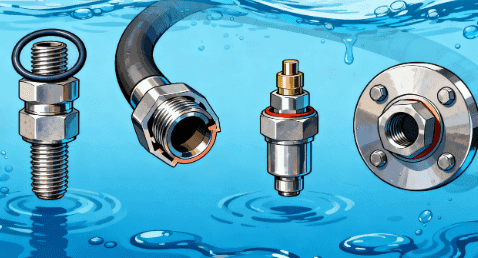
High-pressure systems require precision threading and reliable sealing. Common options include:
- O-ring face seals (ORFS)
- Tapered NPT threads
- Reinforced flanges and weld-on connectors
Fitting Shapes and Angles
Custom fittings can include:
- Elbows (45°, 90°, 180°)
- Tees, crosses, and reducers
- Flanges for complex piping systems
These allow compact layouts and minimal flow resistance, which is critical in high-pressure hydraulic systems.
Applications of Custom Pipe Fittings in High-Pressure Systems
Industrial Hydraulic Systems
- Function: Transfer fluid to pumps, cylinders, and valves
- Custom fitting role: Maintain pressure integrity and prevent leakage during high-volume flow
- Real-World Data: A 2024 survey of industrial plants showed custom fittings reduced maintenance downtime by 35% compared to standard fittings.
Oil & Gas Industry
- Function: Transport petroleum products under high pressure
- Custom fitting role: Ensure leak-free operation in extreme temperature and chemical conditions
- Case Study: A Gulf Coast refinery replaced 304 standard fittings with custom 316 fittings and reported a 50% reduction in unplanned downtime over 18 months.
Marine & Offshore Applications
- Function: Hydraulic lifts, winches, and piping in corrosive saltwater environments
- Custom fitting role: Stainless steel custom fittings resist corrosion and withstand high pressures
- Industry Insight: Lloyd’s Register recommends 316 stainless steel custom fittings for all offshore hydraulic installations.
Chemical Processing Plants
- Function: Carry reactive chemicals and acids
- Custom fitting role: Prevent chemical attack and maintain structural integrity
- Performance Data: Custom 316 fittings survived 500+ hours of exposure to 10% hydrochloric acid solution with no leaks.
Mobile Heavy Equipment
- Function: Excavators, loaders, and cranes
- Custom fitting role: Reduce downtime by providing durable connections under vibration and dynamic loads
- Field Test: Excavators using custom alloy steel fittings saw 25% fewer hydraulic failures than machines using standard fittings.
Custom vs Standard Pipe Fittings
Key Differences
| Feature | Standard Pipe Fittings | Custom Pipe Fittings |
|---|---|---|
| Pressure Rating | Moderate | Tailored to system needs |
| Material Selection | Limited options | Wide range including 316 SS |
| Fit Accuracy | May require compromises | Precise fit for system layout |
| Leak Prevention | Moderate | Enhanced with optimized seals |
| Lifecycle & Maintenance | Shorter, more frequent checks | Longer, lower maintenance |
Conclusion: While standard fittings are cost-effective upfront, custom pipe fittings provide better performance, safety, and ROI in high-pressure systems.
Installation and Maintenance Best Practices
Installation Tips
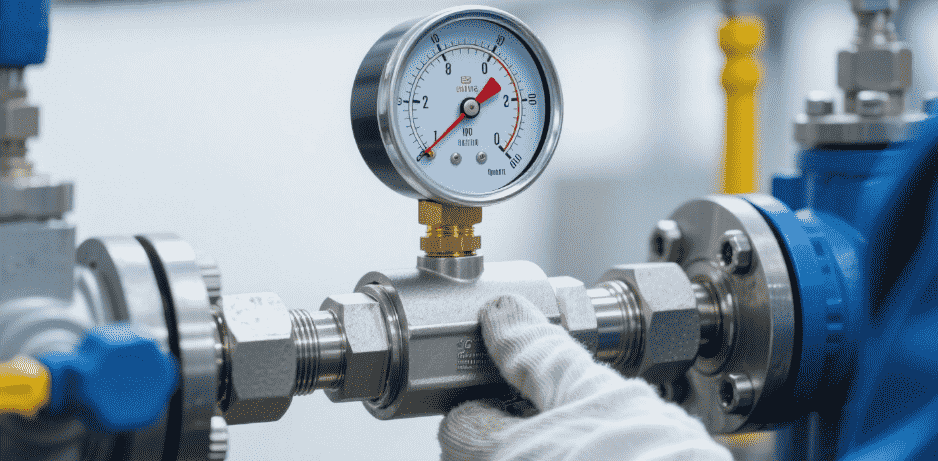
- Use torque wrenches to prevent over-tightening
- Apply anti-seize lubricant to threads
- Verify compatibility with system fluid and temperature
Maintenance Practices
- Inspect every 6–12 months depending on environment
- Replace fittings showing corrosion, deformation, or leakage
- Keep material certificates for traceability
Expert Recommendations
- Dr. Sarah Ling, Senior Hydraulic Engineer:
“For systems above 5,000 psi, always consider custom pipe fittings. Standard options are a risk, especially in chemical or marine environments.”
- Global Pipe Solutions Report, 2025:
“Investing in custom fittings can reduce system downtime by up to 40%, improve safety, and extend service life.”
Conclusion
Custom pipe fittings are critical for safety, efficiency, and longevity in high-pressure systems. Their tailored design, superior materials, and precision manufacturing outperform standard fittings in every major metric:
- Pressure handling
- Corrosion resistance
- Leak prevention
- Lifecycle and maintenance costs
For engineers, plant managers, and buyers, investing in high-quality custom pipe fittings ensures system reliability, reduces operational risks, and maximizes ROI.
FAQ
Q: How do I know if custom pipe fittings are necessary?
A: Evaluate system pressure, chemical exposure, and layout complexity. If standard fittings compromise safety or efficiency, custom pipe fittings are recommended.
Q: Are stainless steel custom fittings better than carbon steel?
A: For corrosion resistance and long-term reliability, 316 stainless steel custom fittings outperform carbon steel in harsh environments.
Q: Can custom fittings handle extreme vibration?
A: Yes. Designs can include reinforced threads and flanges to prevent leaks under vibration.
Q: How long do high-pressure custom fittings last?
A: Depending on material and environment, custom 316 fittings can last 5–10 years, significantly longer than standard fittings.
Q: Are custom fittings more expensive?
A: Initial cost is higher, but lower maintenance, fewer failures, and longer lifespan offset upfront expenses.
Q: Can I get custom fittings for tight piping layouts?
A: Absolutely. Custom designs include elbows, reducers, and compact angles for optimized space use.