Key Takeaways: High Pressure Hose Supply Engineering Insights
- High pressure hose supply systems are engineered for extreme pressure, temperature, and chemical environments
- PTFE hose systems provide superior performance in corrosion resistance and thermal stability
- Industrial standards such as ISO 18752 and SAE J517 define safety and performance benchmarks
- Lifecycle cost is significantly more important than initial procurement cost
- Burst pressure safety ratios typically range from 3:1 to 6:1 depending on application class
- Digital monitoring and smart hose technologies are transforming industrial maintenance
- Proper hose supply selection reduces system downtime and operational risk
Introduction: The Strategic Importance of High Pressure Hose Supply in Industry 4.0
In modern industrial systems, hose supply networks are no longer simple fluid transfer components—they are critical infrastructure elements that directly influence operational safety, production efficiency, and system reliability.
With increasing demand from chemical processing, aerospace engineering, energy systems, and precision manufacturing, high-pressure hose systems are now required to operate under:
- Extreme temperature conditions (-100°F to +500°F)
- High-pressure ranges up to 3000 psi and beyond
- Highly corrosive chemical media
- Continuous 24/7 industrial cycles
According to Global Industrial Hose Market Reports (2025–2026), the high-pressure hose segment is expected to grow at a CAGR of 5.8%–7.2%, driven primarily by energy infrastructure expansion and chemical industry modernization.
Table of Contents
High Pressure Hose Supply System Engineering Architecture

Hose Supply Structural Engineering Model
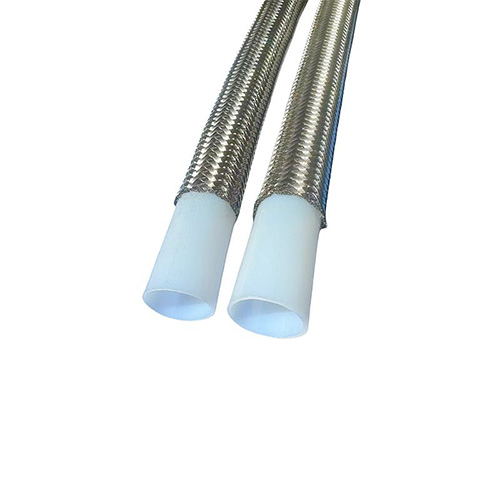
A high-pressure hose system is typically composed of three engineered layers:
- Inner PTFE tube (chemical contact layer)
- Reinforcement layer (stainless steel / aramid fiber braid)
- Outer protective jacket (abrasion + environmental protection)
Pressure Load Distribution Concept
High-pressure hose systems distribute internal stress using a multilayer reinforcement mechanism:
- Inner layer resists chemical attack
- Braided layer absorbs radial pressure
- Outer layer protects against mechanical damage
Engineering Insight
This layered architecture allows pressure ratings exceeding 3000 psi (≈207 bar) in industrial PTFE hose systems.
PTFE Hose Supply Material Science Deep Dive
PTFE Molecular Structure Engineering Concept
PTFE (Polytetrafluoroethylene) consists of:
- Carbon backbone
- Fully fluorinated molecular chains
This structure creates:
- Extremely low surface energy
- High chemical inertness
- Exceptional thermal stability
Thermal Resistance Mechanism Concept
PTFE maintains structural stability because:
- Strong C–F bonds resist thermal degradation
- High crystallinity improves heat tolerance
- Low friction prevents internal wear
Chemical Resistance Engineering Concept
PTFE is resistant to:
- Hydrochloric acid (HCl)
- Sulfuric acid (H₂SO₄)
- Sodium hydroxide (NaOH)
- Organic solvents and hydrocarbons
Hose Supply International Standards and Compliance Framework
Key Global Standards for Hose Supply Systems
| Standard | Organization | Application |
|---|---|---|
| ISO 18752 | International Organization for Standardization | High-pressure hose classification |
| SAE J517 | Society of Automotive Engineers | Hydraulic hose performance |
| DIN EN 853 | European Standard | Steel wire reinforced hoses |
| ASTM D380 | ASTM International | Rubber hose testing |
| ISO 1402 | ISO | Hydrostatic pressure testing |
Engineering Compliance Impact
Standards define:
- Burst pressure limits
- Temperature classification
- Fatigue cycle performance
- Material certification requirements
Industry Insight
Certified hose systems can cost 20%–40% more, but reduce failure risk by up to 70% in critical applications.
Hose Supply Performance Testing Systems
Hydrostatic Pressure Test Concept
Hoses are tested using water or hydraulic fluid under controlled pressure.
- Typical test pressure: 1.5x to 4x working pressure
Burst Pressure Test Concept
The hose is pressurized until failure to determine maximum capacity.
Engineering Safety Rule
Industrial hoses must operate at only 20%–33% of burst pressure rating.
Impulse Test Concept
Simulates repeated pressure cycles:
- 100,000 to 1,000,000 cycles depending on certification level
Hose Supply Types and Engineering Applications
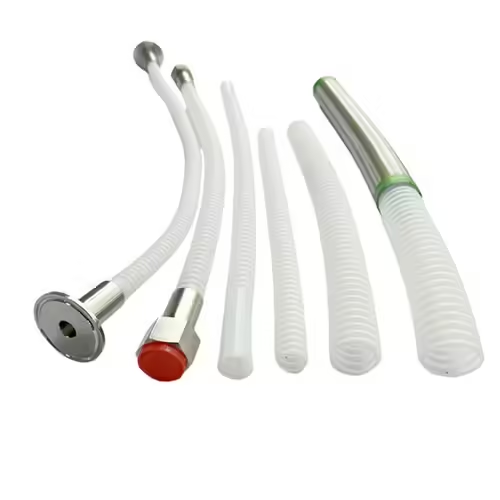
PTFE Hose Supply Systems
Used in:
- Chemical processing plants
- Aerospace hydraulic systems
- Pharmaceutical transfer lines
Advantages:
- High chemical resistance
- Extreme temperature tolerance
Rubber Hose Supply Systems
Used in:
- Construction machinery
- Low-pressure hydraulic systems
Advantages:
- Low cost
- High flexibility
Stainless Steel Braided Hose Supply Systems
Used in:
- High-pressure steam systems
- Industrial gas transfer
Advantages:
- High mechanical strength
- Vibration resistance
Hose Supply Technical Specification Engineering Table
| Parameter | Industrial Range |
|---|---|
| Inner Diameter | 3mm – 100mm |
| Pressure Range | 150 psi – 3000+ psi |
| Temperature Range | -100°F to +500°F |
| Burst Ratio | 3:1 – 6:1 |
| Tensile Strength | Up to 180 kg+ reinforcement |
Hose Supply vs Alternative Fluid Transfer Systems
Hose Supply vs Rigid Pipe Systems
| Feature | Hose Supply | Rigid Pipe |
|---|---|---|
| Flexibility | High | Low |
| Installation Cost | Lower | Higher |
| Pressure Handling | Medium–High | Very High |
| Maintenance | Easy | Complex |
Engineering Insight
Hose systems are preferred in:
- Moving machinery
- Vibration environments
- Complex routing systems
Hose Supply Cost Engineering and Lifecycle Model
Lifecycle Cost Breakdown (LCC Model)
| Cost Type | Percentage |
|---|---|
| Initial Purchase | 20–30% |
| Installation | 20–25% |
| Maintenance | 25–35% |
| Downtime Cost | 20–30% |
Engineering Insight
Lifecycle cost is typically 3–6 times higher than initial hose purchase cost in industrial environments.
Hose Supply Failure Mode Analysis (FMEA Engineering)
Common Failure Types
1. Burst Failure
Caused by overpressure or material fatigue.
2. Chemical Degradation
Occurs when incompatible fluids attack inner tube material.
3. Mechanical Abrasion
External wear due to friction or vibration.
4. Thermal Deformation
Excessive heat exposure reduces structural integrity.
Risk Mitigation Concept
- Proper material selection
- Pressure margin design
- Regular inspection cycles
Hose Supply Industry Applications Expansion
Chemical Industry Engineering Use
Used for:
- Acid transfer
- Solvent processing
- Reactor feeding systems
Aerospace Engineering Use
Used in:
- Hydraulic control systems
- Fuel delivery systems
Energy Sector Use
Used in:
- Oil drilling rigs
- High-pressure steam systems
- LNG transport systems
Hose Supply Digital Transformation Trends
Smart Hose Monitoring Concept
Modern systems integrate:
- Pressure sensors
- Temperature monitoring
- Predictive failure algorithms
Industry 4.0 Integration Concept
Smart factories use:
- Real-time hose condition tracking
- AI-based maintenance prediction
- Automated replacement alerts
Industry Insight
Predictive maintenance can reduce hose failure downtime by up to 40%.
Hose Supply Real Engineering Case Studies
Case Study 1: Chemical Plant Optimization (Germany)
Problem:
Frequent hose degradation due to chemical exposure.
Solution:
PTFE hose supply system upgrade.
Result:
- 60% reduction in maintenance frequency
- 45% increase in system uptime
Case Study 2: Offshore Energy Platform
Problem:
High-pressure failure in hydraulic lines.
Solution:
Stainless steel braided PTFE hose system.
Result:
- Increased safety rating compliance
- Reduced leakage incidents by 70%
Case Study 3: Pharmaceutical Production Line
Problem:
Contamination risk in fluid transfer.
Solution:
High-purity PTFE hose supply system.
Result:
- Full compliance with GMP standards
- Zero contamination incidents reported
Hose Supply Market Outlook 2026
Global Demand Trend
- Asia-Pacific: fastest growing region
- Oil & gas: largest application sector
- Chemical industry: highest premium segment
Price Volatility Drivers
- Stainless steel price fluctuation
- PTFE resin supply chain constraints
- Global logistics costs
FAQ
Why is PTFE preferred for high pressure hose supply systems?
Because it combines chemical resistance, thermal stability, and long service life.
What is the safest operating pressure for industrial hoses?
Typically 20%–33% of burst pressure rating.
How long does a PTFE hose last in industrial use?
Depending on environment, typically 3–10+ years.
What causes most hose failures?
Overpressure, chemical incompatibility, and mechanical fatigue.
Is stainless steel always better than rubber hoses?
Not always; it depends on pressure, temperature, and cost constraints.
Conclusion
The evolution of hose supply systems is closely tied to industrial modernization, automation, and safety engineering standards.
PTFE-based high-pressure hose systems represent the next generation of industrial fluid transfer technology due to their:
- Superior chemical resistance
- Extreme temperature performance
- High-pressure stability
- Long lifecycle efficiency
In the future, integration with smart monitoring systems and predictive maintenance will further redefine hose supply engineering, making industrial fluid transport safer, more efficient, and more intelligent than ever before.