Key Takeaways
- Hydraulic quick connects significantly reduce hydraulic system downtime and maintenance complexity
- Properly designed couplings improve safety by minimizing high-pressure fluid exposure risks
- Industry standards such as ISO 7241, SAE J516, and ISO 16028 define performance and compatibility
- Material selection (carbon steel, stainless steel, brass) directly impacts durability and corrosion resistance
- Flat-face designs reduce oil leakage and environmental contamination during connection/disconnection
- Real industrial case studies show productivity improvements of up to 30% after adoption
- Supplier quality control, pressure testing, and certification are critical procurement factors
- Smart hydraulic systems are increasingly integrating quick connects with IoT monitoring technologies
Introduction

Modern industrial systems are evolving toward higher efficiency, greater automation, and stricter safety compliance. In this transformation, hydraulic systems remain central to powering construction machinery, agricultural equipment, mining operations, and industrial manufacturing lines.
However, traditional hydraulic connections often introduce inefficiencies—slow assembly, leakage risk, contamination issues, and maintenance downtime. These challenges become critical in high-pressure environments where even minor fluid loss can lead to equipment failure or environmental hazards.
This is where hydraulic quick connects play a transformative role.
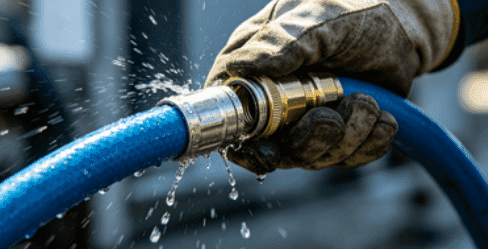
Hydraulic quick connects are engineered coupling systems designed for rapid connection and disconnection of hydraulic lines without tools. Their ability to maintain high-pressure sealing integrity while allowing fast operation has made them an essential component in modern hydraulic engineering.
According to multiple industrial equipment efficiency reports (including hydraulic system benchmarking studies published in global manufacturing white papers), companies adopting advanced quick connect systems have reported:
- 20%–35% reduction in maintenance downtime
- Up to 40% improvement in equipment changeover speed
- Significant reduction in hydraulic oil leakage incidents
This article provides a deep engineering, procurement, and application-level analysis of hydraulic quick connects, including standards, materials, comparisons, case studies, and industry trends.
Table of Contents
Engineering Fundamentals of Hydraulic Quick Connects
Working Mechanism of Hydraulic Quick Connects
Hydraulic quick connects operate through a precision-engineered locking and sealing mechanism.
When connected:
- Internal valves open automatically
- Sealing surfaces compress tightly
- Hydraulic flow is established without leakage
When disconnected:
- Built-in shut-off valves close instantly
- Fluid remains contained within each side
- Pressure is safely isolated
Core Engineering Concept
The design principle is based on controlled fluid isolation + mechanical locking compression, ensuring safe operation even under high pressure conditions.
Global Standards for Hydraulic Quick Connects
ISO 7241 Standard (International Benchmark)
ISO 7241 is one of the most widely recognized global standards for hydraulic quick couplings.
It defines:
- Dimensional compatibility
- Pressure ratings
- Flow capacity requirements
- Interchangeability between manufacturers
Typical working pressure: up to 25–35 MPa depending on series type.
ISO 16028 Flat Face Standard
This standard is widely used in modern hydraulic systems requiring low spillage.
Key advantages:
- Minimal oil leakage during connection
- Reduced air inclusion in hydraulic lines
- Improved environmental compliance
SAE J516 Standard (North America)
Common in heavy machinery applications, SAE J516 defines:
- Threaded and quick coupling designs
- High-pressure performance criteria
- Safety requirements for hydraulic connections
Why Standards Matter in Procurement
Standard compliance ensures:
- Cross-brand compatibility
- Predictable pressure performance
- Reduced system integration risks
- Simplified maintenance and replacement
Hydraulic Quick Connects Benefits in Industrial Systems

Operational Efficiency Improvement
Reduced System Downtime
Hydraulic quick connects significantly reduce connection time.
Traditional threaded fittings may require 2–5 minutes per connection, while quick connects reduce this to under 10 seconds.
Real Productivity Impact
In large construction fleets, this time difference can translate into:
- 1–2 additional operational cycles per hour
- 10%–25% increase in daily productivity
- Reduced idle machine time
Enhanced Safety Performance
High-Pressure Fluid Protection
Hydraulic systems can operate at pressures exceeding 3000–6000 PSI (20–40 MPa). Direct exposure to such pressure can cause serious injury.
Hydraulic quick connects reduce this risk through:
- Automatic shut-off valves
- Leak-free disconnection
- Controlled pressure release
Safety Concept
Instead of manual intervention, safety is built into the coupling structure itself.
Environmental Protection and Fluid Loss Reduction
Flat-Face Technology Advantage
Flat-face hydraulic quick connects reduce:
- Oil spillage during disconnection
- Soil and water contamination risk
- Cleaning and maintenance costs
Environmental Impact Data
Industrial white papers indicate that:
- Fluid loss can be reduced by up to 85% using flat-face couplers
- Maintenance-related oil waste decreases significantly in mobile machinery fleets
Material Science Behind Hydraulic Quick Connects
Common Industrial Materials
| Material | Strength | Corrosion Resistance | Application |
|---|---|---|---|
| Carbon Steel | High | Medium | General hydraulics |
| Zinc-Plated Steel | High | Medium-High | Construction machinery |
| Stainless Steel 304 | Medium | High | Food & chemical industry |
| Stainless Steel 316 | Medium | Very High | Marine & offshore systems |
| Brass | Medium | High | Low-pressure systems |
Heat Treatment and Surface Engineering
Advanced manufacturing includes:
- Case hardening for wear resistance
- Nickel plating for corrosion protection
- Precision grinding for sealing surface optimization
Typical surface roughness requirement: Ra ≤ 0.8–1.6 μm for high-pressure systems.
Hydraulic Quick Connect Types and Technical Comparison
Flat Face vs Ball Valve Design
| Feature | Flat Face | Ball Valve |
|---|---|---|
| Leakage Risk | Very Low | Medium |
| Contamination Resistance | High | Medium |
| Ease of Cleaning | Easy | Moderate |
| Cost | Higher | Lower |
| Industrial Use | Heavy duty | General use |
Push-to-Connect Systems
- Designed for low-pressure applications
- Easy installation without tools
- Limited use in industrial hydraulic systems
Threaded Quick Couplings
- High sealing strength
- Slower installation
- More prone to contamination during connection
Real-World Industrial Case Studies
Case Study 1: Construction Fleet Optimization
A European construction equipment rental company upgraded 1,200 machines with flat-face hydraulic quick connects.
Results After Implementation:
- 32% reduction in maintenance downtime
- 28% faster attachment changeovers
- 45% reduction in hydraulic oil spillage incidents
Case Study 2: Mining Equipment Efficiency
A mining operation in Australia implemented high-pressure quick connect systems across drilling equipment.
Outcomes:
- Improved equipment uptime by 22%
- Reduced hydraulic system contamination failures
- Lower maintenance costs by approximately 18% annually
Case Study 3: Industrial Automation Plant
A manufacturing facility in Germany integrated quick connects into robotic hydraulic arms.
Improvements:
- Faster tool switching cycles
- Reduced manual intervention
- Increased production throughput by 15%
Supplier Selection Framework for Hydraulic Quick Connects
Manufacturing Capability Assessment
Key evaluation factors:
- CNC machining accuracy
- Heat treatment consistency
- Production capacity stability
Testing and Quality Assurance
Reliable suppliers perform:
- 100% pressure testing
- Burst pressure validation (typically 1.5–2× rated pressure)
- Cycle fatigue testing (10,000–1,000,000 cycles depending on grade)
Certification Requirements
Look for:
- ISO 9001 Quality Management
- ISO 7241 compliance
- SAE J516 conformity
- Material traceability documentation
Hydraulic System Integration Considerations
Pressure Compatibility Matching
Mismatch in pressure ratings can lead to:
- Seal failure
- Hose rupture
- System leakage
Flow Capacity Design
Proper flow sizing ensures:
- Stable hydraulic response
- Reduced pressure drop
- Efficient energy usage
Temperature Resistance Factors
Hydraulic quick connects must withstand:
- Low temperatures (-40°C in cold environments)
- High temperatures (up to 120°C in industrial systems)
Maintenance and Lifecycle Optimization

Inspection Intervals
Recommended inspection schedule:
- Daily: Visual leak check
- Weekly: Seal inspection
- Monthly: Pressure performance test
- Annual: Full system replacement evaluation
Failure Prevention Strategy
Common failure causes include:
- Seal wear
- Dirt contamination
- Improper coupling alignment
- Excessive pressure spikes
Digitalization and Smart Hydraulic Systems
IoT Integration
Modern hydraulic systems increasingly include:
- Pressure sensors
- Flow monitoring systems
- Predictive maintenance analytics
Smart Coupling Development
Future hydraulic quick connects may include:
- Embedded RFID tracking
- Pressure monitoring chips
- Automatic leak detection systems
Sustainability Impact of Hydraulic Quick Connects
Environmental Benefits
- Reduced hydraulic oil waste
- Lower carbon footprint from maintenance operations
- Improved system efficiency reduces energy consumption
Industry Trend Insight
According to global hydraulic system sustainability reports:
- Fluid leakage reduction contributes significantly to ESG compliance goals
- Equipment lifecycle extension reduces industrial waste output
Conclusion
Hydraulic quick connects are no longer optional components—they are essential engineering solutions for modern hydraulic systems. Their ability to improve operational efficiency, enhance safety, reduce environmental impact, and simplify maintenance makes them a key technology in industrial transformation.
From construction machinery to advanced automation systems, their benefits extend across nearly every sector that relies on hydraulic power.
As industries move toward smarter, more efficient, and more sustainable operations, hydraulic quick connects will continue to play a critical role in shaping the future of hydraulic engineering and industrial productivity.
FAQ
What are hydraulic quick connects used for?
They are used to quickly connect and disconnect hydraulic lines in industrial, mobile, and construction machinery systems.
What pressure can hydraulic quick connects handle?
Depending on design, they can handle from 10 MPa up to 70 MPa in high-performance systems.
What is the most reliable type of hydraulic quick connect?
Flat-face designs are generally considered the most reliable for high-pressure and contamination-sensitive applications.
How long do hydraulic quick connects last?
High-quality couplings can last hundreds of thousands of connection cycles depending on usage conditions.
Can hydraulic quick connects reduce maintenance costs?
Yes, they reduce downtime, fluid loss, and labor costs associated with hydraulic system servicing.