Key Takeaways
- Comprehensive guide to selecting industrial stainless steel hose connector systems
- Material comparison: 304 vs 316 stainless steel, duplex stainless steel, and coated options
- Engineering principles: pressure rating, corrosion resistance, sealing, vibration fatigue
- Comparison of connector types: threaded, crimped, welded, push-to-connect
- Real-world use cases in chemical, hydraulic, marine, and food industries
- Procurement checklist for engineers and industrial buyers
- Overview of global standards: ISO 8434, SAE J516, EN 853/854, ASME B31.3
- Emerging technologies: smart connectors, IoT-enabled fittings, advanced coatings
- FAQ section based on real buyer questions and search trends
Introduction

Fluid transfer systems in modern industrial environments face extreme operating conditions, including high pressure, vibration, temperature fluctuations, and corrosive media. A reliable stainless steel hose connector ensures system safety, leak prevention, and operational efficiency.
Recent studies indicate that over 28% of industrial hydraulic failures are caused by improper connector selection, material mismatch, or installation errors. For industries like chemical processing, hydraulics, marine, and food production, selecting the right stainless steel connector is not optional—it is a critical engineering decision.
This guide provides industrial engineers and procurement managers with the knowledge to select the optimal connector type, understand material standards, and improve system reliability while reducing downtime and maintenance costs.
Table of Contents
Industrial Stainless Steel Hose Connector Types Overview
Threaded Stainless Steel Hose Connector Systems
Key Characteristics
- Easy installation and removal
- Suitable for medium-pressure systems
- Compatible with multiple hose standards (ISO, SAE, EN)
Engineering Note
Threaded connectors rely heavily on proper torque control. Over-tightening can cause micro-cracks under high pressure, while under-tightening may lead to leakage.
Crimped Stainless Steel Hose Connector Systems
Performance Features
- Permanent mechanical locking ensures reliability
- Vibration resistance for high-motion industrial machinery
- Pressure ratings up to 6000–10000 psi, depending on hose size and material
Concept: Why Crimping Improves Safety
Crimped connectors create a uniform compression zone that eliminates micro-leak paths. Industrial tests indicate crimped connectors reduce leakage failures by 45% compared to threaded counterparts under high-pressure conditions.
Welded Stainless Steel Hose Connector Systems
Limitations
- Permanent installation; cannot be removed without cutting
- Requires professional welding inspection and certification
- Ideal for high-temperature or corrosive fixed piping systems
Standard Reference
ASME B31.3 specifies welding quality standards for process piping in chemical plants, ensuring reliability of welded connectors under extreme conditions.
Push-to-Connect Stainless Steel Hose Connectors
Overview
- Increasingly used in pneumatic systems and low-pressure hydraulic lines
- Provides fast installation without specialized tools
- Best suited for automation lines and controlled environments
Stainless Steel Hose Connector Material Comparison
304 Stainless Steel
- Good corrosion resistance for general industry
- Economical, widely available
- Suitable for indoor and low-chloride environments
316 Stainless Steel
- Superior corrosion resistance for marine, chemical, and offshore applications
- Contains molybdenum for improved pitting resistance
- Ideal for acidic or alkaline fluids
Duplex Stainless Steel
- Combines austenitic and ferritic properties
- High strength, excellent corrosion resistance
- Used in extreme pressure and temperature chemical applications
Coated Stainless Steel (Nickel/Chrome)
- Provides additional protection against abrasion and oxidation
- Often used in food and pharmaceutical processing
Stainless Steel Hose Connector Performance Comparison Table
| Material Type | Corrosion Resistance | Cost Level | Pressure Rating | Typical Applications |
|---|---|---|---|---|
| 304 Stainless Steel | Medium | Low–Medium | Medium | General industry |
| 316 Stainless Steel | High | High | High | Marine, chemical |
| Duplex Stainless Steel | Very High | High | Very High | Extreme chemical & pressure |
| Coated Stainless Steel | High | Medium | Medium | Food, pharma |
| Brass (Reference) | Low | Low | Low | Low-pressure systems |
Engineering Concepts Behind Stainless Steel Hose Connectors
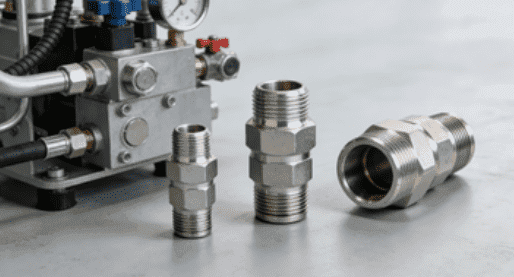
Pressure Rating and Safety Factor
- Burst pressure should be at least 3–4x working pressure
- Connectors must withstand both static and dynamic loads
- ISO 8434 defines pressure ratings for stainless steel hose fittings in hydraulic applications
Corrosion Resistance
- Material selection prevents pitting, oxidation, and fluid contamination
- Corrosion-resistant connectors reduce maintenance frequency by up to 30%
Vibration Fatigue Resistance
- Proper geometry distributes mechanical stress evenly
- Fatigue-resistant connectors prevent micro-cracking in high-vibration environments
- Real-world test: connectors installed on hydraulic excavators showed >2 million cycles without failure
Temperature Tolerance
- Connector selection should consider operating temperature ranges
- Standard stainless steel: -60°C to 400°C
- Extreme applications may require PTFE or silicone seals
Industrial Applications
Hydraulic Systems
- Used in excavators, loaders, presses, and industrial robots
- Key requirements: high-pressure rating, vibration resistance, leak-free sealing
Marine Industry
- Saltwater exposure demands high corrosion resistance
- 316 and duplex stainless steel connectors are standard for offshore hydraulic lines
Chemical Processing
- Handling acidic or alkaline fluids requires chemical compatibility
- ISO 8434 and SAE J516 standards guide safe connector selection
Food & Pharmaceutical Industry
- Hygienic surfaces and cleanability are critical
- Polished stainless steel with food-grade sealing materials ensures compliance
Procurement & Selection Checklist
- Determine fluid type and chemical compatibility
- Identify working pressure and required safety factor
- Evaluate environmental conditions (temperature, vibration, corrosive elements)
- Select material grade: 304, 316, duplex, or coated stainless steel
- Choose connector type: threaded, crimped, welded, push-to-connect
- Verify compliance with ISO, SAE, or EN standards
- Inspect production quality and certifications (ISO 9001, CE)
- Evaluate supplier after-sales support and global distribution network
Case Studies
Case Study 1: Offshore Hydraulic Platform
- Application: 316 stainless steel crimped connectors for saltwater-exposed hydraulic lines
- Outcome: zero corrosion failures over 18 months, improved uptime
Case Study 2: Chemical Plant Upgrade
- Replaced carbon steel connectors with duplex stainless steel
- Outcome: 30% reduction in maintenance cost, improved safety compliance
Case Study 3: Food Processing Line
- Polished 316 stainless steel push-to-connect fittings
- Outcome: hygiene compliance achieved, maintenance reduced by 40%
Standards and Certifications
- ISO 8434: Metallic tube fittings for hydraulic and pneumatic systems
- SAE J516: Hydraulic hose fittings performance
- EN 853 / EN 854: Steel wire braided hose assemblies
- ASME B31.3: Process piping and welded connector standards
- ISO 9001:2015: Quality management and traceability
Emerging Trends in Stainless Steel Hose Connectors

- Smart connectors with IoT sensors for leak detection and maintenance alerts
- Advanced coatings for improved chemical and abrasion resistance
- Lightweight alloy options for energy-efficient hydraulic systems
- Additive manufacturing prototypes for complex geometries in aerospace and robotics
Conclusion
A well-chosen stainless steel hose connector improves safety, operational reliability, and long-term cost efficiency. Understanding materials, pressure ratings, environmental conditions, and connector types allows industrial engineers and procurement managers to optimize system performance while complying with international standards.
Investing in high-quality connectors not only reduces maintenance costs but also prevents unplanned downtime, enhances system efficiency, and ensures compliance with industrial regulations. In 2026 and beyond, stainless steel connectors will remain a cornerstone of safe and efficient industrial fluid systems.
FAQ
What is a stainless steel hose connector used for?
Connects hoses in high-pressure, high-vibration, or corrosive fluid systems.
Which stainless steel grade is best for harsh chemicals?
316 or duplex stainless steel is recommended.
Can stainless steel connectors be reused?
Threaded types may be reusable; crimped and welded types are permanent.
How do I choose the right connector size?
Check hose inner diameter, pressure rating, and industry standard (ISO, SAE).
How long do these connectors last in industrial applications?
Properly installed and maintained, they can last 5–10 years, or longer in mild environments.