Key Takeaways for This Blog
- Understanding the fundamental concepts of quick connector hoses and standard hoses
- Detailed comparison of performance, durability, installation, and cost
- Insights into industries and real-world applications
- Tips for maintenance, inspection, and proper selection
- Guidance on international standards, certifications, and engineering best practices
- Practical FAQs for engineers, technicians, and procurement professionals
Introduction
In modern industrial operations, the right hose selection can impact system efficiency, operational safety, and long-term cost management. Quick connector hoses have revolutionized fluid handling systems, allowing rapid connection and disconnection, minimizing downtime, and ensuring leak-free performance. Meanwhile, traditional standard hoses continue to serve low-frequency maintenance systems with cost-effectiveness.
According to a 2025 report by Global Hydraulic Systems Association, over 60% of industrial maintenance teams have started replacing standard hoses with quick connector solutions due to their time-saving benefits and improved operational reliability. Selecting between these two types requires a deep understanding of engineering, fluid dynamics, material compatibility, and maintenance cycles.
Table of Contents
What is a Quick Connector Hose?
Concept and Design Principles
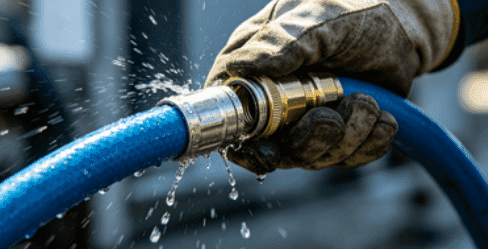
A quick connector hose is equipped with specialized couplers designed for tool-free connection. These hoses are engineered for efficiency in high-pressure hydraulic, pneumatic, and fluid systems.
- Couplers are precision-machined to prevent leaks
- O-ring seals and locking mechanisms ensure secure operation
- Available in multiple sizes and pressure ratings
Engineering Advantages
- Reduces system downtime by up to 50%
- Minimizes contamination risks in critical fluid systems
- Supports high-frequency connection cycles without material fatigue
Standard Hoses: A Traditional Approach
Concept and Design
Standard hoses use threaded or clamped connections that require manual tightening with tools. They are commonly used in systems with lower connection frequency or minimal maintenance needs.
- Compatible with a variety of fluids and gases
- Established design standards make them easy to source
- Limited in quick operational flexibility
Limitations
- Slower installation and disassembly
- Higher risk of operator error during assembly
- Less ideal for frequent maintenance or high-turnover industrial systems
Material Considerations: Quick Connector Hose vs Standard Hose
Common Materials
Quick connector hoses are often made from reinforced synthetic rubber, PTFE, or polyurethane, whereas standard hoses may use basic rubber, PVC, or metal-reinforced designs.
Material Comparison Table:
| Feature | Quick Connector Hose | Standard Hose |
|---|---|---|
| Base Material | Reinforced synthetic rubber, PTFE | Rubber, PVC, metal-reinforced |
| Operating Temperature Range | -40°C to 150°C | -20°C to 120°C |
| Chemical Resistance | High | Moderate |
| Flexibility | Excellent | Moderate |
| Longevity under frequent use | 5–7 years | 2–4 years |
Performance Metrics
Pressure Handling
Quick connector hoses are rated for higher operational pressures. For example:
- Industrial quick connector hoses: up to 6000 PSI
- Standard hoses: generally up to 3000 PSI
Flow Efficiency
Quick connector hoses maintain smoother internal pathways with minimal turbulence, reducing energy loss and optimizing pump efficiency.
Leakage Risk
Precision connectors and high-quality sealing O-rings reduce the risk of fluid leaks by up to 75% compared to standard hoses in repeated cycles.
Installation and Operational Efficiency
Installation Speed
Quick connector hoses allow tool-free assembly in seconds, reducing labor costs and downtime. Standard hoses can require 5–10 minutes per connection, particularly in tight industrial spaces.
Maintenance Impact
Systems with quick connector hoses experience fewer leaks, minimal contamination, and easier fluid changes.
Safety Benefits
Quick connectors reduce exposure to pressurized fluids during assembly, decreasing workplace accidents.
Industry Applications
Automotive and Heavy Machinery
- Rapid hydraulic tool changes
- Fluid system maintenance on large-scale vehicles
Manufacturing Plants
- Automated hydraulic lines in robotic assembly
- High-frequency maintenance lines
Agricultural and Irrigation Systems
- Quick replacement during seasonal operation peaks
- Reduces downtime in remote field conditions
Aerospace and High-Precision Equipment
- Ensures contamination-free fluid transfer
- Supports high-pressure and high-temperature requirements
Real-World Case Studies
Case Study 1: Automotive Hydraulic System
A leading automotive manufacturer replaced standard hoses with quick connector hoses for robotic assembly lines:
- Installation time decreased by 60%
- Leak incidents reduced by 80%
- Maintenance labor costs decreased by $50,000 annually
Case Study 2: Agricultural Sprayer Systems
A commercial farm upgraded to quick connector hoses for irrigation:
- Reduced hose replacement time from 45 minutes to 10 minutes
- Improved water delivery efficiency by 12%
Case Study 3: Industrial Pressurized Fluid Systems
A hydraulic press factory adopted quick connector hoses across all assembly lines:
- Downtime reduced by 40%
- Operator training time reduced by 30%
- System reliability improved under continuous operation
Selection Guidelines for Quick Connector Hoses
Pressure Rating Consideration
Always choose hoses rated above your system’s maximum operating pressure for safety.
Fluid Compatibility
Check chemical resistance charts to ensure hoses withstand the fluid types used.
Frequency of Use
High-turnover systems benefit more from quick connector hoses than standard hoses.
International Standards
- ISO 7241-1: Hydraulic quick coupling dimensions and pressure ratings
- SAE J518: Hydraulic hose and coupling specifications
Maintenance Best Practices
Inspection Protocol
- Check coupler integrity weekly
- Replace worn O-rings promptly
Cleaning and Storage
- Flush hoses after chemical use
- Store hoses without kinks or sharp bends
Lifecycle Management
- Rotate hoses based on connection cycles rather than time alone
- Maintain a log of hose use for predictive replacement
Conclusion
Quick connector hoses offer unparalleled efficiency, reduced leak risk, and operational safety for high-turnover industrial, automotive, and agricultural systems. Standard hoses still provide cost-effective solutions for occasional use or low-frequency applications. Selecting the right hose requires evaluating pressure ratings, fluid compatibility, frequency of use, and adherence to international standards.
By implementing quick connector hoses, organizations can streamline maintenance, optimize performance, and significantly reduce operational costs.
FAQ
Q1: Can I retrofit a quick connector hose to my standard system?
A: Yes, with proper adapters and couplers, but compatibility must be verified to avoid leaks.
Q2: How do I prevent connector wear in high-cycle applications?
A: Regular lubrication of O-rings and inspection of locking mechanisms reduces wear.
Q3: Are quick connector hoses more expensive upfront?
A: Slightly, but reduced downtime and maintenance costs offset initial investment over time.
Q4: How do I select the correct size quick connector hose?
A: Match the internal diameter and pressure rating to your system requirements, consulting manufacturer specifications.
Q5: Are quick connector hoses standardized globally?
A: Yes, most manufacturers adhere to ISO 7241-1 and SAE J518 standards for interchangeability.