Table of Contents
Introduction
In the intricate world of hydraulic systems, efficiency, safety, and reliability hinge on one critical factor: a leak-free operation. Even the slightest drip can lead to significant downtime, environmental hazards, and costly repairs, undermining the performance of your entire machinery. At the heart of achieving this impeccable integrity are the various types of hydraulic fittings. These seemingly small components act as the vital conduits, connecting pipes, hoses, pumps, valves, and actuators, ensuring hydraulic oil transmits power and pressure seamlessly without escape. Understanding the distinct characteristics and application scenarios of different types of hydraulic fittings is not just beneficial; it’s crucial for engineers, designers, and maintenance professionals aiming for ultimate system reliability and, most importantly, zero leaks.
This guide delves into the essential types of hydraulic fittings designed to prevent leakage, exploring their unique sealing mechanisms, material considerations, and best practices for installation and testing. By identifying the right types of hydraulic fittings for specific applications, you can significantly enhance system performance, reduce maintenance costs, and extend operational lifespans.
Understanding the Core types of hydraulic fittings for Leak-Free Operations
The choice of hydraulic fitting type profoundly impacts a system’s ability to remain leak-free. Each design employs a specific sealing principle, making it more suitable for certain pressures, temperatures, and dynamic conditions.
O-ring Face Seal (ORFS) types of hydraulic fittings: Ensuring Perfect Sealing
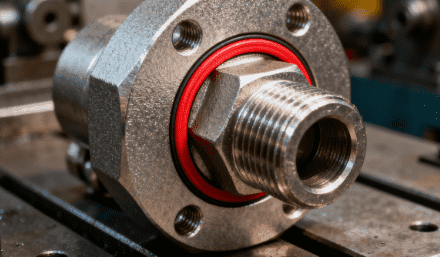
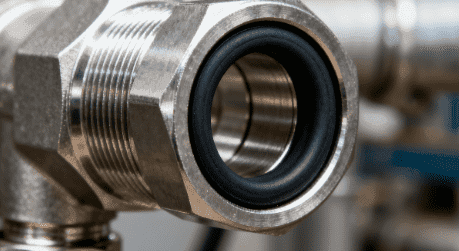
O-ring Face Seal (ORFS) fittings are renowned for their exceptional leak-free performance, particularly in medium-pressure applications (up to 25MPa). This type of hydraulic fitting utilizes a flat-faced connection with a captive O-ring. When the fitting is tightened, the O-ring is compressed between the flat face of the fitting and the mating port, creating a robust, elastomeric seal. The O-ring provides an initial seal, which is then reinforced by the metal-to-metal contact as tightening torque increases. This design makes them highly resistant to overtightening and vibration, mitigating one of the most common causes of leakage. To ensure zero leakage, it is critical to inspect the O-ring before installation for any damage or deformation.
24° Cone Seal types of hydraulic fittings: High-Pressure Zero-Leakage Secrets
The 24° cone seal types of hydraulic fittings are another excellent choice for high-pressure systems. These fittings achieve their seal through a metal-to-metal contact between the male fitting’s outer cone and the female port’s inner cone. An additional O-ring on the male fitting’s cone provides an initial, soft seal that is then amplified by the “lever effect” of the conical surfaces as the nut is tightened. This combination creates a very high contact pressure, theoretically resulting in a superior seal. Their design makes them particularly effective in applications where high pressure and vibration are common, ensuring long-term leak prevention. Similar to ORFS, pre-installation inspection of the O-ring is vital.
Flanged types of hydraulic fittings: The Robust Solution for Extreme Pressures
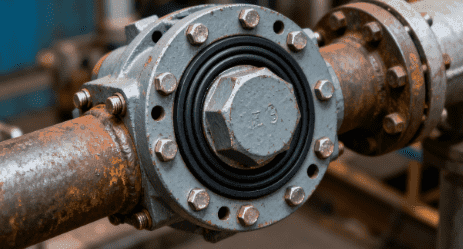
For extremely high-pressure environments, often exceeding 50MPa, flanged connection types of hydraulic fittings are the go-to solution. These fittings do not rely on threads for sealing. Instead, a flange head, secured by high-strength bolts, presses against a port, compressing an O-ring between the two surfaces. This setup creates an incredibly strong seal capable of withstanding significant pressures and vibrations, making them indispensable in heavy industrial machinery such as those found in metallurgy and mining. The immense pre-tightening force from the bolts ensures excellent sealing efficacy. Proper inspection of the O-ring on the flange head is essential during installation.
Stud End types of hydraulic fittings: Relying on O-Ring at the Thread Root
Stud end fittings are a type of hydraulic fitting where a separate O-ring is located at the root of the thread. When the fitting is screwed into a port, the O-ring compresses against the flat face of the port, forming the seal. This design is simple yet effective for ensuring a leak-free connection, primarily leveraging the O-ring’s deformation against the mating surface.
37° Flare types of hydraulic fittings: Tapered Seal for Long-Term Reliability
The 37° flare type of hydraulic fitting also uses a tapered metal-to-metal seal. The soft metal of a flared tube end is compressed between the fitting’s tapered seat and the nut. As the nut is tightened, the flared tube end conforms precisely to the fitting’s cone, creating a leak-tight seal. The conical action provides significant contact pressure, ensuring a reliable seal. These fittings are widely used due to their simplicity and effectiveness, especially in applications where flexibility in tube routing is needed.
Cartridge and Metal-to-Metal Seal types of hydraulic fittings: Precision and Endurance
While not always explicitly categorized as “7 crucial types” in the same vein as the others, two additional sealing methods deserve mention for their role in specialized leak-free applications. Cartridge connection fittings, often seen as “quick-change” designs, allow for rapid connection and disconnection, even under pressure, and are common in engineering machinery requiring frequent assembly and disassembly. Their design often incorporates seals to maintain integrity during these operations.
Metal-to-metal seal types of hydraulic fittings, without elastomeric O-rings, are critical for extreme conditions such as very high temperatures (above 150℃) and pressures (over 40MPa). These are typically found in demanding sectors like nuclear power and chemical processing, where the absence of rubber seals prevents degradation and ensures enduring leak-free performance. The precision in manufacturing and tight tolerances are paramount for achieving a perfect seal with these fittings.
Material Matters: Selecting types of hydraulic fittings for Corrosion and Durability
The material of your hydraulic fitting is as crucial as its design in preventing leaks and ensuring system longevity. Different types of hydraulic fittings materials offer varying degrees of resistance to corrosion, pressure, and specific hydraulic media.
• Carbon Steel: Often chosen for its high cost-effectiveness and excellent pressure resistance, carbon steel fittings are commonly used in general engineering machinery and hydraulic stations. However, without proper surface treatment, they are susceptible to rust, which can lead to disassembly difficulties and potential leaks after long-term use. Surface strengthening treatments like hard chromium plating (≥ 0.02mm thickness) or molybdenum disulfide lubricant coating can mitigate this, or for critical parts, selection of stainless steel is recommended.
• 316L Stainless Steel: For environments demanding superior corrosion resistance, such as chemical processing and semiconductor equipment, 316L stainless steel types of hydraulic fittings are indispensable. This material offers excellent resistance to corrosive media and can prevent issues like thread rusting, which is a common cause of leakage or difficult disassembly. Parts made from 316L stainless steel can withstand salt spray testing for over 720 hours without corrosion.
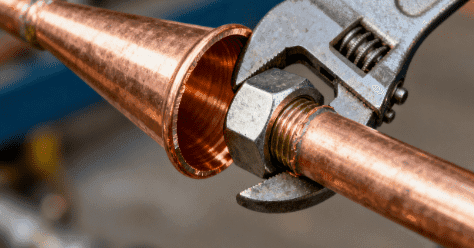
• Copper Alloy: With low electrical conductivity, copper alloy types of hydraulic fittings are suitable for explosion-proof scenarios, like oil fields, where flammable environments necessitate spark-free components.
Choosing the correct material ensures that the types of hydraulic fittings can withstand their operational environment, maintaining their sealing integrity over time.
| Type of Hydraulic Fitting | Sealing Mechanism | Key Features for Zero Leaks | Common Application |
| O-ring Face Seal (ORFS) | O-ring compression | Resists overtightening & vibration | General hydraulic equipment, medium pressure |
| 24° Cone Seal | Metal-to-metal + O-ring | High contact pressure, excellent for high pressure | High-pressure systems, industrial machinery |
| Flanged Fitting | O-ring compression by bolts | Extremely high-pressure resistance, robust | Metallurgy, mining machinery (≥50MPa) |
| Stud End Fitting | O-ring at thread root | Simple, effective O-ring seal | Various general applications |
| 37° Flare Fitting | Metal-to-metal taper | Conforms to tubing, reliable seal | General hydraulics, simple installations |
| Metal-to-Metal Seal | Direct metal contact | No elastomer, ideal for extreme temperatures/pressures | Nuclear, chemical, extreme environments |
| DIN Card Sleeve Connector | Compression ring deformation | High precision, strong vibration resistance | Aviation, precision machine tools |
Installation and Testing: Critical Steps for Zero-Leakage types of hydraulic fittings
Even the highest quality types of hydraulic fittings can leak if not installed or tested correctly. Precision in these stages is paramount for achieving and maintaining zero leakage.
Preventing Thread Misalignment and Ensuring Accurate Assembly
Thread misalignment is a significant cause of hydraulic oil leakage in multi-joint systems. To combat this, standardized control measures are essential, such as establishing a thread identification system (e.g., laser printing “NPT-1/2-28UNF” on the fitting) and providing detailed size comparison tables that include ISO/ANSI/DIN standard conversion parameters. Furthermore, precision detection equipment, like electronic thread gauges (accuracy ± 0.01mm) to verify tooth profile angles (60° or 55°), and ensuring the tube body ovality is ≤ 0.05mm, are crucial.
Professional installation guidance is equally important. Employing the torque step method (initial torque 50% → compound torque 100% → final torque 120%) and using a hydraulic torque wrench with high accuracy (± 3%) in conjunction with a fixed torque socket can ensure correct tightening and prevent leaks. Pre-installation cleaning of welding slag and oil stains with kerosene or anhydrous ethanol is also critical to ensure the sealing surface is free of impurities.
Strengthening Testing Verification for High-Pressure types of hydraulic fittings
For high-voltage systems, the risk of joint rupture and subsequent shutdown due to leakage is a major concern. Accurate selection of types of hydraulic fittings is the first step: the working pressure should be ≤ 80% of the joint’s nominal pressure, with an additional 30% margin for impact conditions, and pressure adjusted by temperature coefficients for high-temperature environments.
Beyond selection, robust testing is vital. Providing third-party pressure pulse test reports (e.g., no leakage after 100,000 0.5Hz square wave tests) offers concrete proof of reliability. Structural optimization, such as adopting a double-layer sealing structure (main seal + buffer ring) to absorb pressure fluctuations and using thickened pipe wall materials, significantly enhances safety and prevents leaks. Adding safety relief valves in critical areas can also act as an additional safeguard.
Customization and Quality: Tailoring types of hydraulic fittings for Specific Demands
Many B2B buyers require specialized hydraulic system components beyond standard offerings. The ability to provide customized types of hydraulic fittings that meet unique specifications while maintaining zero-leakage performance is a significant advantage. Customization services encompass product design, manufacturing, and performance testing, delivering solutions that improve system efficiency, reduce maintenance costs, and shorten project cycles.
Quality assurance for types of hydraulic fittings is non-negotiable for achieving zero leaks. Products that pass international certifications like IP68 waterproof, CE, UL, and ROHS, and are manufactured following stringent standards such as GB/T, ASME, and DIN, provide confidence in their durability and leak-prevention capabilities. Advanced manufacturing processes like precision forging and laser welding further ensure the accuracy and longevity of types of hydraulic fittings.
Conclusion
Achieving zero leaks in hydraulic systems is a critical pursuit that directly impacts operational efficiency, safety, and cost-effectiveness. The selection and proper installation of the right types of hydraulic fittings are fundamental to this goal. From the reliable O-ring face seals and robust flanged connections to the precision of cone seals and the specific material considerations, each type of hydraulic fitting offers distinct advantages in preventing hydraulic fluid loss.
By focusing on appropriate material selection, adhering to meticulous installation procedures, conducting rigorous testing, and leveraging customization capabilities, businesses can significantly reduce the risk of leakage. Investing in high-quality, expertly designed types of hydraulic fittings is not merely a purchase; it’s a strategic decision that safeguards system integrity, minimizes downtime, and ensures long-term operational success, paving the way for truly leak-free hydraulic performance.
FAQ
Q1: How can I completely solve the frequent leakage of hydraulic joints after installation?
A1: To solve frequent leakage, you should replace the hydraulic joint with a new one. Before installation, thoroughly clean the welding slag and oil stains inside the pipe with kerosene or anhydrous ethanol to ensure that the sealing surface is free of impurities. This ensures a clean and effective seal.
Q2: How do I prevent rust on hydraulic fitting threads, which can cause disassembly difficulty and potential leaks after long-term use?
A2: You can prevent rust by applying surface strengthening treatments, such as plating threads with hard chromium (thickness ≥ 0.02mm) or coating them with molybdenum disulfide lubricant (suitable for -20℃ to 200℃ working conditions). For critical parts, use stainless steel material (e.g., 316L), which has superior corrosion resistance. For storage, install moisture-proof silicone bags and apply rust-proof oil to contact surfaces, and regularly check thread cleanliness. For rusted threads, use WD-40 penetrant and a nylon brush, or cut off severely corroded sections.
Q3: How should I choose types of hydraulic fittings to avoid joint rupture in high-pressure systems?
A3: To avoid rupture, ensure the working pressure is ≤ 80% of the joint’s nominal pressure (e.g., use a 50MPa grade joint for a 35MPa system). Add an additional 30% margin for impact conditions and convert pressure based on the temperature coefficient in high-temperature environments. Strengthen testing verification by requiring third-party pressure pulse test reports (e.g., no leakage after 100,000 0.5Hz square wave tests). Structural optimizations like double-layer sealing and thickened pipe walls (e.g., high-pressure hose joint SC5S outer diameter ≥ 25mm) also enhance safety.
Q4: What measures can prevent hydraulic oil leakage caused by thread misalignment during multi-joint system installation?
A4: Implement standardized control measures like a thread identification system (e.g., laser printing “NPT-1/2-28UNF” on the joint) and provide a size comparison table with ISO/ANSI/DIN standard conversion parameters. Use precision detection equipment like electronic thread gauges (accuracy ± 0.01mm) to check tooth profile angles and ensure tube body ovality is ≤ 0.05mm. For installation, adopt the torque step method (initial 50% → compound 100% → final 120%) and use a hydraulic torque wrench with high accuracy (± 3%).