Table of Contents
Introduction
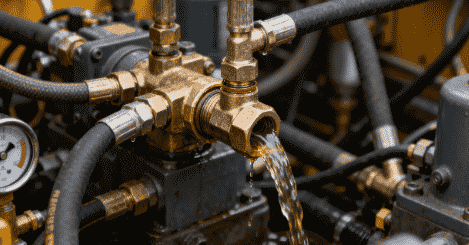
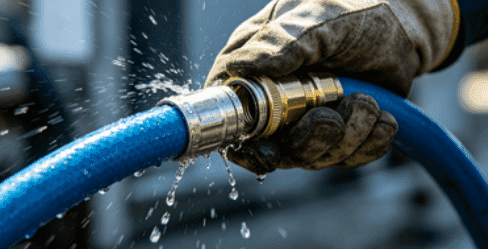
Hydraulic systems are the backbone of countless industrial applications, from heavy machinery to manufacturing processes. At the heart of these powerful systems lies a critical, yet often overlooked, component: the hydraulic hose connector. These vital fittings are responsible for securely linking hydraulic hoses to other system components, ensuring the seamless transfer of hydraulic energy, power, and pressure. Without the right hydraulic hose connectors, even the most advanced hydraulic systems can suffer from inefficiencies, dangerous leaks, or catastrophic failures, leading to costly downtime and safety hazards.
The process of selecting the optimal hydraulic hose connector is far more nuanced than simply picking a size. It requires a deep understanding of your system’s specific demands, environmental conditions, and the various types of connectors available. This ultimate guide is designed to empower you with the knowledge needed to make informed decisions, guaranteeing that your hydraulic system operates with zero leakage, ultra-long durability, and peak efficiency. By following our comprehensive 6-step approach, you will learn how to choose the best hydraulic hose connectors that meet your unique requirements, enhance system performance, and significantly extend operational longevity.
Understanding the Role of Hydraulic Hose Connectors
Hydraulic hose connectors serve as indispensable conduits, forming the crucial interface between hydraulic hoses and other essential components such as pumps, valves, and actuators. Their primary function is to facilitate the flow of hydraulic fluid, thereby transmitting power and pressure throughout the system. Beyond simple connection, these connectors must exhibit exceptional sealing integrity and stability to prevent any loss of hydraulic medium, which could compromise performance or lead to environmental and safety issues.
The importance of selecting high-performance hydraulic hose connectors cannot be overstated. Inferior or mismatched connectors are a common source of system vulnerabilities. They can lead to frequent leakage, which not only wastes expensive hydraulic fluid but also reduces system pressure and efficiency. Moreover, inadequate connectors can suffer premature rupture, especially in high-pressure applications, posing significant safety risks and causing unexpected system shutdowns. Even minor issues like thread misalignment during installation can initiate leaks and necessitate complex repairs.
Therefore, investing time in understanding and correctly choosing your hydraulic hose connectors is a direct investment in the reliability, safety, and operational efficiency of your entire hydraulic infrastructure. Professional manufacturers adhere to strict quality management systems and utilize the best materials to produce reliable hydraulic joints, aiming for customer satisfaction and offering customized solutions.
The 6-Step Ultimate Guide to Choosing the Best Hydraulic Hose Connectors
Navigating the vast array of hydraulic hose connectors requires a structured approach. Here are six essential steps to guide you in making the optimal selection for your hydraulic system.
Step 1: Assess System Pressure and Flow Requirements
The first and most critical step involves a thorough evaluation of your hydraulic system’s operational parameters. Understanding the pressure and flow rate is fundamental to preventing failures and ensuring efficient operation.
- Working Pressure: Always ensure that the nominal pressure of the chosen hydraulic joint is significantly higher than your system’s working pressure. A good rule of thumb is that the working pressure should be no more than 80% of the joint’s nominal pressure. For instance, if your system operates at 35MPa, a joint rated for 50MPa or higher should be selected.
- Impact Conditions: Hydraulic systems often experience pressure spikes and pulsations. For conditions involving significant impact, it’s advisable to add an additional 30% margin to your pressure calculations.
- Temperature Considerations: High-temperature environments can degrade the performance of hydraulic hose connectors. The pressure rating of a connector may need to be de-rated based on temperature coefficients, typically reduced by 20% for every 100°C increase in operating temperature.
- Flow Rate: While hydraulic hose connectors are designed to facilitate flow, their internal diameter and design can influence flow rate. Choose connectors with an internal diameter that matches or slightly exceeds the hose to minimize restrictions and pressure drops. Ensure that the connector’s geometry supports the required flow without creating excessive turbulence, which can lead to heat generation and energy loss.
Step 2: Identify Connection Types and Standards

Hydraulic hose connectors come in various types and adhere to numerous international standards. Matching these correctly is paramount for compatibility, sealing, and performance.
- Hose-to-Fitting Connection: This refers to how the connector attaches to the hydraulic hose itself.
- Crimped Hydraulic Hose Connectors: These are the most common and widely used type.
- Integrated Crimped Connectors: Consist of a fitting core and an outer sleeve formed as a single unit, simplifying production.
- Crimped Hydraulic Hose Connectors: These are the most common and widely used type.
- Split Crimped Connectors: Composed of a fitting core, sleeve, and nut, offering greater flexibility and suitability for various hose diameters and high-pressure environments.
- Crimping Methods: The method of crimping also depends on the hose type and pressure environment.
- Non-peeling crimping: The outer rubber layer of the hose remains intact, typically for low-pressure applications.
- Crimping Methods: The method of crimping also depends on the hose type and pressure environment.
- Outer-peeling crimping: The outer rubber layer is removed, allowing the fitting core to directly contact the hose’s steel wire or fiber layer, suitable for medium to high-pressure systems.
- Inner and Outer Peeling Crimping: Both inner and outer rubber layers are removed for full contact with the metallic wire layers, ideal for high-pressure and extreme operating conditions, providing maximum sealing and strength.
- Fitting-to-System Connection: This describes how the hydraulic hose connector attaches to other components of the hydraulic system.
- Threaded Connections: These are very common and can be metric, imperial (British), or American standards. Examples include:
- NPTF Tapered Thread Joints: Dry seal, 60° tooth angle, primarily for fuel lines, not interchangeable with BSPT.
- JIC 37° Cone Seat Joints: Used for high-pressure hydraulic lines, straight threads with a 37° cone seat for sealing.
- SAE 45° Cone Seat Joints: Typically for soft copper tubing, low-pressure applications (e.g., fuel and refrigeration lines), straight threads with a 45° cone seat for sealing.
- O-ring Face Seal Joints: Straight threads with an O-ring on the male connector sealing against a flat face on the female connector.
- O-ring Planar Seal Fixed Joints: Sealing occurs when an O-ring on the male connector contacts a flat surface on the female connector, offering excellent leak control.
- Ermeto-style Compression Fittings: Consist of a straight thread male connector with a 24° cone seat, mating with a ferrule and nut, sealing between the ferrule and the cone seat.
- Flange Connections: Often used in high-pressure, large-flow hydraulic systems. These involve a flange, bolts, and a gasket for connection, allowing for robust connection and easy disassembly. SAE J518 (SAE 61 and 62 type) four-bolt split flanges are widely used.
- Articulated Connections: Designed for applications requiring flexible movement or torque absorption.
- Quick Connectors: Ideal for situations demanding frequent connection and disconnection. They feature simple push-pull mechanisms, often with internal and external ring seals to maintain integrity under high pressure.
- Fitting Shapes: Beyond connection type, the shape of the hydraulic hose connector influences pipe routing.
- Straight Connectors: Used for linear connections between pipes or hydraulic components, simple and easy to install where direction remains constant.
- Elbow Connectors: Available in various angles (e.g., 45°, 90°) to change the direction of piping, crucial for space-constrained layouts or directional changes in flow.
Selecting the correct standard is vital to avoid thread misalignment and ensure proper sealing. Professional guidance includes establishing a thread identification system and providing size comparison tables for ISO/ANSI/DIN standard conversion parameters.
| Connection Type (Fitting-to-System) | Sealing Method | Typical Applications | Advantages | Considerations |
| NPTF Tapered Thread | Metal-to-metal dry seal (tapered threads) | Fuel lines, general industrial applications | Cost-effective, widely available | Not interchangeable with BSPT, thread sealant often required |
| JIC 37° Cone Seat | Metal-to-metal (37° cone seat) | High-pressure hydraulic lines, automotive, aerospace | Reliable sealing, good for vibration | Requires precise cone formation |
| SAE 45° Cone Seat | Metal-to-metal (45° cone seat) | Low-pressure fuel and refrigeration lines, soft copper tubing | Easy to machine, suitable for softer materials | Lower pressure rating than JIC |
| O-ring Face Seal (ORFS) | O-ring compression against flat face | High-pressure hydraulic systems, minimizes leakage | Excellent leak-free performance, reusable | O-ring can be damaged if over-tightened |
| O-ring Flange (SAE J518) | O-ring with bolted flange | High-pressure, large diameter lines, pumps, motors | High pressure capacity, robust, easy disassembly | Requires flange surface preparation |
| Ermeto-style (Compression) | Ferrule bite into tube, 24° cone seat | High-pressure tubing, often in Europe | High pressure, no flaring or welding needed | Proper assembly crucial for seal integrity |
| Quick Connectors | Internal/external ring seals (push-pull) | Frequent connection/disconnection, test points | Rapid connection/disconnection, versatile | Potential for pressure drop, maintenance needed |
Step 3: Evaluate Material and Durability
The material of your hydraulic hose connector directly impacts its longevity, resistance to corrosion, and ability to withstand harsh operating environments.
- High-Quality Materials: Reputable manufacturers insist on using the best materials, such as specialized stainless steel, to ensure the reliability and performance of their products. Inferior materials can lead to premature wear, weakening, and eventual failure.
- Corrosion Resistance: For applications exposed to moisture, chemicals, or extreme temperatures, corrosion resistance is paramount. Connectors made from materials like 316L stainless steel offer superior protection against corrosion, with some even passing salt spray tests for over 720 hours without corrosion. Surface treatments such as hard chromium plating or molybdenum disulfide lubricants can further enhance resistance to rust and wear.
- Certifications: Look for hydraulic hose connectors that have passed relevant international certifications such as IP68 waterproof, CE, UL, and ROHS. These certifications are a testament to the product’s quality, durability, and compliance with safety and environmental standards.
- Craftsmanship: Advanced manufacturing processes like precision forging and laser welding are indicators of superior craftsmanship, which contribute to the accuracy and durability of the finished product.
Step 4: Consider Sealing Mechanisms
Effective sealing is the cornerstone of any reliable hydraulic system, preventing leakage and maintaining system pressure. The choice of sealing mechanism in your hydraulic hose connector is critical.
- Zero Leakage Connection: The ultimate goal is a zero-leakage connection, which implies meticulous design and robust sealing elements. Connectors with advanced sealing technologies are designed to achieve this, preventing fluid loss even under extreme conditions.
- O-ring Technology: O-rings are widely used in various hydraulic hose connectors, including O-ring face seal and O-ring planar seal types, providing excellent elastic seals to control leakage.
- Cone Seals: Many threaded connectors, such as JIC 37° and SAE 45° cone seat designs, rely on metal-to-metal contact at a precisely machined cone for sealing. The Ermeto-style connector uses a 24° cone seat in conjunction with a ferrule for its sealing mechanism.
- Double-Layer Sealing: For high-pressure systems, structural optimization suggestions include adopting a double-layer sealing structure, which incorporates a main seal and a buffer ring. This design helps to absorb pressure fluctuations and enhances overall sealing reliability.
- Preventing Thread Misalignment: Even with the best sealing mechanisms, improper installation can lead to leaks. Thread misalignment is a common cause of hydraulic oil leakage in multi-joint systems. Utilizing precision detection equipment like electronic thread gauges (accuracy ± 0.01mm) and adhering to professional installation guidance, such as the torque step method (initial torque 50% → compound torque 100% → final torque 120%), are crucial. The use of a hydraulic torque wrench with high accuracy (± 3%) is recommended for consistent and correct tightening.
Step 5: Prioritize Quality Control and Testing
The reliability of hydraulic hose connectors is directly linked to the manufacturer’s commitment to quality control and rigorous testing.
- Quality Management System: A professional company will strictly test its products according to a comprehensive quality management system. This ensures that every hydraulic hose connector meets specified performance and safety standards before it reaches the customer.
- Manufacturing and Testing System: Look for manufacturers with a comprehensive manufacturing and testing system that ensures product quality throughout the production process. This includes everything from raw material inspection to final product verification.
- Third-Party Verification: For critical applications, especially those involving high pressure, demand third-party pressure pulse test reports. These reports confirm that the connectors can withstand cyclical pressure changes without leakage, such as passing 100,000 0.5Hz square wave tests.
- Adherence to Standards: Ensure the manufacturing process strictly follows established international and national standards such as GB/T, ASME, and DIN. This commitment to standards provides an assurance of consistent quality and interoperability.
- Safety Features: Consider connectors that allow for the addition of safety relief valves in critical areas, set at a value less than 10% of the maximum system pressure, to prevent over-pressurization and potential ruptures.
Step 6: Seek Customization and Technical Support
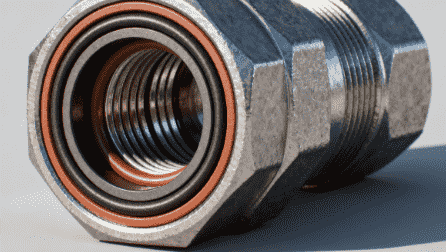
Every hydraulic system has unique requirements. Partnering with a manufacturer that offers customization and robust technical support can significantly improve system efficiency and reduce project cycles.
- Tailored Solutions: A professional connector manufacturer should be capable of tailoring hydraulic hose connectors according to specific customer needs. This includes providing specialized custom stainless steel hydraulic components that leverage strong engineering capabilities.
- Independent Development: A professional design team with independent development capabilities can innovate and provide solutions for complex or unusual hydraulic system component needs.
- Full Lifecycle Support: Look for manufacturers that offer full lifecycle technical support and rapid service response. This encompasses product design, manufacturing, performance testing, and after-sales service, helping clients not only solve problems but also optimize system efficiency and reduce maintenance costs.
- Cooperation and Services: Companies that cooperate with well-known enterprises and offer OEM/ODM services demonstrate their capacity to handle diverse and demanding client requirements. Customer testimonials often highlight the importance of responsive service and the ability to solve long-standing problems like joint leakage.
Can hydraulic hose connectors restrict the flow rate?
Yes, hydraulic hose connectors can indeed restrict the flow rate within a hydraulic system if not properly selected or installed. This restriction, also known as a pressure drop, can lead to decreased system efficiency, increased heat generation, and potential damage to components. Several factors contribute to this:
- Internal Diameter Mismatch: If the internal diameter of the hydraulic hose connector is significantly smaller than the internal diameter of the hydraulic hose it connects, it will act as a bottleneck, restricting the fluid’s path. Fluid must accelerate to pass through the narrower section and then decelerate, which consumes energy and causes a pressure drop.
- Internal Geometry and Design: The internal passages of hydraulic hose connectors, especially those with complex designs or sharp turns (like some elbow connectors), can create turbulence. Turbulent flow is less efficient than laminar flow and results in a greater loss of energy, effectively restricting the flow rate. Poorly designed internal features, such as sharp edges or abrupt changes in cross-section, exacerbate this issue.
- Incorrect Crimping or Assembly: If the hydraulic hose connector is not crimped correctly onto the hose, it can deform the hose’s internal lining, reducing the effective internal diameter. Similarly, overtightening threaded connections or using incorrect assembly techniques can constrict the fluid path.
- Contamination and Debris: Impurities such as welding slag or oil stains inside the pipe or connector, if not thoroughly cleaned before installation, can accumulate and partially block the flow path, causing significant restriction over time. This is why thorough cleaning is a recommended step to prevent frequent leakage and ensure optimal flow.
- Excessive Bends and Angles: While elbow connectors are necessary to change the direction of piping, using too many or choosing connectors with unnecessarily sharp angles (e.g., a 90° elbow where a 45° would suffice) can collectively increase flow resistance throughout the system.
- Structural Optimization: To mitigate the risk of flow restriction and potential rupture in high-pressure systems, structural optimization suggestions include using thickened pipe wall material. For example, a high-pressure hose joint like SC5S with an outer diameter of ≥ 25mm is recommended to ensure robust flow and pressure handling.
The consequences of flow restriction include reduced power output from hydraulic actuators, increased energy consumption, premature wear of hydraulic pumps due to cavitation, and excessive heat buildup in the hydraulic fluid, which can degrade seals and the fluid itself. Therefore, careful consideration of a hydraulic hose connector’s internal design and proper sizing relative to the hose is crucial for maintaining optimal flow rates and system performance.
Which way to unscrew hydraulic connector hose?
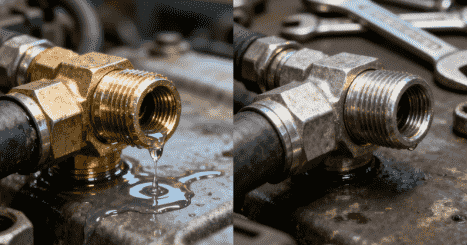
When it comes to unscrewing a hydraulic connector hose, the general rule of “lefty loosy, righty tighty” applies to most standard threaded connections. This means you will turn the connector counter-clockwise to loosen and remove it, and clockwise to tighten it. However, the actual process can sometimes be more challenging due to various factors that can bind the threads.
Here’s a breakdown of the process and common challenges
General Procedure
- Depressurize the System Safely: Before attempting any work on hydraulic components, ensure the hydraulic system is completely shut down and all residual pressure is relieved. This is paramount for safety.
- Clean the Area: Remove any dirt, grease, or debris around the connector. This helps prevent contaminants from entering the system and allows for a better grip with tools.
- Use Appropriate Tools: Always use the correct size open-end or box-end wrenches. Adjustable wrenches can be used but carry a higher risk of stripping the fastener if not used carefully. For larger connectors, a pipe wrench might be necessary, but this should be avoided if possible as it can damage the fitting’s exterior.
- Counter-Clockwise Rotation: Apply steady, firm pressure in a counter-clockwise direction to loosen the fitting. If it’s particularly tight, a sharp, quick jerk can sometimes be more effective than continuous pressure.
Common Challenges and Solutions
1. Rusted or Corroded Threads:
◦ Problem: Long-term use, especially in harsh environments, can lead to rusting of connector threads, making disassembly extremely difficult and potentially damaging the threads.
◦ Solution:
▪ Penetrating Oil: Apply a high-quality penetrating oil, such as WD-40 penetrant, to the rusted threads. Allow it to soak for a significant period (e.g., 15-30 minutes, or even longer for severe rust) to soften the rust.
▪ Gentle Tapping: Lightly tap the connector with a hammer (avoiding deformation) to help the penetrating oil work its way into the threads and break the rust bond.
▪ Nylon Brush: Once softened, try cleaning the threads with a nylon brush to remove loose rust particles.
▪ Heat (Cautiously): In extreme cases, carefully applying heat with a torch can expand the outer component, potentially loosening the bond. However, this carries risks and should only be done by experienced personnel, ensuring no flammable materials are nearby and the system is completely drained.
▪ Emergency Response: If corrosion is severe and the connector cannot be salvaged, the damaged section may need to be cut off and the pipe re-tapped.
◦ Prevention: Surface strengthening treatments like hard chromium plating or molybdenum disulfide lubricant coatings can prevent rust. Using stainless steel (e.g., 316L) for key parts is also effective. During storage, install moisture-proof silicone bags and apply rust-proof oil. Regularly check and clean threads with high-pressure gas to prevent impurity accumulation.
2. Over-tightened Connectors:
◦ Problem: Connectors that were overtightened during installation can be extremely difficult to loosen and may suffer from deformed threads.
◦ Solution: Similar to rusted threads, penetrating oil can sometimes help. Applying more leverage with a longer wrench or breaker bar, cautiously, may be necessary. The risk of stripping or damaging the fitting is higher in these cases.
◦ Prevention: Always use a hydraulic torque wrench with an accuracy of ± 3% and follow the manufacturer’s recommended torque specifications and torque step methods for installation.
3. Thread Misalignment or Cross-threading:
◦ Problem: If the threads were improperly aligned during installation, they can become cross-threaded, making both tightening and loosening very difficult and damaging.
◦ Solution: Cross-threaded connectors are often permanently damaged and may need to be replaced. Attempting to force them apart can worsen the damage.
◦ Prevention: Professional installation guidance is crucial. Establish a thread identification system (e.g., laser printing “NPT-1/2-28UNF” on the joint) and use a size comparison table. Employ precision detection equipment like electronic thread gauges to verify tooth profile angles and ovality. Always ensure threads are properly engaged by hand before applying any torque with a wrench.
Safety Reminder: Always wear appropriate personal protective equipment (PPE), including safety glasses and gloves, when working with hydraulic systems. Never work on a pressurized system.
Conclusion
The selection of hydraulic hose connectors is a pivotal decision that directly impacts the safety, efficiency, and longevity of your hydraulic systems. It is not merely a matter of finding a compatible size but involves a detailed consideration of pressure ratings, flow characteristics, connection types, material durability, sealing mechanisms, and the manufacturer’s commitment to quality control and technical support. By diligently following the 6-step ultimate guide presented, you can make informed choices that mitigate risks such as leaks, ruptures, and flow restrictions, ultimately ensuring a zero-leakage connection and ultra-long durability for your machinery.
Prioritizing high-quality hydraulic hose connectors from reputable manufacturers, who employ advanced craftsmanship, adhere to strict testing standards, and offer comprehensive support, is an investment that pays dividends in terms of reduced maintenance costs, enhanced system performance, and a safer operating environment. Remember, the “best” connector is one that is perfectly matched to your system’s specific demands and installed with precision, laying the foundation for a reliable and efficient hydraulic future.
FAQ
Q1: How can I completely solve frequent leakage of hydraulic joints after installation?
A: To eliminate frequent leakage, you should replace the problematic hydraulic joint with a new, high-quality one. Crucially, before installing the new joint, thoroughly clean the inside of the pipe with kerosene or anhydrous ethanol to remove any welding slag or oil stains, ensuring the sealing surface is entirely free of impurities. This meticulous cleaning is vital for a perfect seal.
Q2: How can I choose hydraulic hose connectors to avoid the risk of system shutdown due to joint rupture in high-pressure systems?
A: Accurate selection is key. Ensure the working pressure of your system is no more than 80% of the connector’s nominal pressure. For systems with impact conditions, add an additional 30% pressure margin. Also, account for high-temperature environments by converting pressure based on temperature coefficients (reducing by 20% for every 100°C). Strengthen verification by requesting third-party pressure pulse test reports (e.g., no leakage after 100,000 0.5Hz square wave tests). Consider structural optimizations like adopting a double-layer sealing structure (main seal + buffer ring) and choosing connectors with thickened pipe wall material.
Q3: How do I avoid hydraulic oil leakage caused by thread misalignment during the installation of multi-joint systems?
A: Implement standardized control measures such as an established thread identification system (e.g., laser printing thread specifications on the joint) and provide a size comparison table (including ISO/ANSI/DIN standard conversion parameters). Use precision detection equipment like electronic thread gauges (accuracy ± 0.01mm) to verify the tooth profile angle and ensure the ovality of the tube body is ≤ 0.05mm. Follow professional installation guidance, such as the torque step method (initial torque 50% → compound torque 100% → final torque 120%), and use a hydraulic torque wrench with high accuracy (± 3%) in conjunction with a fixed torque socket.
Q4: What causes difficulty in disassembling rusted hydraulic hose connector threads, and how can it be prevented?
A: Difficulty in disassembly is typically caused by corrosion and rust on the connector threads after long-term use. To prevent this, consider surface strengthening treatments like plating with hard chromium (thickness ≥ 0.02mm) or coating with molybdenum disulfide lubricant. For critical parts, using stainless steel material (such as 316L) which offers high corrosion resistance is recommended. For rust prevention management, install moisture-proof silicone bags during storage and apply rust-proof oil to contact surfaces. Regularly check and clean the threads (e.g., by blowing with high-pressure gas to prevent impurity accumulation). If threads are already rusted, they can be softened with WD-40 penetrant and cleaned with a nylon brush; severe corrosion may require cutting off the damaged section and re-tapping.