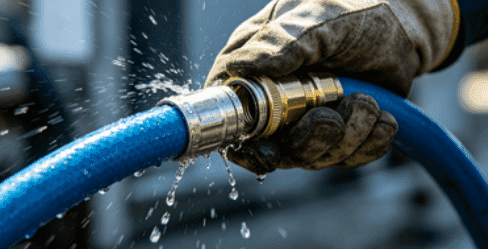
Hydraulic hose couplings are the backbone of reliable fluid power systems, connecting pumps, valves, and cylinders in countless industrial and mobile applications. Despite their small size, poor maintenance of couplings can result in catastrophic failures, from costly hydraulic fluid leaks to complete equipment shutdowns.
With the rise of automation, heavy machinery, and mobile hydraulics in industries such as construction, mining, and agriculture, ensuring that hydraulic hose couplings function correctly has never been more critical. According to a study by the Hydraulic Institute, over 30% of hydraulic system failures are linked to improper hose and coupling maintenance. Regular inspections, cleaning, and preventive care not only prolong hose life but also safeguard operational efficiency and workplace safety.
Table of Contents
Key Points You Will Learn in This Blog
- Overview of hydraulic hose coupling types and their industry applications
- Step-by-step maintenance procedures to prevent leaks and failures
- Comparison of materials and designs for long-term performance
- Safety standards and operational best practices
- Cost-benefit analysis of proactive maintenance
- Expert tips for extending the lifespan of couplings and hoses
- FAQ section addressing common and advanced maintenance concerns
Understanding Hydraulic Hose Couplings
What Are Hydraulic Hose Couplings?
Hydraulic hose couplings are mechanical connectors that join hoses to pumps, cylinders, and valves in hydraulic systems. They are designed to withstand high pressures, maintain leak-free connections, and allow quick assembly or disassembly depending on the design.
Key Functions of Hydraulic Hose Couplings:
- Ensure high-pressure fluid transfer without leaks
- Facilitate modular and replaceable hydraulic connections
- Reduce downtime with efficient coupling replacement
Types of Hydraulic Hose Couplings
Threaded Couplings
Threaded couplings provide a permanent and highly secure connection. They are ideal for high-pressure systems where leak prevention is critical. These couplings often use standardized threads (e.g., BSP, NPT) and require wrenches for assembly.
Advantages:
- High leak resistance
- Suitable for heavy-duty applications
- Durable under fluctuating pressures
Limitations:
- Require tools for installation and removal
- Slower replacement during maintenance
Quick-Connect Couplings
Quick-connect couplings allow rapid tool-free connection and disconnection, making them suitable for systems requiring frequent hose changes. They typically include a locking mechanism to prevent accidental release.
Advantages:
- Easy and fast to operate
- Minimize system downtime
- Compatible with various hose diameters
Limitations:
- Slightly lower pressure ratings than threaded designs
- Susceptible to dirt and debris if not cleaned properly
Flange Couplings
Flange couplings are commonly used in large-diameter hydraulic systems where high flow rates are needed. They provide strong mechanical stability and precise alignment.
Advantages:
- Excellent for high-flow, high-pressure systems
- Easy alignment during assembly
- Robust for industrial applications
Limitations:
- Require bolting and gasket installation
- Heavier and bulkier than other types
Maintenance Practices for Hydraulic Hose Couplings
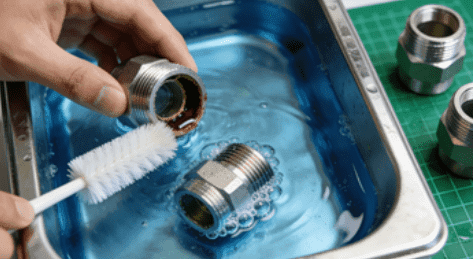
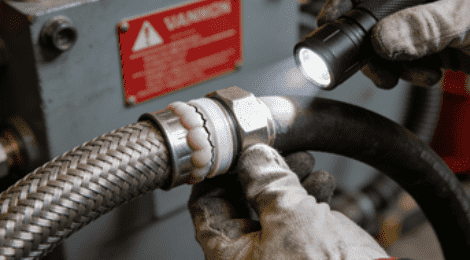
Daily Visual Inspection
- Inspect hoses and couplings for wear, cracks, abrasions, or corrosion
- Check for oil leakage or seepage around connections
- Monitor hose bends and strain points to prevent kinking or twisting
According to Parker Hannifin, even minor leaks can escalate into system pressure drops and hydraulic inefficiency if left unchecked. Daily inspection reduces the risk of unexpected downtime.
Cleaning and Lubrication
- Clean threads and seals with lint-free cloths to remove debris
- Apply manufacturer-approved lubricants to quick-connect components
- Avoid excessive lubrication, which may attract dust and contaminants
Periodic Pressure Testing
- Conduct hydrostatic testing to ensure couplings withstand rated operating pressures
- Record test pressures and flow rates for compliance and preventive maintenance
- Identify weak points before catastrophic failure occurs
Example: A study in the Journal of Hydraulic Engineering found that couplings maintained with periodic pressure testing had 40% fewer failures over a 12-month period compared to couplings without routine testing.
Torque Verification
- Verify that threaded couplings meet manufacturer-specified torque values
- Over-tightening can damage threads and seals; under-tightening can cause leaks
- Use calibrated torque wrenches for consistency
Material Selection and Design Comparisons
Common Coupling Materials
| Material | Advantages | Limitations |
|---|---|---|
| Steel | High strength and durability | Heavier, corrosion-prone without coating |
| Stainless Steel | Corrosion-resistant, long lifespan | Higher cost |
| Brass | Chemically resistant, easy to machine | Lower pressure tolerance |
| Aluminum | Lightweight, easy handling | Less durable under high pressure |
Design Comparisons
- Quick-Connect vs Threaded: Quick-connect couplings save labor and downtime but have slightly lower pressure limits. Threaded couplings are better for long-term high-pressure operations.
- Reusable vs Permanent: Reusable couplings allow cost-effective maintenance, while permanent couplings provide maximum leak resistance.
Expert Opinion: John Miller, Senior Hydraulic Engineer at Eaton Corp, emphasizes that selecting the right material and design is crucial for both safety and lifecycle cost optimization.
Safety and Operational Best Practices
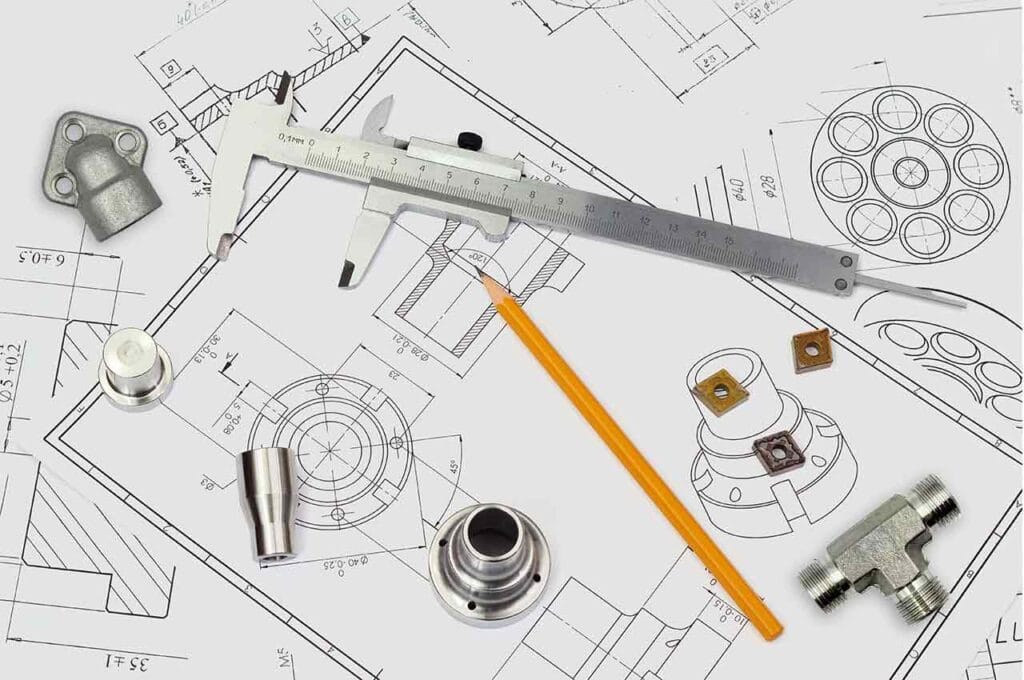
Proper Assembly Techniques
- Ensure hoses are cut squarely and free of burrs
- Align couplings correctly to prevent cross-threading or seal damage
- Use torque-controlled wrenches for threaded assemblies
Avoiding Operational Hazards
- Keep hoses away from heat sources, sharp edges, and moving machinery
- Never exceed the recommended pressure or temperature rating
- Implement PPE and safety protocols during maintenance
Documentation and Record-Keeping
- Log inspection dates, repairs, and replacement components
- Maintain historical data to predict hose and coupling lifespan
- Use digital tracking systems for large-scale industrial operations
Advanced Maintenance Strategies
Preventive Replacement
- Replace hoses and couplings before the end of their rated lifespan
- Monitor cumulative operational hours and stress cycles
- Schedule replacements during planned downtime to avoid operational interruptions
Predictive Maintenance Using Sensors
- Modern hydraulic systems can integrate pressure, flow, and temperature sensors
- Sensors detect early signs of leakage or degradation
- Predictive alerts reduce unplanned downtime and maintenance costs
Data Insight: A case study in the Mining Hydraulic Journal reported a 25% reduction in unexpected coupling failures after integrating IoT-based predictive monitoring systems.
Cost Analysis: Benefits of Proper Maintenance
- Reduced Downtime: Proactive maintenance prevents system stoppages, which can cost thousands per hour in heavy industry.
- Lower Replacement Costs: Well-maintained couplings last longer, reducing frequent replacements.
- Safety and Compliance: Preventing leaks mitigates environmental hazards and workplace safety violations.
Example: Maintaining 100 hydraulic hose couplings in a construction fleet can save approximately $15,000–$25,000 annually in reduced downtime and replacement costs.
Conclusion
Effective maintenance of hydraulic hose couplings ensures operational reliability, safety, and cost efficiency. By following inspection schedules, selecting appropriate materials, applying advanced monitoring, and adhering to best practices, businesses can significantly extend the service life of their couplings and hoses. As industrial systems grow more complex, integrating preventive and predictive maintenance strategies will be key to sustaining productivity and minimizing unexpected downtime.
Properly maintained hydraulic couplings not only save costs but also protect personnel, reduce environmental risks, and optimize system performance—making them an essential component of modern hydraulic systems.
FAQ
Q: How often should hydraulic hose couplings be inspected?
Daily visual inspections are recommended, with in-depth checks including pressure testing at least monthly.
Q: Can quick-connect couplings handle high pressures?
Yes, modern quick-connect couplings are rated up to 6000 PSI, but threaded or flanged couplings may be preferred for extreme pressures.
Q: How do I prevent leaks in hydraulic couplings?
Use proper alignment, clean threads and seals, adhere to torque specifications, and replace damaged parts promptly.
Q: Which materials are best for corrosive environments?
Stainless steel and brass are preferred in chemically aggressive or wet conditions due to corrosion resistance.
Q: What are the signs that a coupling needs replacement?
Visible cracks, deformation, leaks, damaged threads, or worn seals indicate immediate replacement is necessary.