Key Takeaways of This Blog
- Comprehensive understanding of hydraulic fitting dimensions
- Importance of accurate sizing in high-pressure hydraulic systems
- Differences between global dimension standards (ISO, SAE, JIC, BSP, DIN)
- How to measure and select fittings with precision
- Common mistakes to avoid in hydraulic design
- Real-world case studies of industrial hydraulic failures and successes
- Quick reference tables for standard fitting dimensions
- FAQ section addressing common engineer and buyer questions
Introduction
In today’s fast-paced industrial environment, hydraulic systems power construction machinery, agricultural equipment, oil and gas rigs, and automated manufacturing lines. A single incorrect hydraulic fitting dimension can lead to:
- Pressure drops that reduce system efficiency
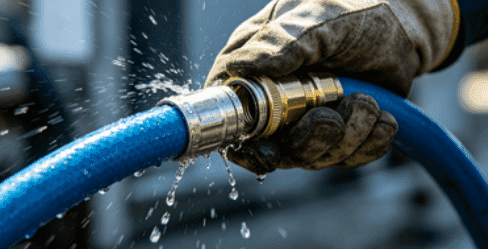
- Leaks that cause hydraulic fluid loss and downtime
- Catastrophic failures that risk personnel safety
According to a 2024 whitepaper by the International Fluid Power Society (IFPS), nearly 18% of hydraulic system failures globally are linked to incorrect fitting or hose sizing. Correct knowledge of hydraulic fitting dimensions is not optional—it is essential for system reliability, maintenance efficiency, and cost optimization.
Table of Contents
Understanding Hydraulic Fitting Dimensions
What Are Hydraulic Fitting Dimensions?
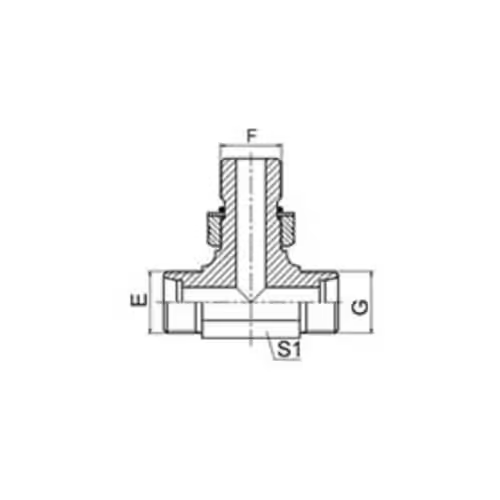
Hydraulic fitting dimensions refer to the measurable characteristics of a fitting: thread diameter, seat angle, sealing type, and overall length. Each dimension impacts system compatibility, pressure rating, and sealing integrity.
Core Components Influencing Dimensions
- Thread Type: Metric, BSP, NPT, or JIC threads determine connection compatibility.
- Sealing Mechanism: O-ring, cone, or flat-face types influence leak-proof performance.
- Outer Diameter and Length: Ensure correct hose attachment and proper clearance in the system.
Global Standard Dimension Systems
ISO Metric Standards
ISO standards (ISO 8434-1, ISO 8434-2) govern metric hydraulic fittings, ensuring global interoperability. ISO fittings are widely adopted in Europe, Asia, and increasingly in North America.
JIC and SAE Standards
JIC fittings use a 37° flare angle, while SAE standards may use 45° or other variants. These fittings are prevalent in North American mobile hydraulic systems and industrial equipment.
BSP and NPT Threads
- BSP (British Standard Pipe) is common in European systems.
- NPT (National Pipe Thread) is prevalent in US-based systems.
Differences in tapering and sealing require engineers to verify the standard before installation.
DIN Standards
DIN 2353 defines hydraulic tube fittings widely used in Germany, Europe, and global OEM machinery. They emphasize high-pressure performance, up to 630 bar.
Dimension Comparison Table
| Standard | Thread Type | Angle | Pressure Range | Common Applications |
|---|---|---|---|---|
| ISO Metric | Metric | 24° | 210–350 bar | Industrial machinery, presses |
| JIC | UNF | 37° | 350–420 bar | Mobile hydraulics, construction |
| SAE | UN | 45° | 300–400 bar | Automotive, industrial pumps |
| BSP | BSPP/BSPT | 30° | 200–300 bar | Water systems, hydraulics |
| NPT | Tapered | 60° | 150–350 bar | US industrial applications |
| DIN 2353 | Metric | 24° cone | 250–630 bar | High-pressure hydraulic lines |
How to Measure Hydraulic Fitting Dimensions
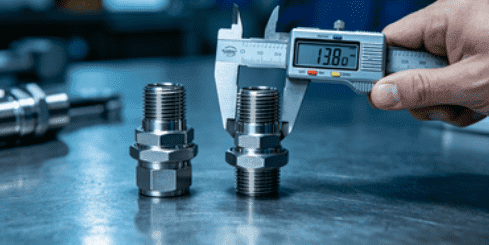
Using Calipers and Gauges
Digital calipers measure thread diameter, outer diameter, and length with ±0.01 mm accuracy. Thread gauges help identify pitch and type.
Measuring Thread Type and Sealing Surface
Verify thread type and sealing angle. Using a JIC fitting in an NPT system can lead to leakage and compromised safety.
Checking Pressure and Flow Compatibility
Always compare the fitting’s pressure rating with system requirements. Hydraulic hoses may experience bursts if mismatched.
Selecting the Right Hydraulic Fitting
Matching Hose and Fitting Size
Fitting dimensions must align with hose internal diameter (ID) and outer diameter (OD). Proper sizing ensures flow efficiency and prevents premature wear.
Material Considerations
- Carbon Steel: Standard, cost-effective, suitable for most industrial applications
- Stainless Steel 316: Corrosion-resistant, ideal for chemical, marine, or aggressive environments
- Brass: Low pressure, good for water-based systems
System Layout Considerations
Bends, elbows, and reducers affect hydraulic flow and pressure. Proper dimensioning avoids turbulence and system inefficiency.
Common Mistakes in Hydraulic Fitting Dimensions
Wrong Thread Type
Mismatched threads can strip, causing leaks or catastrophic failure.
Overlooking Hose Size
Incorrect hose-to-fitting matching reduces efficiency and increases maintenance frequency.
Ignoring Pressure Rating
Using a fitting rated below the system’s operating pressure risks equipment damage and safety hazards.
Case Study: Industrial Leak Incident
In a Southeast Asian manufacturing plant, mismatched BSP and metric fittings caused a hydraulic leak, halting operations for two weeks, costing the company approximately $120,000 in downtime.
Advanced Considerations
High-Pressure Systems
Systems over 5000 PSI require reinforced fittings with stricter tolerances. ISO 8434-1 and DIN 2353 fittings are designed to withstand these pressures safely.
Temperature and Environmental Effects
Extreme temperatures (−40°C to 200°C) can affect sealing surfaces. Selecting appropriate material and fitting dimensions is crucial.
Corrosion Resistance
316 stainless steel fittings are often recommended for marine, chemical, or high-humidity environments, offering superior longevity compared to 304 stainless steel or carbon steel.
Dimension Comparison Across Standards
| Feature | ISO Metric | JIC | BSP | NPT | DIN 2353 |
|---|---|---|---|---|---|
| Thread Diameter | mm | inch | inch | inch | mm |
| Sealing Type | O-ring / 24° cone | 37° flare | Parallel / tapered | Tapered | 24° cone |
| Pressure Rating | 210–350 bar | 350–420 bar | 200–300 bar | 150–350 bar | 250–630 bar |
| Common Region | Global | US & Asia | Europe | US & Canada | Europe / OEM |
Tips for Engineers and Buyers
- Always double-check manufacturer specifications before ordering
- Use color-coded or labeled fittings to avoid installation errors
- Implement digital verification tools for automated measurement in large facilities
- Keep spare fittings of multiple dimension standards to reduce downtime
Case Studies and Real-World Applications

Case Study 1 – Automotive Hydraulics (USA)
JIC fittings in construction equipment reduced leaks by 25% compared to non-standard fittings, improving machine uptime by 18%.
Case Study 2 – Marine Applications (Europe)
316 stainless steel fittings in offshore oil rigs endured saltwater exposure for 3 years with zero corrosion-related failures.
Case Study 3 – Manufacturing Plant (Asia)
Implementing DIN 2353 fittings in high-pressure hydraulic presses reduced maintenance frequency from monthly to quarterly.
Conclusion
Mastering hydraulic fitting dimensions is essential for system reliability, efficiency, and safety. Engineers and buyers should consider:
- Thread type, angle, and sealing mechanism
- Hose compatibility and pressure rating
- Material selection and environmental considerations
By adhering to international standards, performing accurate measurements, and referencing dimension charts, hydraulic systems can operate safely under high-pressure conditions with minimal downtime and maximum efficiency.
FAQ
Q1: How do I ensure I select the right fitting dimension?
Measure hose ID/OD, confirm thread type, and consult manufacturer dimension charts.
Q2: Can I interchange JIC and NPT fittings?
No, mismatched threads may cause leaks or unsafe conditions.
Q3: Are there international standards for hydraulic fittings?
Yes, ISO 8434, DIN 2353, JIC, BSP, and NPT standards provide global guidelines.
Q4: How does pressure rating relate to dimensions?
Higher pressure requires thicker walls and precise thread sealing; selecting proper dimensions ensures safety.
Q5: What common mistakes should I avoid?
Confusing thread types, ignoring hose compatibility, and underestimating operating pressure are the main errors.